Global delegates visit Assembly
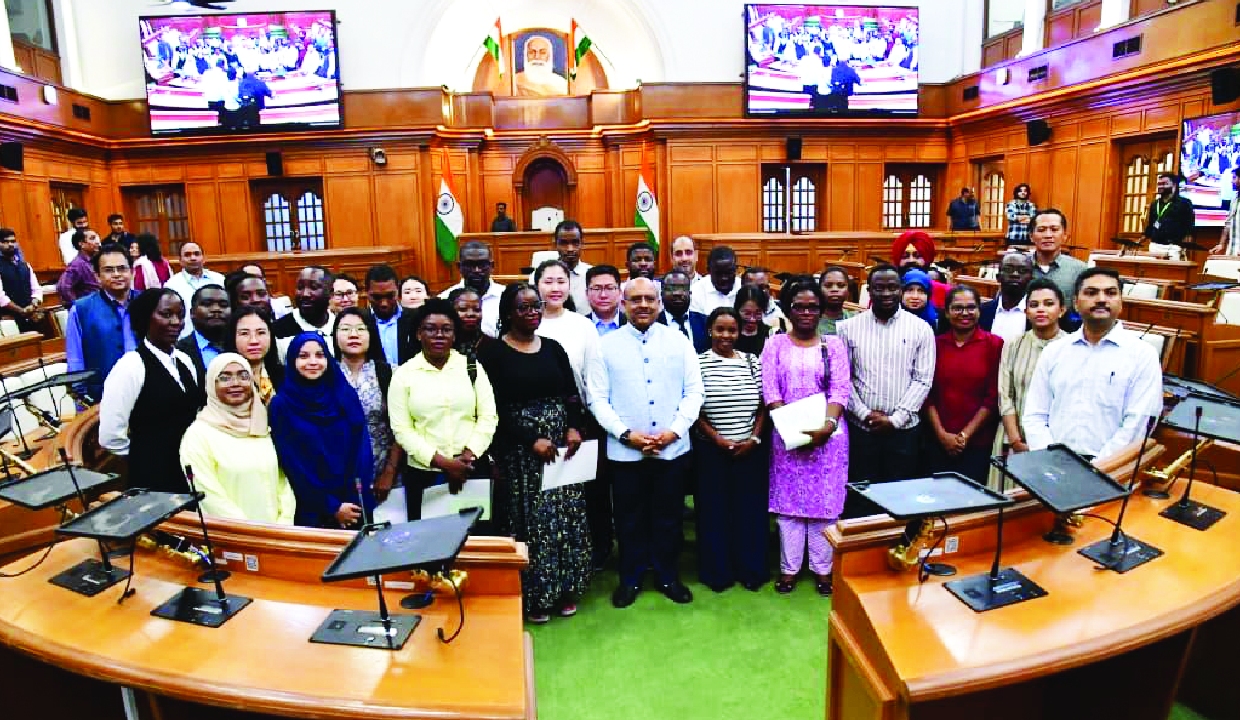
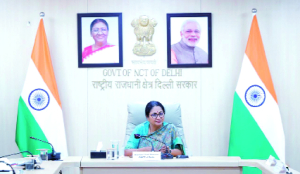
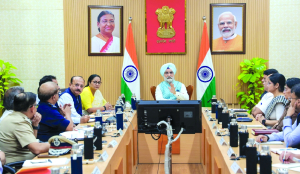
A group of 43 delegates from 18 countries visited the Delhi Legislative Assembly on Tuesday as part of an international training programme, where Speaker Vijender Gupta highlighted the importance of precise legislative drafting in strengthening democratic governance.
Addressing participants of the 37th International Training Programme in Legislative Drafting, organised by the Parliamentary Research and Training Institute for Democracies, Gupta said the effectiveness of laws depends on how clearly they are framed. He said well-drafted legislation is essential to protect rights, ensure accountability and influence everyday governance.
The visiting delegation included representatives from countries such as Bangladesh, Bhutan, Oman, Kenya, Sri Lanka, the Philippines and Tanzania. Officials said the visit was aimed at sharing institutional practices and strengthening international cooperation in legislative processes.
Gupta placed the Delhi Assembly in its historical context during his address. He said the building, constructed in 1912, has served as a key site of legislative activity since the colonial period. It earlier housed the Imperial Legislative Council and later the Central Legislative Assembly under the Government of India Act of 1919.
He also recalled the election of Vitthalbhai Patel as the first Indian President of the Assembly in 1925. He described it as an important moment in the assertion of legislative independence during colonial rule. Referring to the presence of Mahatma Gandhi during key deliberations, Gupta said the Assembly has historically been a space where democratic ideas evolved.
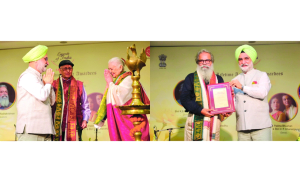
As part of the visit, delegates toured the Assembly premises and attended a screening of a documentary on Vitthalbhai Patel. They were also introduced to a publication detailing the institution’s history, a copy of which was presented to programme officials for archival purposes.
Highlighting recent reforms, Gupta said the Assembly has adopted several measures to improve efficiency and transparency. He said the institution now operates fully on solar energy, reflecting a shift towards sustainable governance practices. He added that proceedings have become paperless through the use of a digital legislative platform.
The Speaker said work is underway to digitise the Assembly Library to preserve records and improve access to research material. He also informed delegates about plans to develop a museum within the premises to showcase the Assembly’s institutional journey. A light and sound programme is also being planned to present its history to the public.
Gupta said such initiatives aim to combine institutional memory with modern governance practices.