Glasgow 2026 strengthens India’s case in hosting the 2030 CWG
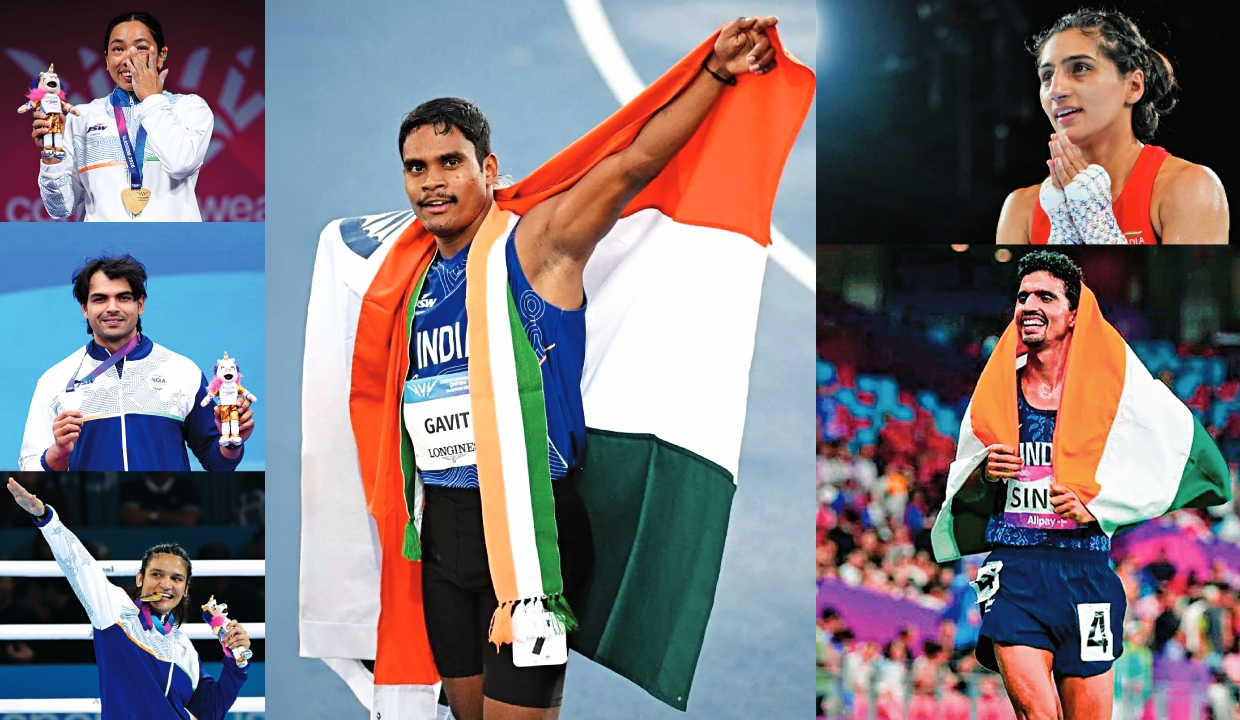
A late surge over the final three days left a strong imprint on India’s campaign at the 2026 Commonwealth Games, as they secured a fourth-place finish with 13 gold medals and 39 overall. Glasgow hosted an emergency, scaled-down edition comprising just ten sports, almost half the programme seen in Birmingham four years earlier. Several of India’s traditional medal-winning disciplines, including Wrestling, Badminton and Table Tennis, were absent, while Shooting had already been dropped in 2022.
The reduced programme made India’s eventual performance more credible than it initially appears. Birmingham 2022 had already shown India could remain among the leading nations despite the exclusion of Shooting, one of its strongest disciplines. Glasgow posed an even tougher challenge, stripping away several additional sports that have traditionally contributed substantially to India’s medal tally. That India remained competitive suggests the country’s sporting base is becoming broader rather than dependent on a handful of events.
Equally significant was the expanded presence of Para-sports at the Commonwealth Games. India has emerged as one of the world’s fastest-rising para-sporting nations, with its performances at recent Paralympic Games often exceeding expectations compared with the Olympics.
However, Glasgow also exposed the increasingly fragile state of the Commonwealth Games. The event has struggled to find stable hosts for over a decade. Durban lost the 2022 Games because of financial concerns before Birmingham stepped in. The Australian state of Victoria was awarded the 2026 edition but withdrew after projected costs escalated dramatically, forcing Glasgow to rescue the event with a significantly reduced programme.
These repeated disruptions have inevitably prompted questions about whether the Commonwealth Games, which began as the British Empire Games, still have a meaningful place in an increasingly crowded international sporting calendar. For India, however, the answer is likely to be yes.
Unlike most Commonwealth nations, India occupies a unique position by competing at both the Commonwealth Games and the Asian Games. While the Commonwealth Games have traditionally offered greater medal opportunities in many sports, the Asian Games remain a stronger measure of sporting excellence because of competition from powerhouses such as China, Japan and South Korea in India’s stronger disciplines.
That distinction has become particularly relevant because India is actively pursuing the 2036 Olympic Games in Ahmedabad. Ideally, any aspiring Olympic host would stage a major multi-sport event beforehand to demonstrate organisational capability, operational readiness and public engagement. The obvious choice would have been the Asian Games, but the hosting rights for both 2030 and 2034 had already been allocated in 2020, the former to Doha, also a rival bidder for the 2036 Olympics. That effectively left the 2030 Commonwealth Games also in Ahmedabad, as India’s only realistic opportunity to organise a major international multi-sport event before 2036.
Countries that successfully host major sporting events tend to build institutional expertise that strengthens future bids. South Korea, Brazil, West Germany and the United States have all staged the FIFA World Cup and Olympic Games within relatively short periods. Such events create experienced organising teams, tested venues, volunteer networks and confidence among international sporting bodies. India cannot replicate those examples exactly, but hosting the 2030 Commonwealth Games would allow it to demonstrate many of the same capabilities.
There is, admittedly, one important caveat. The International Olympic Committee is expected to decide the host of the 2036 Olympics in 2029, before the 2030 Commonwealth Games are held. It would therefore be inaccurate to argue that the Commonwealth Games will directly determine India’s Olympic bid.
That, however, should not diminish their strategic importance. If India secures the Olympics, the Commonwealth Games would provide valuable operational preparation immediately beforehand. If the Olympic bid is unsuccessful, a well-executed Commonwealth Games would substantially strengthen India’s credentials for hosting a future edition.
There is also a less tangible but equally important benefit. Major sporting events can change public behaviour, even if only temporarily. The 2010 Commonwealth Games in Delhi arrived amid widespread criticism over multiple delays and financial controversies. Yet once competition began, public attention shifted decisively towards the athletes. India crossed the 100-medal mark for the first time, finished second overall and carried that momentum into its then-best-ever Asian Games performance later that year. With the 2030 Commonwealth Games expected to revert to a full-scale event, alongside home advantage, India could again finish among the leading nations.
Glasgow 2026 may ultimately be remembered as the stopgap edition that kept the Commonwealth Games alive. For India, however, it served another purpose. It underlined why 2030 should be viewed not simply as another Commonwealth Games, but as an opportunity to strengthen sporting institutions, build international credibility and accelerate its long-term ambition of becoming a genuine global sporting nation.
The writer is a sports management consultant with over a decade of experience in sports promotion and development. His work across both the private and government sectors gives him a well-rounded view of India’s sports ecosystem; Views presented are personal.