Geopolitical shocks and strains
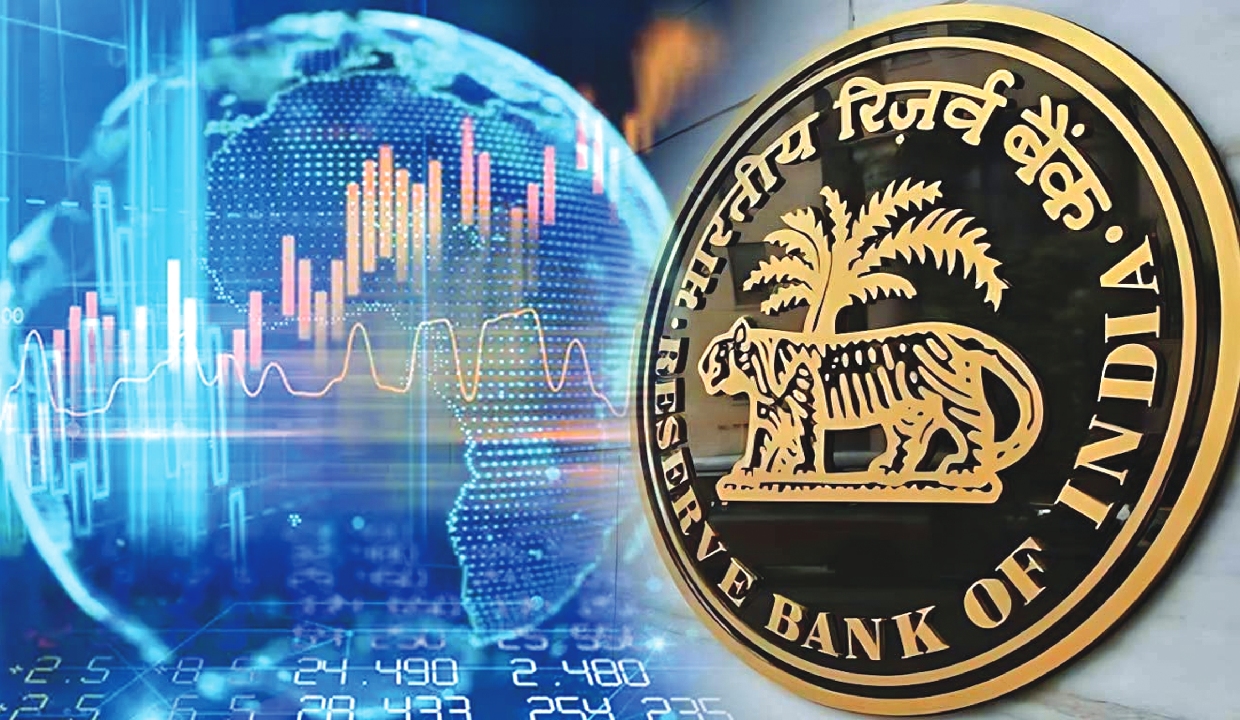
Global uncertainty has hardened from a periodic disturbance into a defining macroeconomic condition. For India, this is no longer an external backdrop but a set of forces shaping domestic monetary policy, fiscal arithmetic and interGovernmental relations. The Reserve Bank of India (RBI) and the Ministry of Finance are navigating a world where energy volatility, geopolitical tensions, capital flow reversals and supply disruptions interact in persistent and complex ways. These pressures are increasingly transmitted through India’s federal architecture, exposing state Governments to global shocks without commensurate policy flexibility.
The RBI’s decision to hold the policy repo rate at 5.25 per cent reflects a calibrated pause rather than inertia. Inflation, after an unusually benign phase in 2025, is normalising towards the 4.5-4.7 per cent range. Yet the risks are clearly tilted upward. Brent crude crossing $100 per barrel has reintroduced imported inflation pressures, particularly through fuel, fertilisers and transport costs. Inflationary expectations, especially led from food and energy components, remain sensitive to such shocks. The central bank’s dilemma is sharpened: easing too early risks unanchoring expectations, while further tightening could compress a recovery that is already losing momentum.
Complicating this domestic balance is the stance of the US Federal Reserve. Policy signals from the Fed chair have reinforced a higher-for-longer interest rate environment, strengthening the dollar and tightening global liquidity. For India, this translates into intermittent capital outflows and exchange rate pressures. Episodes of capital flight-particularly from debt markets-have intensified in response to shifting expectations about US interest rates. The rupee, though relatively resilient, has faced depreciation pressures, reflecting both global dollar strength and a widening trade deficit driven by higher energy imports.
Currency depreciation feeds directly into inflation by raising the cost of imports, especially oil. It also complicates monetary transmission. The RBI must manage not only domestic price stability but also external stability, often requiring liquidity adjustments that may not align with domestic growth conditions. This dual concern makes policy calibration more complex in a volatile global environment.
Growth, while still robust by global standards, is moderating. After expanding at around 7.5 per cent in FY26, GDP growth is expected to ease towards the 6.8-7.2 per cent range. External demand is weakening, financial conditions are tightening and domestic consumption remains vulnerable to inflation shocks. Bond markets reflect this uncertainty.
The term structure of interest rates has shown intermittent steepening, with long-term yields embedding inflation expectations, fiscal borrowing pressures and global risk premia. Capital flow volatility has added to liquidity management challenges, reinforcing the RBI’s cautious stance.
On the fiscal side, the Union Government’s consolidation path-targeting a deficit of 4.3 per cent of GDP-remains credible but increasingly contingent on favourable assumptions. Higher oil prices widen the current account deficit and increase subsidy burdens, while slower global growth risks dampening tax buoyancy. At the same time, expenditure commitments on infrastructure, welfare and defence remain substantial. Public debt, elevated since the pandemic, constrains fiscal flexibility. War-related uncertainties further complicate fiscal arithmetic, both directly through higher defence spending and indirectly through commodity price volatility.
The deeper and less examined challenge lies in India’s fiscal federal structure. State Governments account for a substantial share of public spending, particularly in health, education and infrastructure, yet their fiscal capacity is constrained by limited revenue autonomy and dependence on transfers from the Centre. In an environment of heightened uncertainty, this dependence becomes a source of instability. InterGovernmental transfers-especially those linked to shared taxes-are inherently volatile, fluctuating with economic cycles and policy decisions. Delays, shortfalls or changes in allocation formulas amplify fiscal uncertainty at the State level.
The result is a fiscal space crunch for states. They must meet committed expenditures-salaries, pensions, interest payments and welfare programmes-even as revenues fluctuate. Borrowing limits imposed by fiscal responsibility frameworks restrict their ability to respond countercyclically. This often leads to compression of capital expenditure, undermining long-term growth prospects. In effect, macroeconomic stabilisation is centralised, while fiscal stress is decentralised. States too equally face the macroeconomic uncertainties now. Global shocks amplify these federal tensions. Rising energy prices increase subsidy burdens across both Union and state budgets. If the Centre absorbs a larger share, transfers to states may be constrained; if states bear more of the burden, their fiscal stress deepens. Either way, public investment risks being crowded out. The interaction between global volatility and domestic fiscal arrangements thus creates a feedback loop that complicates policy effectiveness.
Supply chain disruptions add another layer of complexity. Maritime chokepoints such as the Strait of Hormuz and the Red Sea have become increasingly fragile, forcing rerouting of shipments via longer routes like the Cape of Good Hope. These disruptions raise freight costs, extend delivery times and increase uncertainty for trade. For India, this affects export competitiveness, port efficiency and logistics costs. Ports face congestion and scheduling disruptions, while industries dependent on imported inputs encounter delays and cost escalations.
Less visible but equally critical is the vulnerability of digital infrastructure. Submarine cables running along these maritime routes carry a significant share of global internet traffic. Disruptions in these corridors can affect financial transactions, services exports and digital platforms. In an economy where digital services are a major growth driver, such risks have systemic implications.
For firms, particularly small and medium enterprises, these uncertainties translate into tighter financial conditions. Credit channels become more risk-averse, with higher risk premia raising effective borrowing costs even without changes in policy rates. Investment decisions are deferred, especially in sectors exposed to global trade and supply chains. The result is a cascading effect: supply disruptions raise costs, reduced profitability weakens creditworthiness, and tighter credit further dampens economic activity.
What distinguishes the current phase is its multiplicity and persistence. Unlike the pandemic, which was a singular global shock, today’s uncertainty is layered-energy volatility, capital flow reversals, currency pressures, supply chain disruptions and federal fiscal constraints interacting simultaneously. These are not transient disturbances but structural features of the global economy.
For policymakers, this requires a shift from reactive crisis management to proactive resilience building. The RBI must preserve credibility in its inflation-targeting framework while managing exchange rate stability and financial conditions. The Ministry of Finance must pursue fiscal consolidation without undermining growth, prioritising resilience alongside investment. Equally important is the need to strengthen fiscal federalism-ensuring predictability in tax transfers, flexibility in borrowing and greater coordination between the Centre and states.
India’s macroeconomic fundamentals remain relatively strong, but resilience in this environment will depend less on headline indicators and more on institutional adaptability — both RBI and the Ministry of Finance.
The writer is a Professor, National Institute of Public Finance and Policy (NIPFP); Member, Board of Management, International Institute of Public Finance (IIPF) Munich; and Research Affiliate, Levy Economics Institute of Bard College, New York; Views presented are personal.