Fake case hatched to finish off AAP: Kejriwal
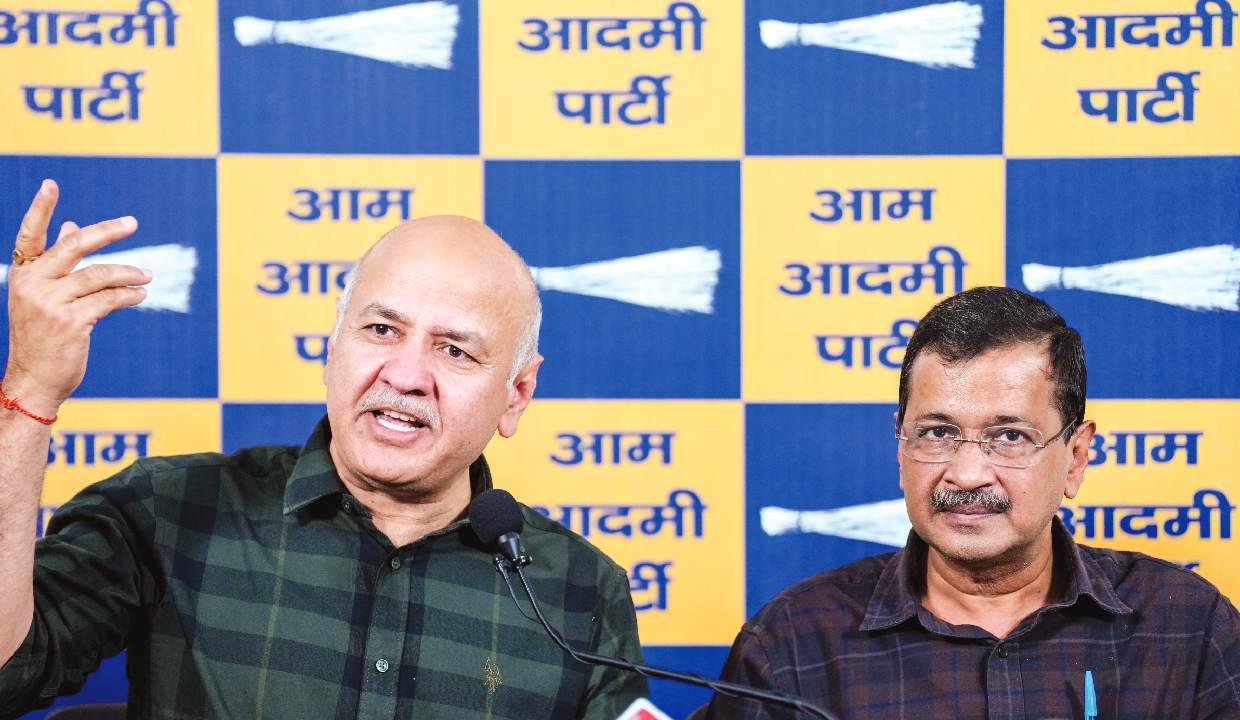
After a special Delhi court discharged all the accused in the so-called liquor scam and ruled that the case was not even fit to proceed to trial, AAP National Convener Arvind Kejriwal hit out at Prime Minister Narendra Modi and Union Home Minister Amit Shah alleging they hatched a conspiracy to finish off the Aam Aadmi Party through a “fake” case which was part of the “biggest political conspiracy” in independent India’s history, aimed at destroying the AAP. He also challenged PM Modi to hold fresh polls in Delhi and said he would quit politics if the BJP wins over 10 seats. “The BJP has thrown Delhi into chaos with problems like pollution, a polluted Yamuna, and damaged roads,” the AAP chief said.
Highlighting that he has earned nothing but honesty in his life, Kejriwal said the court’s verdict had effectively affirmed his integrity. He called out PM Modi and Amit Shah for hatching a political conspiracy to seize power in Delhi, demanded that they apologise to the country, and revealed that the case was fabricated precisely because they knew the public regarded him as staunchly honest.
“Who created this entire conspiracy and why? This conspiracy was created by two people, PM Narendra Modi and Amit Shah. Today, both of them should apologise to the entire country. They conspired to eliminate the Aam Aadmi Party and to destroy it. Under that conspiracy, they created the biggest and most disgraceful political conspiracy in independent India. They saw that they could not defeat us in Delhi. They saw that the people of Delhi were very happy with our work. They saw that in the politics of work, they could not stand anywhere. So, they created a conspiracy,” he asserted.
The court, while granting the relief to Kejriwal, his deputy Manish Sisodia and 21 others in the case, was unsparing in its criticism of the CBI, saying its charge sheet “suffers from internal contradictions, striking at the root of conspiracy theory.”
The court has given a historic verdict, Kejriwal said, adding that the judge showed tremendous courage in passing the order “under the existing circumstances when all institutions are under assault.” “The court has proved that Kejriwal, Manish Sisodia and AAP are ‘Kattar Imaandar’,” he said, accompanied by former deputy chief minister of Delhi Sisodia.
Kejriwal said for the past four years, the BJP has used the word ‘liquor scam’ extensively in Indian politics. But today, the court and our justice system have delivered a very historic judgment in this matter. I want to sincerely thank the judiciary and the learned judge for this decision.” “BJP has thrown Delhi into chaos with problems like pollution, polluted Yamuna, damaged roads... I challenge PM Modi to hold fresh polls in Delhi and if BJP wins over 10 seats, I will quit politics,” Kejriwal asserted.
After the court verdict, Kejriwal broke down while talking to reporters. The AAP convener was present in the court when the order was passed by Special Judge Jitendra Singh.
Later in the day, addressing a press conference, the AAP chief said that they will file an application in a court for discharge in connection with cases registered by the Enforcement Directorate.
Soon after the court’s order, celebrations broke out at Kejriwal’s home and AAP workers distributed sweets and danced to dhol beats, cheering ‘Arvind Kejriwal Zindabad.’
Key observations of Delhi court in Delhi excise policy case
The following are the key observations of the Delhi court on Friday while discharging former Delhi chief minister Arvind Kejriwal, his deputy Manish Sisodia and 21 others in the liquor policy case:
- Prosecution case does not disclose even the threshold of prima facie suspicion, far less the “grave suspicion” mandated by settled principles of criminal jurisprudence.
- The CBI case was unable to survive judicial scrutiny and stands discredited in its entirety.
- Due to the absence of any admissible evidence, the prosecution case is rendered legally infirm, unsustainable, and unfit to proceed any further in law.
- The evidence establishes that the policy was the outcome of a consultative and deliberative exercise, undertaken after engagement with relevant stakeholders and in adherence to the procedure prescribed under law.
- In the absence of a tainted policy or demonstrably unlawful implementation, the prosecution theory is reduced to conjecture.
- Found no apparent breach of restrictions relating to “related entities” or any other policy condition which could, by itself, attract criminal liability.
- Record further reveals an investigative approach to stitch together disparate fragments so as to create an impression of a vast and complex conspiracy, unsupported by legally admissible material.
- Investigation appears to have proceeded on a predetermined trajectory, implicating virtually every person associated with the formulation or implementation of the policy in order to lend an illusion of depth and credibility to an otherwise fragile narrative.
- The endeavour to further connect such allegations to the Goa assembly elections, so as to project, layering, and utilisation of alleged proceeds of crime, rests more on assumption than on legally sustainable material.
- Prosecution case, as presented in the charge sheet, rests largely on surmises, conjectures, and inferential leaps unsupported by cogent material.