Evolving strategic partnership between Kuwait and India
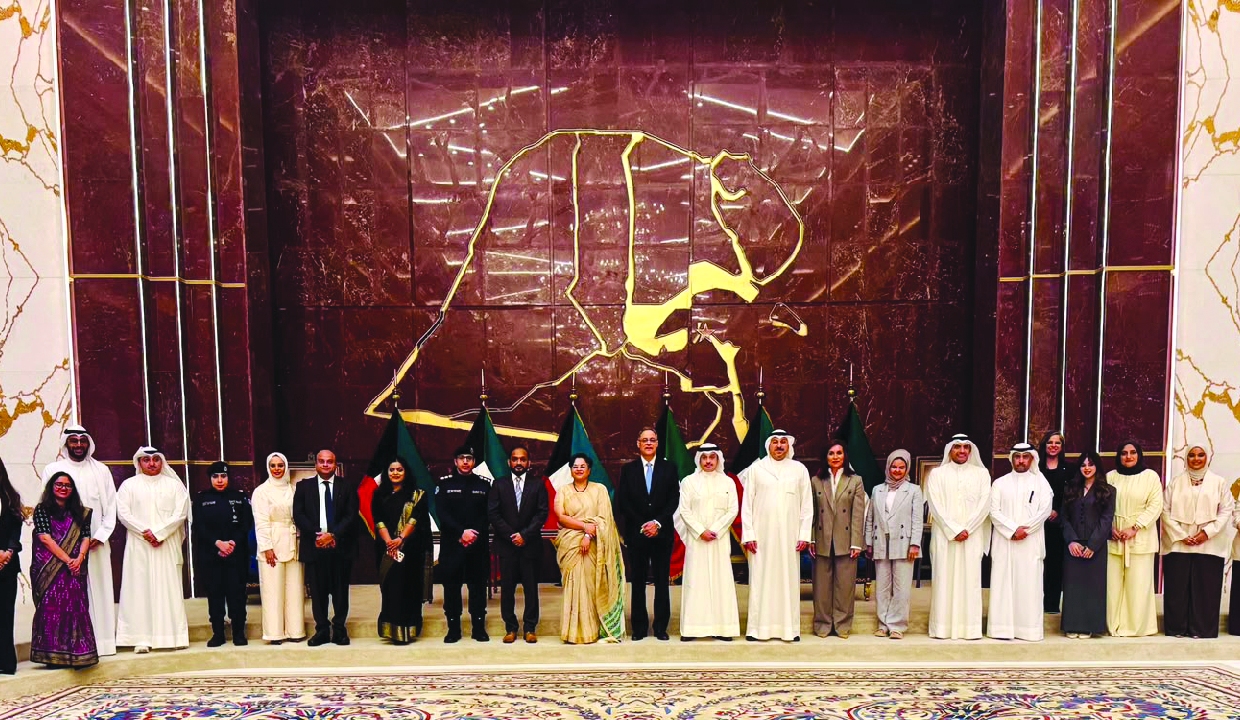
Kuwait and India have always had close ties, and the historical relations between both the countries have significantly deepened in recent years with bilateral agreements, trade boost and increased investments, shaping a new era of collaboration.
This evolution culminated in the elevation of ties to a Strategic Partnership during the visit of Hon’ble Prime Minister Shri Narendra Modi to the State of Kuwait on December 21-22, 2024. The evolving strategic partnership between Kuwait and India reflects the transformation of bilateral ties from a traditional buyer–seller energy relationship into a broad-based partnership covering defence, trade, investment, technology, security, and people-to-people cooperation.
The year 2026 is very special for the State of Kuwait and the Republic of India as it marks the celebration of the 65th anniversary of the establishment of diplomatic relations between both the nations. The celebration also coincides with the 65th anniversary of the National Day of Kuwait and the 1st anniversary of the elevation of bilateral ties to a strategic partnership.
Political Relations: Political relations have been distinguished by high-level exchanges, fostering cooperation across defense, energy, technology, healthcare, food security, and cultural ties, marked by a large Indian diaspora and recent high-level agreements, with future dimensions focusing on shared tech goals, increased connectivity, and joint economic ventures. The last high-level visit from Kuwait to India was that of the late Prime Minister
H.H. Sheikh Jaber Al-Mubarak Al-Hamad Al-Sabah in 2013, while the late Amir H.H. Sheikh Sabah Al Ahmed Al Jabar Al Sabah visited India on a private visit in July 2017. From the Indian side, Prime Minister Shri Narendra Modi paid an official visit to Kuwait on 21-22 December 2024, which was the first trip to Kuwait by an Indian Prime Minister in 43 years, as the last Indian Prime Minister to visit Kuwait was Mrs. Indira Gandhi in 1981. On ministerial level, the last visit from Kuwait to India was that of H.E. Mr. Abdullah Ali Al-Yahya, Minister of Foreign Affairs on 3-4 December 2024, while from Indian side, Minister of External Affairs Dr. S. Jaishankar visited Kuwait on 18 August 2024. After the escalation of situation in the West Asia on 28 February 2026, both sides held a number of telephone conversations to discuss the situation in the region. On 9 June 2026, Prime Minister Shri Narendra Modi held a telephone conversation with the Amir of Kuwait, H.H. Sheikh Meshal Al-Ahmad Al-Jaber Al Sabah. He expressed deep concern over the escalation of tensions in West Asia and reaffirmed India’s strong condemnation of attacks on Kuwait’s sovereignty and territorial integrity. Minister of Foreign Affairs of Kuwait, Sheikh Jarrah Jaber Al-Ahmad Al Sabah, and External Affairs Minister Dr. S. Jaishankar also held telephonic conversations on February 28, April 13, 2026, where the two leaders discussed the latest developments in West Asia.
Cooperation during Covid-19: During the global crisis caused by the COVID-19 pandemic, both Kuwait and India strengthened their diplomatic and humanitarian collaboration to protect public health, support migrant populations, and maintain essential economic ties. The Government of the State of Kuwait established an air and sea bridge to carry medical supplies from Kuwait to India, through which it dispatched 425 tons of liquid medical oxygen, and approximately 11,440 oxygen cylinders, oxygen concentrators, ventilators and other medical equipment.
Meanwhile, the Republic of India provided the State of Kuwait with a 15- member medical team and approximately 2 tons of medical supplies to help 2 fight COVID-19 in Kuwait. A consignment of 2,00,000 doses of Covishield vaccines was supplied to Kuwait in February 2021.
Bilateral Agreements/MoUs: Kuwait–India relations are supported by a longstanding framework of bilateral agreements and Memoranda of Understanding (MoUs) covering political, economic, security, labour, and cultural cooperation.
Around 40 bilateral agreements/MoUs have been signed between the two countries across multiple sectors. During the visit of the Indian Prime Minister to Kuwait, the MoU on Cooperation in the field of Defence, Cultural Exchange Programme for the years 2025-2029 and Executive Programme for Cooperation in the Field of Sports (2025-2028) were signed. Kuwait also signed the Treaty of International Solar Alliance (ISA) in Dec 2024 and ratified the agreement in May 2025.
Recently, a specific MoU was signed between the Financial Intelligence Units (FIUs) of Kuwait and India in July 2025 to enhance cooperation in combating money laundering and terrorist financing, and a landmark MoU on Civil Aviation was also signed on 15 July 2025, expanding the weekly seat quota from 12,000 to 18,000 for each country. The agreement is expected to pave the way for greater collaboration in air services, increased flight frequencies, ultimately benefiting travelers and airlines from both countries. Furthermore, a Memorandum of Understanding to establish a Joint Commission for Cooperation (JCC) at the level of Foreign Ministers was signed during the visit of Foreign Minister of Kuwait to India in December 2024. Under the newly formed JCC, 7 new Joint Working Groups (JWGs) have been set-up in areas of trade, investments, education and skill development, science and technology, security and counter-terrorism, agriculture and food security, and culture, in addition to the existing 3 JWGs on Health, Manpower and Hydrocarbons. 3 In addition, seven rounds of Foreign Office Consultations (FoCs) have been held so far in 2012, 2014, 2016, 2018, 2023, 2024 and 2025 between both the nations. Economic Relations: Kuwait-India relations have always had an important trade and economic dimension. India has consistently been among the top trading partners of Kuwait, with a total bilateral trade reaching $10.22 billion during FY 2024-25. Kuwait remains a reliable supplier of crude oil & Liquefied petroleum gas (LPG) to India, meeting crucial energy needs of the country. During the same period, Kuwait was the 6th largest crude supplier and 5th largest supplier of Liquefied Petroleum Gas (LPG) to India, meeting about 3.5 per cent of India’s total energy needs. Apart from energy sector, there are other emerging areas of trade where potential exists to further diversify it. During the visit of H.E. Shri Narendra Modi to Kuwait, both countries discussed avenues to transform the cooperation from a buyer-seller relationship to a comprehensive partnership with greater collaboration in different sectors. Both sides expressed keenness to support companies of the two countries to increase cooperation in the fields of exploration and production of oil and gas, refining, engineering services, petrochemical industries, new and renewable energy. Both sides also agreed to discuss participation by Kuwait in India’s Strategic Petroleum Reserve Programme. Furthermore, the volume of investment between the two countries increased significantly over the past few years, with cumulative FDI inflows from Kuwait to India amounting to $11 billion as of December 2025. The State of Kuwait is committed to attract foreign investment, particularly from India, and for this, it recently launched a new investment promotion strategy that is specifically targeting Indian investment in a variety of promising sectors, including infrastructure, manufacturing, tourism, health and energy.
4 Significant growth potential exists in the area of trade and economic cooperation between Kuwait and India, such as to encourage the use of local currencies (Kuwaiti Dinar-Indian Rupee) for cross-border transactions, including trade, remittance, and investment flows, which will likely to benefit over 1 million Indians living in Kuwait, and travelers between the two countries.
I hope that ongoing government actions to facilitate investment in both directions and open new sectors to private investment will continue to accelerate the economic growth, development, and increased prosperity that our deep economic engagement has delivered to both nations.
I also believe that concluding free trade negotiations between the GCC countries and the Republic of India is of utmost important, as it will provide opportunities for Kuwait and India to increase the volume of bilateral trade and investment. In conclusion, the Kuwait-India relationship is a testament to the enduring bonds that transcend geographical boundaries and historical contexts. This multifaceted partnership, characterised by robust economic cooperation, vibrant cultural exchanges, and strong diplomatic ties, continues to thrive and evolve through sustained efforts and collaborative spirit of the two countries. Both nations are keen to explore new avenues of cooperation, including renewable energy, healthcare, technology, education, food security and cybersecurity. The focus is on sustainable development and leveraging each other’s strengths to achieve common goals.
The author is the Ambassador of the State of Kuwait to India; Views presented are personal.