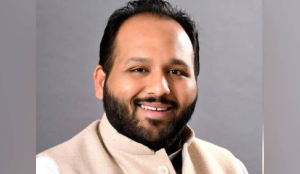
Everything fine with Fino Bank?

Two weird events happened with the Fino Payments Bank in the past few days. First, its MD and CEO, Rishi Gupta, was arrested, which sparked instant reaction from the business community, and forced Finance Minister Nirmala Sitharaman to admit that she will look at the case. On Monday, the stock price dropped nearly 10 per cent in the pre-trading period. During the day, it not only recovered the losses, but closed higher by nearly INR 2 compared to the previous trading session’s closing price. Both were seen by experts as knee-jerk reactions, when fears, emotions, and sentiments overtook rationality.
Both incidents, however, are linked to Gupta. The fintech business community pleaded with the FM on social media that neither the CEO-MD nor the bank was linked to the alleged GST frauds. The illegal deals, which resulted in short payments of the taxes, were done by business associates. The arrest was irregular, and not warranted. Fino Bank clarified to the investors that the arrest was not related to the bank's GST compliance, and the probe was linked to managers in various banks. The bank was not involved in the non-payments. As it is, Gupta has no role in the business activities of the managers.
However, it is unusual for the investigating agencies to arrest a CEO. Even in cases that involve non-payment of loans of INR 1,00,000 crore, promoters and chairmen are interrogated, with restrictions on foreign travel, as is the case with Anil Ambani. The arrest signifies a larger issue. Unless, of course, we assume the logic that the investigators find it easier to arrest the small fish, and generally go easy on the whales and sharks. Fino Bank is a small entity, with 16 million customers (as in December 2025), deposit base of just over INR 2,000 crore, and processed INR 1,10,000 crore in transactions in Q2-2026.
More importantly, a mere resignation of a CEO can render chaos within a firm, and among its shareholders. Both globally, and in India, one has seen high-profile exits followed by share slumps. On August 1, 2025, the shares of PNB Housing Bank fell by 17 per cent, despite strong quarterly results, when its CEO announced that he would step down. If a mere resignation can lead to investor concerns, an arrest is more meaningful, and portends dangers. For investors to become buyers, instead of sellers, due to a clarification, seems confusing.
One can agree that there are no GST liabilities on Fino Bank because of Gupta’s arrest, but the investigators allege his involvement in “relation to provisions of real-money gaming services by a partner entity, and the alleged under-reporting of GST.” The latter part is insignificant, especially when the central bank approved Gupta’s reappointment a month ago. In December, 2025, received the regulator’s approval to convert from a payments bank to a small finance bank, which the CEO-MD termed as a “natural progression.” But he termed it “historic and momentous occasion in Fino’s evolution journey.”
The difference between a payments bank and a small finance one lies in what they can and cannot do. The former can accept deposits up to INR 2,00,000 per customer, offer digital payments, and debit cards. But it cannot issue credit cards, offer loans, and issue credit products. A small finance bank can perform these activities, and “provide full banking services similar to regular commercial banks.” In the case of Fino, the conversion enables it to expand products and customers, and offer more choices, solutions, and conveniences to the customers.
However, on December 8 (Monday), 2025, two days after Fino Bank revealed an ‘in-principle’ approval to become a small finance bank, the share price crashed by nearly five per cent in the early trades. It closed at almost INR 315 on Friday (December 5). The closing price on December 8 was below INR 277, or a huge fall. Since then, the stock has slid to below INR 195, or nearly 40 per cent in less than three months. After a brief respite in early February 2026, the fall continued. Clearly, the investors were unhappy with the so-called good news.
One of the reasons, as pointed by analysts on December 8, was immediate profit-booking. But there were larger concerns. As a small finance bank, Fino will need to adhere to specific compliances. There may be obvious execution risks related to the change, and the process may take a few years. In the past, before the central bank’s clearance, Gupta had said that he wishes to be cautious rather than opt for nationwide expansion. Despite the transition, payments is likely to remain the main and most important business of the bank.
In the current arrest, there are efforts to distance Gupta from the fraud. For example, Fino Bank clarified that the managers responsible for the non-payment of GST are entities who source merchants for UPI transactions for it. Both the lender, managers, and merchant on-boarding processes are compliant with the regulatory requirements. The bank is compliant with the GST payments. The on-boarding was not done by the MD-CEO. Finally, according to Fino Bank, there is no “material impact” on the operations and, if there is, it will inform the stock exchanges. Hence, the bank is on firm and stable ground.
One can see a few holes, albeit small, in the logic and arguments. Of course, a MD-CEO does not on-board merchants, which is handled by specific teams and departments. But the CEO needs to take moral responsibility for the wrongdoings, if any. Gupta’s arrest hints that the authorities believe that he possibly aided or abetted the non-payments. Fino Bank cannot simply pass the buck lower down, and absolve the leader. The bank seems uncertain about the financial fallout. Hence, it is keeping the door open for future adverse disclosures.
At a technical level, chartists contend that the chart appears weak, which have resulted, and may result, in selling pressures. There is a temporary support for the stock price but it is not yet “backed by strong bullish confirmation. The overall price action continues to indicate lower highs and lower lows, which keeps the broader rend negative,” says an analyst. According to others, “A decisive close above INR 208 (current price: INR 194) is required to signal strength, and improve short-term momentum. Until such a break occurs, upside attempts may face resistance…. On the downside, immediate support is placed around INR 165, and a breakdown below this level could trigger weakness.”