ED raids multiple sites in fake CSR scam
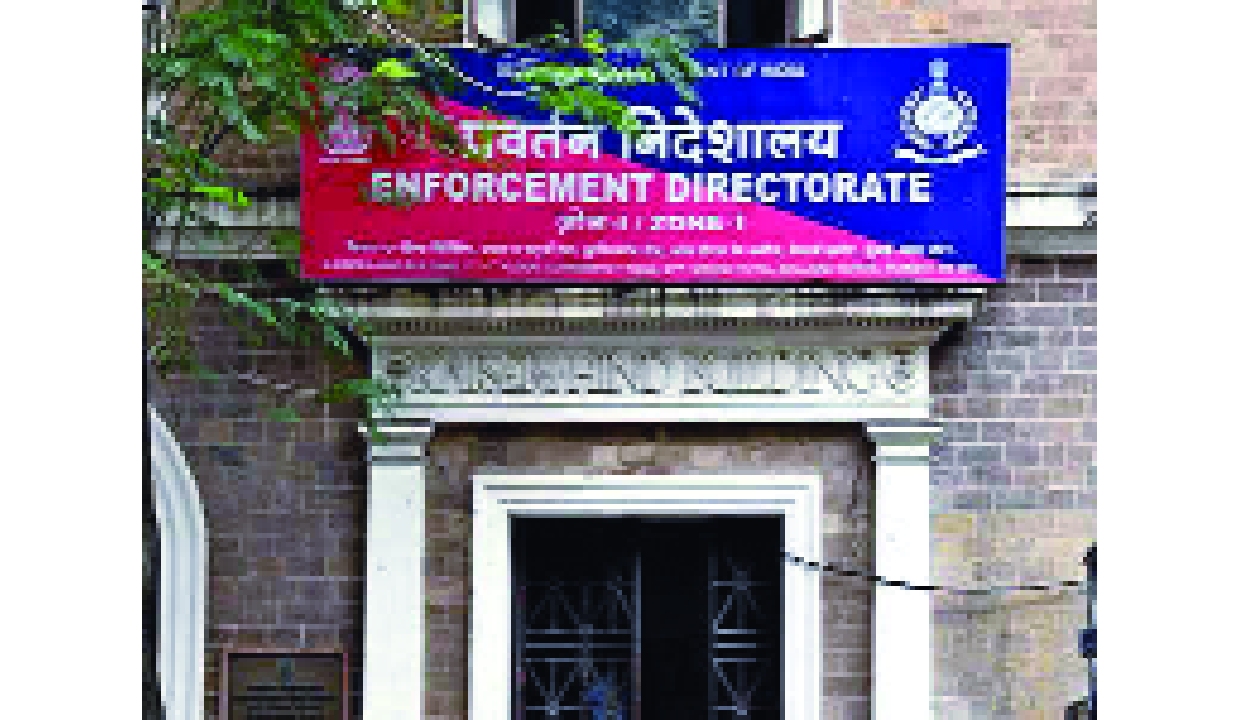
The Enforcement Directorate (ED)’s Mumbai Zonal Office-I searched eight locations across Maharashtra, West Bengal, Gujarat, and Delhi-NCR as part of an investigation into an alleged fake corporate social responsibility (CSR) donation scheme.
The searches, carried out under the Prevention of Money Laundering Act (PMLA), 2002, targeted Dharmendra Kumar Chandradev Singh and others. Officers seized about `21 lakh in cash, along with documents and digital devices. According to the agency, the CSR system was used to turn legal funds into unaccounted cash. About ?200 crore in CSR funds have passed through this setup.
The money-laundering investigation started after a first information report was filed at Juhu Police Station. Singh faces charges under the Maharashtra Medical Practitioners Act, 1961, the National Medical Commission Act, 2019, and the Bharatiya Nyaya Sanhita, 2023, which correspond to Sections 420, 467, 471, and 475 of the Indian Penal Code. These offences are listed under the PMLA.
The agency says Singh has no recognised medical qualifications and is not registered with the Medical Council. He completed formal education only up to Class XII. Still, he is accused of calling himself a doctor for almost thirty years and using the title “Doctor.” Using this title, he set up and ran a network of charitable trusts and private companies that claimed to focus on healthcare-related CSR activities. Large amounts of CSR funds from public-sector undertakings and private companies were raised through this network.
The searches suggest there was a larger scheme involving charitable trusts, trustees, CSR agents, intermediaries, and equipment suppliers to divert and recycle CSR funds. At least 40 public-sector undertakings and banks across India reportedly donated to the trusts run by Singh. Many projects were only partly completed or did not match the amount of money received. Vendor bills were inflated, and extra funds were sent through fake or shell companies. Intermediaries who helped arrange the CSR funding were allegedly paid kickbacks and commissions.
Further investigation found that the trusts were used to buy expensive machinery and equipment for hospitals and healthcare centres. When these institutions said they did not have enough money for the equipment, they were connected with local public representatives. These representatives then recommended funding certain projects through Singh’s trusts. The inquiries showed that public-sector undertakings mainly donated CSR funds to these trusts based on recommendations from public representatives or their staff.
The investigation also found that private companies got their CSR contributions back in cash, minus a small commission. The searches revealed a network of CSR agents and intermediaries who sent CSR funds to the trusts, which were then routed through shell companies controlled by market operators. Most of these companies have also been linked to several GST fraud cases.