Did you know?
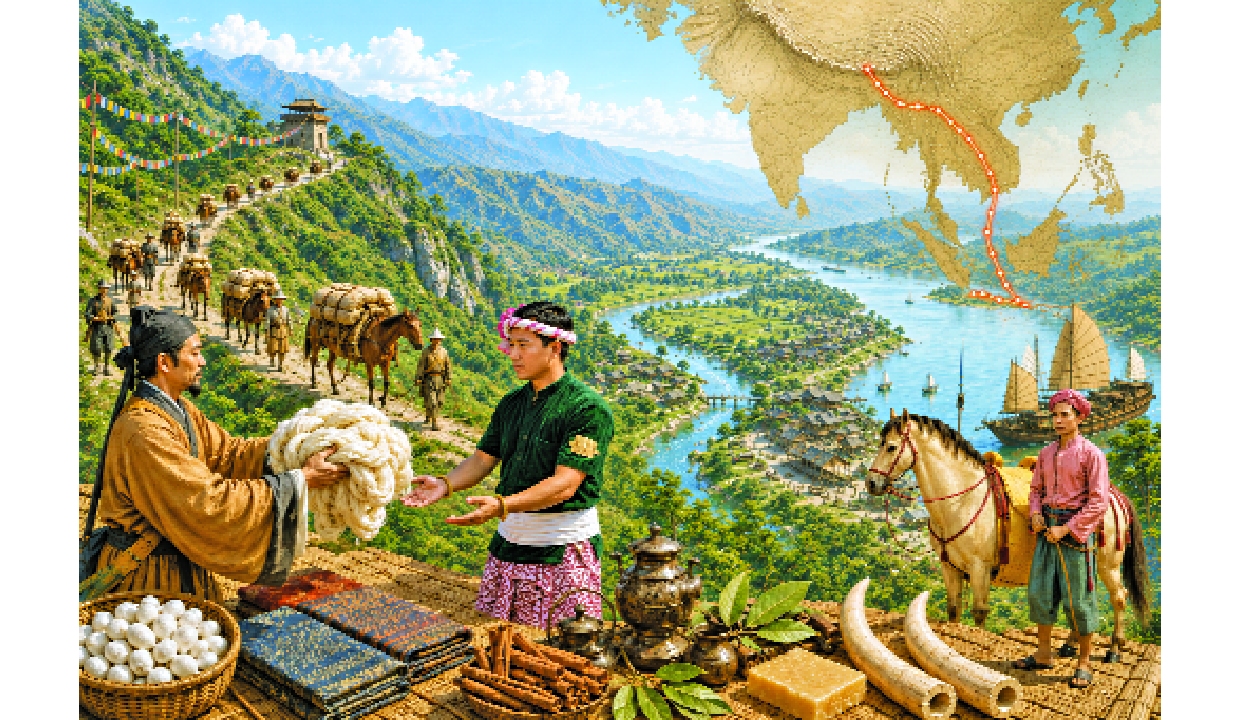
Centuries before modern trade agreements, Manipur served as India's overland gateway to Southeast Asia. As early as 200 BCE, a branch of the ancient Southwest Silk Road, known as the Shuyandu Dao, passed through Manipur's hills, followed the Chindwin River into Myanmar, and connected with markets across the Far East. The Imphal Valley functioned as a major commercial and production hub supporting regional and international trade. Chinese merchants transported raw silk, Sichuan textiles, and ironware, while local goods such as malabathrum, wax, ivory, and ponies were widely exchanged. Today, the border town of Moreh serves as India's key land port, linking trade across India, Myanmar, China, and Thailand, and continuing the historic Southwest Silk Road corridor. Now, under India's Act East Policy, the India-Myanmar-Thailand Trilateral Highway is restoring Manipur's ancient role as a gateway between South and Southeast Asia.