Marvels of India - Harappan Urban Commerce
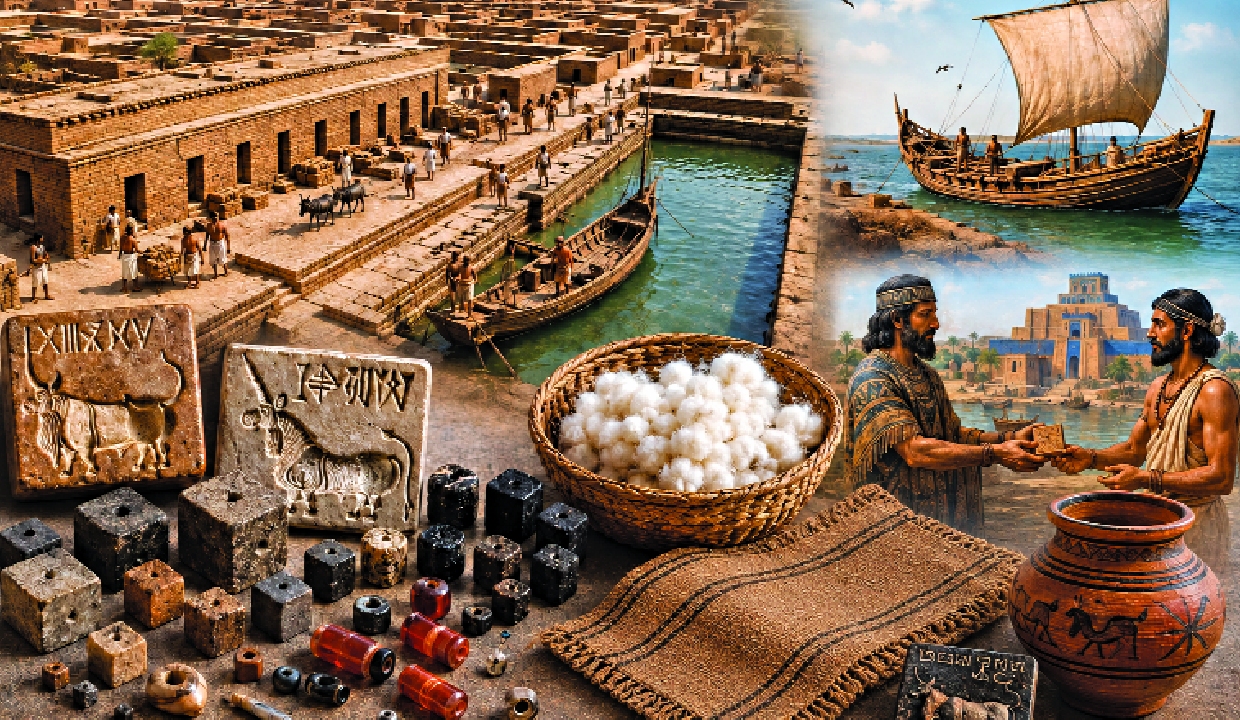
The Harappan urban commerce was the world's first planned economy.
Cities as Commercial Engines
The economy of the Sindhu-Saraswati civilisation thrived on agriculture, crafts and trade, built on the surplus produced by peasants. Well-planned urban centres like Mohenjo-daro and Harappa served as major trade hubs with advanced infrastructure, including warehouses and docks.
Standardised Weights: World's First Trade Regulation
Standardised weights and seals testify to an elaborate economic structure supporting trade, with direct Mesopotamian commerce peaking between 2400 and 2000 BCE. The Harappans developed the first accurate system of standardised weights and measures, some of which were as precise as 1.6 mm.
Maritime Trade and Lothal's Dockyard
Papers in the Journal of Archaeological Science and the Journal of Maritime Archaeology by Gupta, Prabhakar and Jain have established the existence of the dockyard at Lothal. The brick-lined basin, over 200 m. long, confirms Lothal's role in Harappan interregional and maritime trade.
International Commerce
Harappan seals and cubical weights found at Mesopotamian sites like Ur and Kish attest to the presence of Harappan merchants in Mesopotamia. Cotton, first cultivated in the Sindhu-Saraswati valley, was traded as raw fibre and woven textiles, thereby linking the Harappans to an expansive commercial circuit.