Deposit return systems move beyond pilots as states test new models
India’s efforts to improve packaging waste recovery are moving beyond policy, with Goa, Tamil Nadu, Uttarakhand and Himachal Pradesh testing different versions of Deposit Return Systems (DRS).
The principle is straightforward. Consumers pay a refundable deposit when buying a product and receive it back when they return the empty container. The four states are testing the model across very different settings, from a tourism-driven economy to retail outlets and high-footfall pilgrimage routes.
Goa is preparing a technology-enabled DRS for beverage containers, scheduled to launch on April 1, 2027. The system is being designed for use across the state, where tourism generates large volumes of beverage containers through hotels, restaurants and retail outlets.
The scheme has a dedicated institutional framework through the Goa DRS Authority, created under the Goa Non-Biodegradable Garbage (Control) (Amendment) Act 2026.
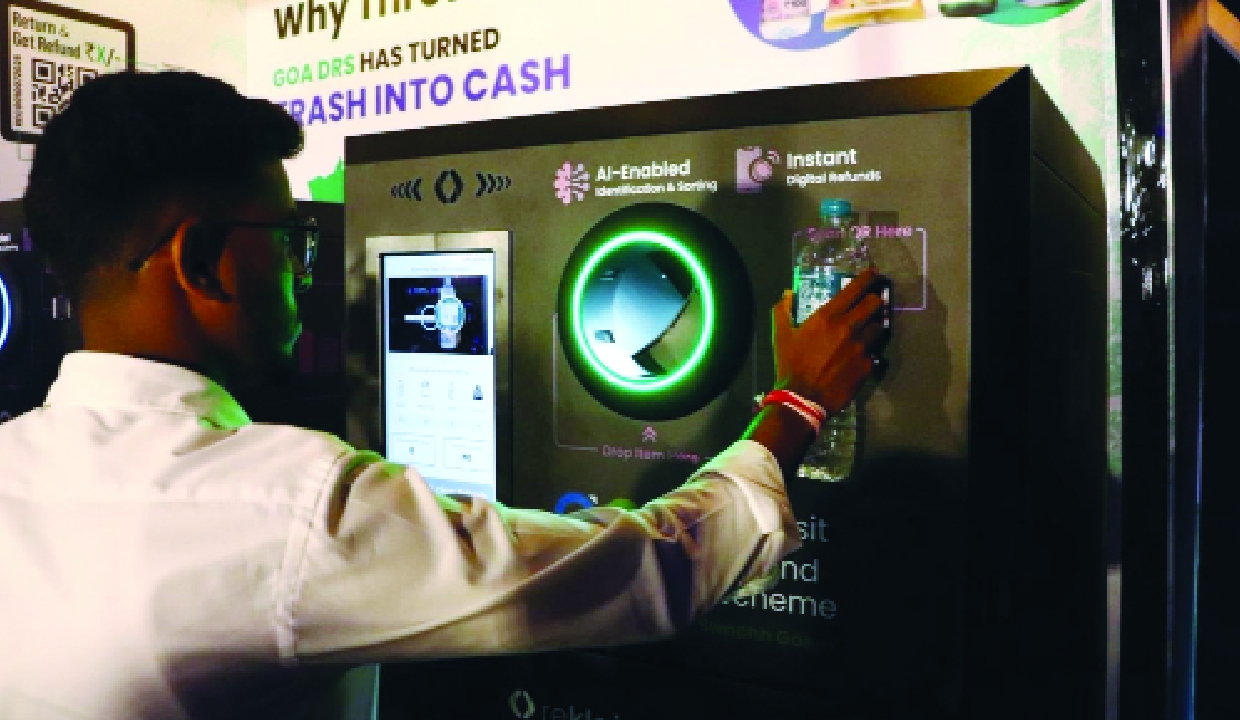
Tamil Nadu is testing DRS at the collection point. Following directions from the Madras High Court to address pollution from discarded liquor bottles, TASMAC has introduced an automated bottle collection unit at its Egmore outlet in Chennai.
Customers scan and deposit the bottle and then scan a QR code to receive the refund through a UPI-linked account. The unit can hold up to 3,000 bottles, sort them by size and alert collection agents through SMS and WhatsApp when it approaches capacity.
Similar units are expected to be introduced across the state in phases, depending on the outcome of the trial.
Uttarakhand has operated a Digital Deposit Refund System along the Char Dham Yatra route since 2022. It began in Kedarnath and was later expanded to Gangotri and Yamunotri.
Pilgrims pay a deposit on plastic bottles and multi-layer packaging, tagged with QR codes, and receive the money back through UPI after returning the material at collection points or reverse vending machines.
The three Dhams have recovered about 58,175 kg of plastic waste over four years, with Kedarnath accounting for nearly 85 per cent of the recovered material, according to the figures cited in the source material.
Himachal Pradesh’s cabinet approved a Deposit Refund Scheme in 2025 covering glass bottles, plastic containers, cans, liquid cartons and multi-layer packaging. It is to be introduced on a pilot basis before being scaled statewide.
A deposit return system has also been introduced along the Manimahesh Yatra route in Chamba district. The initiative is being run by the district administration with technology and NGO partners. The route was declared a plastic-controlled zone during the yatra, with the initiative reporting a 99 per cent recovery rate through digital traceability.
The four initiatives are testing DRS under very different conditions. Goa is preparing a statewide system, Tamil Nadu is experimenting with automated collection at a retail outlet, while Uttarakhand and Himachal Pradesh are using pilgrimage routes.
The common element is the refundable deposit, which gives consumers a direct financial incentive to return packaging.
For India’s Extended Producer Responsibility framework, these experiments focus on a practical challenge: getting packaging back after it has been sold and used.
The next test will be whether the systems can maintain recovery rates, preserve material quality and remain viable as they expand. The experience of these four States could help determine how widely deposit return systems are adopted across India’s circular economy.