Delhi Film Festival: A system in the making
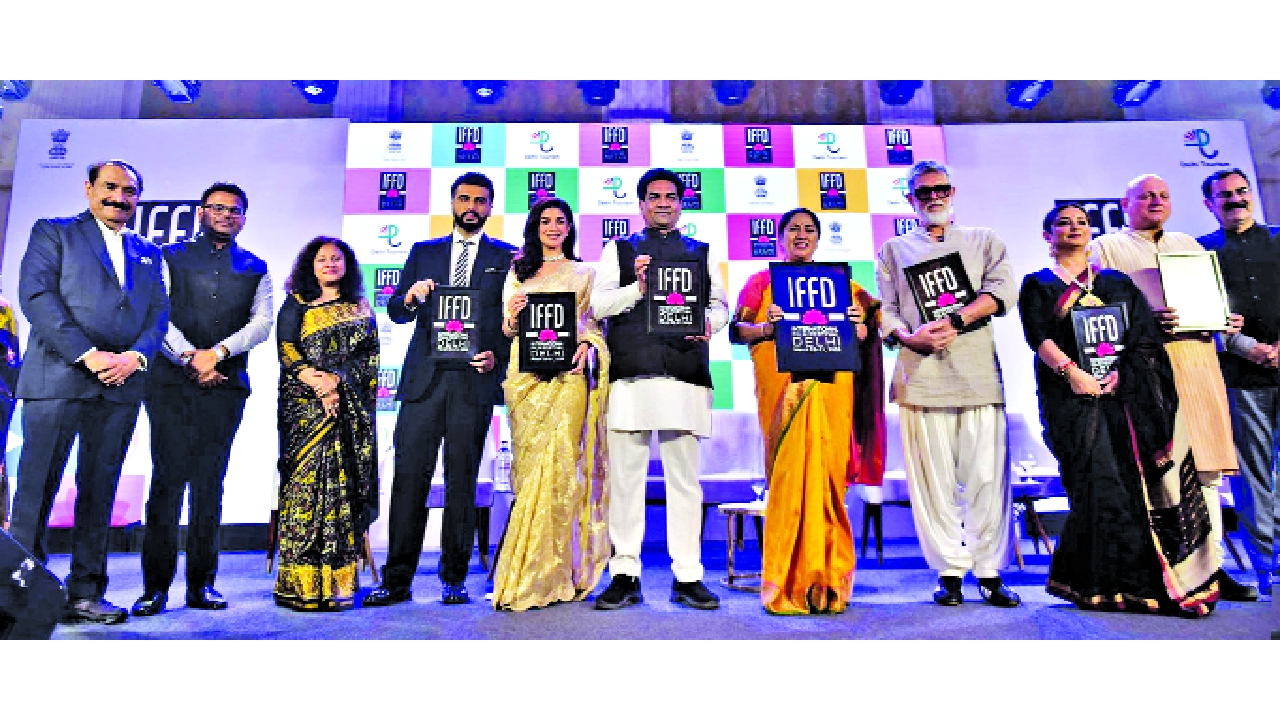
Delhi has always been a city of stories. Political, cultural, deeply personal, something is always unfolding here. This March, cinema found its way back into that mix in a big way. The Delhi International Film Festival 2026 didn’t just begin; it arrived with scale, energy, and a certain confidence that felt long overdue. For a city that once hosted the International Film Festival of India before it moved to Goa, this feels less like something new and more like something reclaimed.
But the real question isn’t about how it started. It’s about what it becomes. Because putting together a large festival is one thing. Building something that people take seriously year after year, that’s where the real work begins. Right now, the festival has attention. It has curiosity. But what it needs next is identity, structure, and consistency.
If Delhi is to build a serious cinematic identity, the festival must resist becoming a one-off showcase. The first step towards institutionalisation lies in temporal discipline. The festival must anchor itself firmly to a fixed calendar window, a defined geography, and a stable identity. Just as Cannes is inseparable from May and Venice from late August, Delhi must claim its own moment in the cultural calendar. A late-March positioning works strategically, it avoids overlap with global heavyweights while aligning with India’s academic and cultural cycles, but this must now be codified and protected. A festival that shifts in time and space each year risks losing not just recall, but relevance.
Once that foundation is in place, the next big shift has to be in how the festival programs itself. Right now, it feels like a wide, fairly inclusive mix, and that’s understandable for a first edition. But going forward, it has to feel more intentional. Less like a collection, more like a point of view. The difference between a good festival and a great one is not how many films it shows, but how clearly it knows what it wants to say through them.
That means building sections that feel thought-through. Bringing in more director-led storytelling, where the craft and perspective matter as much as the narrative itself. Giving real, central space to women-directed and women-centric cinema, not as a token category, but as a core part of the programming. And also leaning into films that engage with real, lived issues, social, political, environmental. Because the festivals that stay with you are the ones that reflect the moment you’re living in.
At the same time, Delhi has the opportunity to do something most festivals in India haven’t fully managed yet, to become a space where cinema is not just screened, but developed. There is so much raw talent in this city, students, theatre actors, independent creators, people experimenting with storytelling in ways that don’t always find platforms. The festival can step into that gap. Script labs, pitching forums, casting platforms, youth sections, these aren’t add-ons, they’re what can make the festival feel alive beyond the screenings.
What can really set Delhi apart, though, is how deeply it involves its own people. Right now, a lot of the festival still sits within designated venues. But cinema has the ability to move, to travel, to meet people where they are. Open-air screenings across neighbourhoods, community-led programming, student participation, and these things can turn the festival into something the city feels a part of, not just something happening around it. The more people feel included, the stronger the festival becomes. There’s also a strong case for going deeper within India itself.
If the festival wants to be global, it has to first be rooted. Regional cinema needs more than representation; it needs prominence. Voices from the North-East, independent filmmakers, and smaller industries, they should feel central, not peripheral. And alongside that, OTT can’t be ignored. It’s not a parallel world anymore; it’s part of the same ecosystem. Bringing it into the festival, giving it space, engaging with it seriously, that’s just being honest about where cinema is today.
At the same time, the global cinema showcase this year has been one of the festival’s strongest signals of intent. Bringing films from across continents, diverse storytelling styles, and different cinematic languages onto one platform has helped position Delhi as outward-looking and internationally aware. The current edition has seen a notable focus on regions such as Saudi Arabia and parts of Africa, alongside a wider mix of international entries from Europe, Asia, and beyond. But going forward, this needs to become sharper and more curated. Instead of broad representation, the festival could move towards focused country spotlights, director retrospectives, and region-specific showcases that offer deeper engagement rather than surface-level exposure. Building sustained partnerships with global festivals and film bodies can also ensure that Delhi is not just screening international cinema but becoming part of its circulation. The goal should be to move from access to influence.
If Delhi really wants to move into the league of major festivals, it also needs to think beyond screenings and build an industry layer. Spaces where filmmakers meet producers, where ideas find backing, where collaborations begin. That’s what gives a festival weight. And in doing so, it doesn’t have to compete with the International Film Festival of India. It can actually complement it, where IFFI remains the flagship, Delhi can become more agile, more industry-facing, and more experimental.
A lot of this, of course, depends on how the government chooses to take this forward. Not just as an annual event to organise, but as something to build over time. That means consistency in funding, long-term thinking, and a structure that exists beyond individual editions. Because festivals like this don’t become important overnight, they grow into that space.
Right now, the Delhi International Film Festival has done something important: it has made people look. It has been shown that Delhi can host something of this scale and do it well. But attention doesn’t last. What lasts is substance.
The next edition doesn’t need to be bigger. It just needs to be clearer. More confident about what it stands for and where it wants to go.
Because if Delhi gets this right, it won’t just be another stop on the festival circuit. It will become a place where cinema actually feels like it belongs.
The author is a Commentator and Writer on Cinema, Branding, Media Management and Geo-Strategic Communication. Inputs provided by Zoya Ahmad and Vaishnavie Srinivasan ; views are personal