Cuba faces US pressure for leadership change
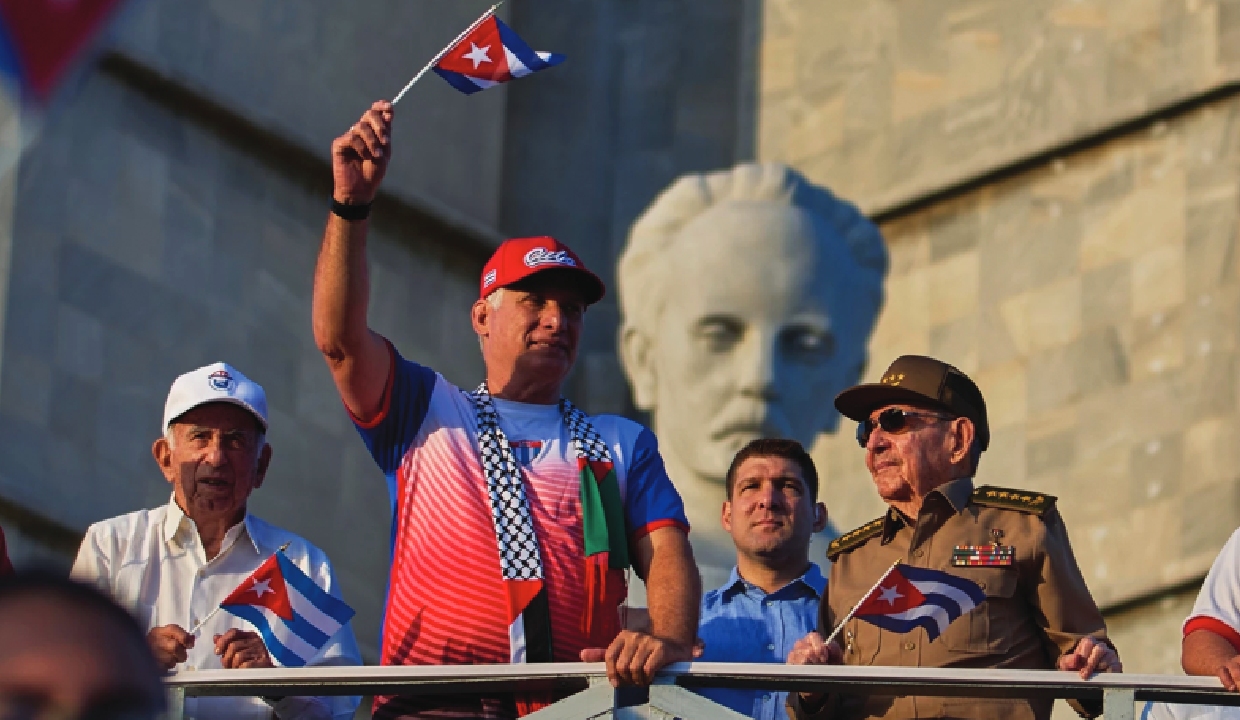
As US President Donald Trump pushes for change in Cuba’s leadership, speculation is mounting about who, if anyone, might replace Cuban President Miguel Diaz-Canel.
As Raul Castro’s handpicked, largely figurehead successor in 2018, Diaz-Canel has been the only leader without the last name Castro to govern since the 1959 revolution. He still has two years left in his term, but some experts and a growing number of Cubans doubt he’ll make it.
Two Castro cousins have come into focus as potential replacements, experts said. Oscar Perez-Oliva Fraga - Raul Castro’s 55-year-old great-nephew - has shot to power since emerging from obscurity several years ago. He became minister of Cuba’s influential Ministry of Foreign Trade and Investment in May 2024 and was appointed the island’s deputy prime minister in October.
By contrast, Raul Guillermo Rodriguez Castro — Raul Castro’s grandson — has never occupied a Government post, having served as his grandfather’s bodyguard and later as head of Cuba’s equivalent of the US Secret Service.
He has long been known as “Raulito” or “Little Raul” and is new to the spotlight cast on high-ranking Government officials. But he made news last month when he secretly met on the sidelines of a Caribbean Community summit in St Kitts with US Secretary of State Marco Rubio. At the time, Rubio refused to say who he was speaking to in the Cuban Government.
“The role Raulito is playing right now is the connection between Raul Castro and whoever is on the US side,” said Sebastian Arcos, interim director of the Cuban Research Institute at Florida International University. “He enjoys the absolute trust of Raul Castro.”
But, Arcos and other experts argue, even should someone with the Castro pedigree take the presidency, little is likely to change.
“Party leadership doesn’t mean anything in Cuba,” Arcos said. “The party is just a hollow facade. The real power resides in the military, under Raul Castro.”
The 94-year-old remains at the helm as general, appears at key events and is considered the most powerful person in Cuba, a country subject to more than six decades of absolute rule, first by revolutionary leader Fidel Castro, and then for the past decade, his younger brother Raul.
And that is unlikely to change. “The most significant thing that we have to consider for the last 30 years in Cuba is the absolute reluctance of this regime to implement serious structural economic reforms,” Arcos said. “Asking them for political reforms would be too much.”
One Castro cousin is described as a technocrat Perez-Oliva studied electrical engineering before becoming director general of an import company and then business director within Cuba’s Mariel Special Development Zone.
That’s all the Cuban Government has officially shared on Perez-Oliva.