US will need years to replenish weapons used in Iran war, analysis finds

US military contractors need at least three years to replenish stockpiles of three key weapons systems used heavily in the Iran war, according to an analysis released on Wednesday, adding to concerns that American forces would have limited firepower in any future conflict with China.
The weapons systems are Tomahawk cruise missiles, which are used to strike targets deep inside enemy territory, and Patriot and THAAD interceptors that defend against incoming missiles and drones.
“The United States has enough munitions for any plausible scenario in the Iran war, but the depleted inventories have created a window of vulnerability for a potential Western Pacific conflict,” the Centre for Strategic and International Studies said in its new report. “The time needed to rebuild those inventories has thus become a major concern.”
China has a stated goal of ensuring its military is capable of taking Taiwan by force if necessary by 2027, which experts see as more aspirational than a hard deadline. But Chinese President Xi Jinping warned this month that if Washington mishandles its relations with the self-governing island, the US and China could end up clashing or even in open conflict.
The analysis by the Washington think tank factors in the Republican Trump administration’s historic defence budget proposal of $1.5 trillion for 2027, which significantly accelerates spending on high-end munitions that began during the Democratic Biden administration.
While there’s bipartisan agreement in Congress to boost inventories, “the problem today isn’t money; it’s time,” the report said.
“It takes time to expand production capacity and to build these complex systems,” the report said, adding that the window of vulnerability will last “for several years until inventories return to their previous levels and another several years before they get to the levels that war planners desire”. Although munitions inventories are classified, CSIS said sufficient public information exists in Pentagon budget materials to estimate production timelines.
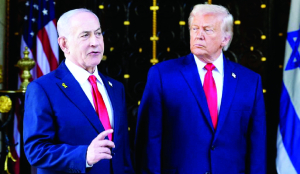
President Donald Trump and Defence Secretary Pete Hegseth have insisted the US is capable of fighting any war. They have pushed defence contractors to speed up munitions production, with Hegseth telling lawmakers last month that military spending under Trump will help manufacturers double or even triple their capacities. Chief Pentagon spokesman Sean Parnell said in a statement that the military “has everything it needs to execute at the time and place of the President’s choosing”. “We have executed multiple successful operations across combatant commands while ensuring the US military possesses a deep arsenal of capabilities to protect our people and our interests,” Parnell said.
Some military experts have pushed back. Pentagon officials “knew the reality of our military stockpiles and hopefully told someone, Hey, if we go to this fight, even in the most conservative estimates, we are drawing down our stockpiles to a critical level,’” said Virginia Burger, a senior defence policy analyst at the Project On Government Oversight watchdog group and a former Marine officer.
Concerns about diminished stockpiles were a theme at recent congressional hearings. For Democrats, the munitions supply is a damning metric against the Iran war, which Trump launched without lawmakers’ approval.