Cong attacks Centre over rising prices, accuses Modi govt of misleading people

The Congress on Tuesday accused the Centre of failing to address rising prices and alleged that the Modi government was using misleading statistics to hide the impact of inflation on people.
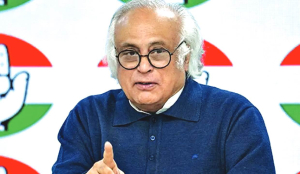
Congress general secretary in-charge of communications Jairam Ramesh said the rise in the cost of construction materials and electrical goods was putting additional pressure on poor and middle-class households.
"The Modi government is delivering a fresh, high-voltage shock of rising prices to the country every week," Ramesh said in a post on X.
He alleged that inflation was no longer limited to household kitchen expenses and was affecting people planning to build or renovate homes.
Ramesh cited a media report to claim that the price of copper wire had increased from around Rs 850 to Rs 1,700 per kg, while aluminium prices had risen from Rs 350 to Rs 650 per kg.
According to the figures cited by him, the cost of electrical wiring for a 1,000-square-foot house had increased from around Rs 50,000 to nearly Rs 1 lakh.
Ramesh also claimed that solar panels had become 10-15 per cent more expensive, while prices of fans and false-ceiling materials had also increased.
He said household electrical appliances, including electric irons, had witnessed price increases of up to 20 per cent, while LED and halogen lights had also become more expensive.
Ramesh alleged that costs had risen across several components involved in home construction, including switches, sockets, cables, tiles, wiring and labour.
"Inflation is giving a shock to the public's pocket hard from all directions, yet the arrogant Modi government remains intent on masking this reality and misleading the people through statistical jugglery," he said.
Ramesh shared a media report which attributed the rise in prices in the electrical and electronics sector to higher raw material costs, particularly copper and aluminium.
His comments came after Prime Minister Narendra Modi highlighted India's 7.8 per cent GDP growth in the April-June quarter and said the economy had performed strongly despite wars, instability and disruptions to global supply chains.
India's economy grew 7.8 per cent in the first quarter of the 2026-27 financial year, exceeding market expectations despite concerns over the impact of the conflict in West Asia on energy markets and global trade.
However, the growth rate was lower than the 8.6 per cent recorded in the previous quarter.
The Congress had on Monday questioned the quality of the economic growth, saying the 7.8 per cent figure did not reflect weak investment sentiment and describing it as a "Greatly Distorted Picture" of the economy.
Hitting back at Modi, Ramesh had said this is a case of "premature celebration" by the prime minister, as consumer confidence is "sluggish", household saving rates have fallen and debt has reached a "record high". (with inputs from PTI)