Company can face criminal prosecution even if no individual named as accused: SC
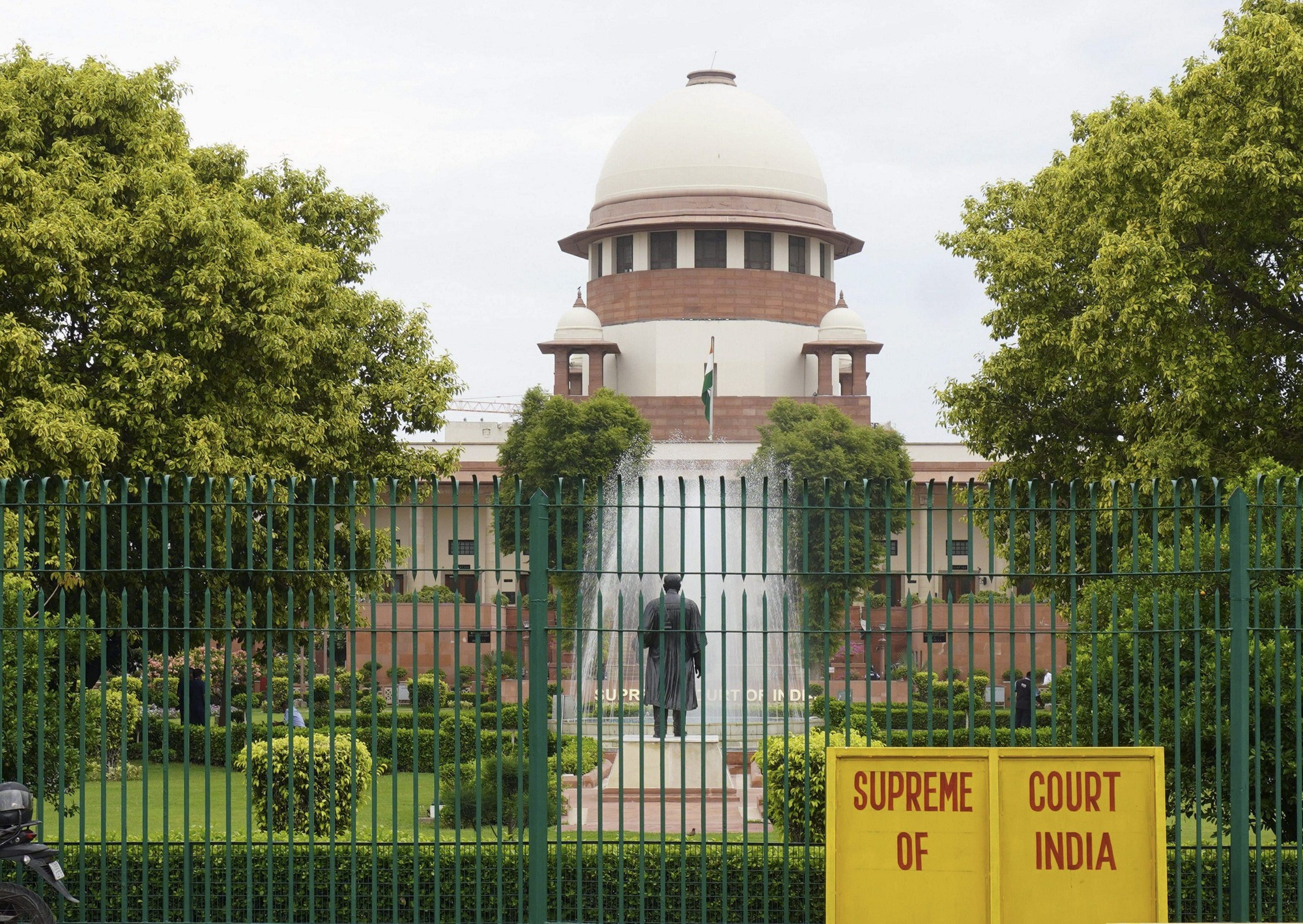
New Delhi, Sep 7 (PTI) In a significant verdict on corporate criminal liability, the Supreme Court held on Monday that criminal proceedings against a company cannot be quashed solely because the probe agency has neither identified nor made a particular director, employee or some other person, through whom the alleged offence was committed, an accused in the case.
The verdict came on an appeal of Sanofi India Limited, a public limited company engaged in the primary business of manufacturing pharmaceutical products, against a Karnataka High Court order refusing to quash proceedings against it.
A bench of Justices J B Pardiwala and Manoj Misra dismissed the appeal filed by Sanofi India against the continuation of the criminal proceedings arising out of a CBI case concerning the alleged procurement of medicines for the Bhabha Atomic Research Centre (BARC).
The chargesheet had alleged that a BARC official had conspired with Sanofi India in the procurement of medicines at inflated rates and that illegal gratification was paid in return for undue favours.
However, no employee or official of Sanofi India was made an accused along with the company.
The company took the plea that no prosecution against it can be sustained as no mens rea (criminal intent) can be fastened on it and in the event of conviction, it cannot be jailed as punishment.
Justice Pardiwala, writing a 98-page judgment, examined in detail the principles governing corporate criminal liability and how acts and the mental state, or mens rea, of natural persons can be attributed to a corporation.
The bench was dealing with the question that whether the high court ought to have quashed the criminal proceedings instituted against the company on the ground that no natural person was identified and arraigned alongside it as an accused.
The verdict held that while a corporation can possess mens rea only through attribution from natural persons, the non-identification of a particular individual at the stage of considering a petition for quashing proceedings is not, by itself, fatal to the prosecution.
"The position under Indian law is, thus, clear that a corporation can be prosecuted for an offence notwithstanding that it carries a mandatory sentence of imprisonment, or requires proof of mens rea. It appears that a corporation cannot be prosecuted only where the offence is punishable with imprisonment alone, or where the offence, by its nature, requires personal malicious intent, such that it is incapable of commission by a corporation at all," the top court said.
"What the chargesheet must disclose, on its face, is that the corporation itself has committed the offence," it said, holding that a company's role could be disclosed through allegations concerning its conduct, decisions and dealings, even without naming the particular individual who carried those out.
"While the academic debate goes on, it is beyond question that, both in India and elsewhere, corporations can and are being subjected to criminal liability.... This has been primarily driven by the pragmatic recognition that corporations, as institutions commanding vast financial and sociopolitical power, possess the ability to cause serious harm...," the court said.
At first blush, the question framed may appear to be a simple one and on closer examination, it proves to be a good deal more complex, it added.
"Corporate criminal liability is a notoriously-vexed issue and the difficulty traces back to two fundamental notions we simultaneously hold about corporations. First, a corporation is an artificial person with an identity distinct from that of its members. Second, a corporation is merely an abstraction, that is, an impalpable thing or, as is famously said, a corporation has 'no soul to damn and no body to kick'," it said.
The court said mens rea could also, at the threshold stage, be inferred from the surrounding facts and circumstances and need not necessarily be tied to a specifically-identified individual.
The question of attribution, involving a detailed examination of facts, would ultimately have to be considered during trial, it added.
On the issue of making an individual an accused, the verdict rejected the argument that the prosecution of a corporation necessarily requires the simultaneous making of a natural person an accused.
It said in cases involving a direct criminal liability of a corporation, not making a natural person an accused alone would not justify quashing proceedings.
At the same time, the bench made it clear that companies do not enjoy any special immunity from the ordinary test governing the quashing of criminal proceedings.
The verdict set out a broad framework for determining when acts and the mental state of individuals can be attributed to a corporation, noting that corporate criminal liability involving offences requiring mens rea raises complex questions that may ultimately require legislative intervention and a more systematic examination of the law.
The verdict established a new, hierarchical three-stage framework to determine how a human's guilty mind is "attributed" to a corporation and said courts must first look at the company's constitutional documents (articles of association) to see who was vested with the power to act.
It said courts must examine whether the power was delegated to a person with "sufficient discretion and independence", regardless of his formal title.
If the first two fail, courts may fashion a "special rule of attribution" based on the specific purpose and policy of the statute in question.