City witnesses hottest February day in 3 years
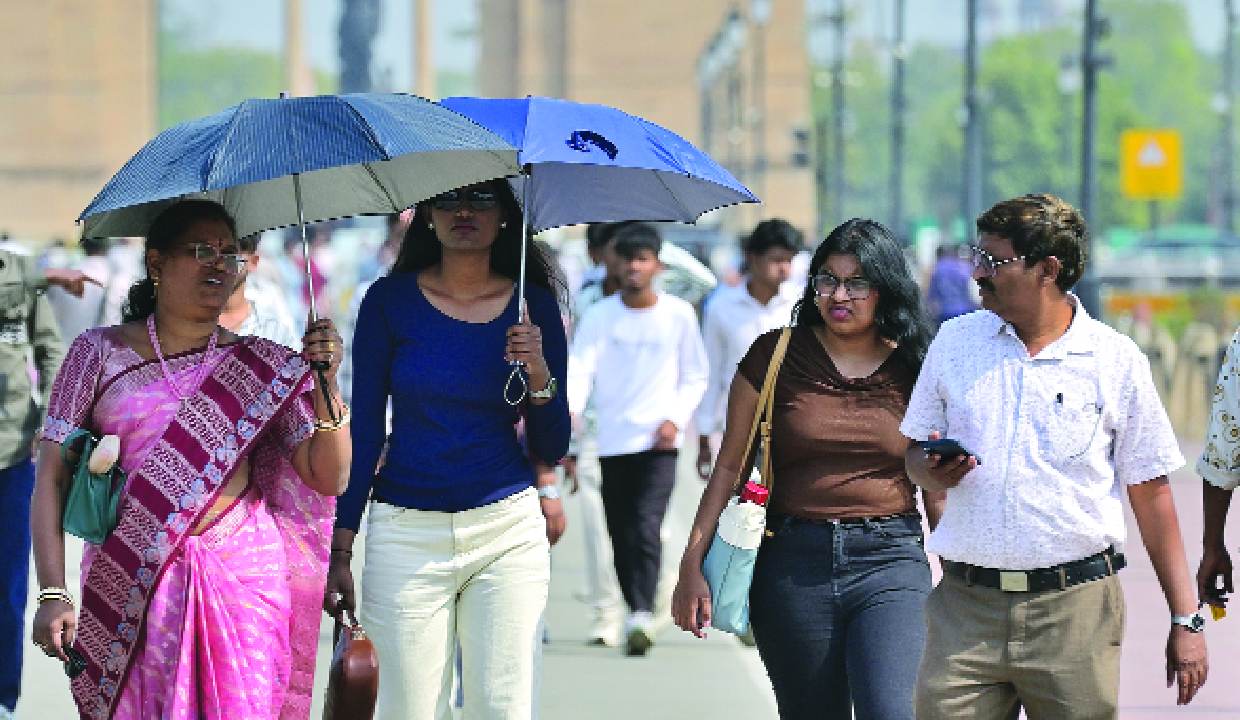
Delhi witnessed its hottest February day in three years on Saturday, with the maximum temperature settling at 32.5 degrees Celsius, marking an unusually warm end to the month. An analysis of monthly data shows that Delhi has recorded its hottest February in three years, with the average maximum temperature settling at 27.1 degrees Celsius. The last time the maximum temperature was higher than this was on February 20, 2023, when it had reached 33.6 degrees Celsius.
An identical pattern was observed in February 2025, when the average maximum temperature stood at 26.7°C and rainfall was limited to 1.4mm. In contrast, February 2024 saw 32.5mm of rainfall, keeping the average maximum lower at 24.4°C and helping maintain relatively better air quality. In 2023, Delhi recorded zero rainfall and an average maximum of 28.2°C - the highest in 15 years.
Of the 27 days so far this month, maximum temperatures have remained above normal on 25 days, dipping below normal only on February 2 and 18 due to brief drizzle and cloud cover. As March is set to begin, the weather forecast for Sunday indicates that the minimum temperature is likely to settle at 15 degrees Celsius and the maximum at 32 degrees Celsius. The IMD has also forecast strong surface winds during the daytime.
According to the Central Pollution Control Board (CPCB) data, this month also holds the record of being the most polluted February in three years.
According to the India Meteorological Department (IMD), station-wise data showed that maximum temperatures remained high across the city. The highest maximum temperature of 32.9 degrees Celsius, which was 6.1 degrees above normal, was recorded at Ridge, the IMD said.
Safdarjung, the city’s base station, recorded the maximum temperature of 32.5 degrees Celsius, 6.4 degrees above normal; Lodhi Road recorded 32.2 degrees Celsius, 6.2 degrees above normal; while Ayanagar registered 32.4 degrees Celsius, 5.8 degrees above normal. Palam recorded a maximum of 30.8 degrees Celsius, 4.9 degrees above normal.
Delhi also witnessed unusually high minimum temperatures. The minimum temperature recorded by Safdarjung stood at 16.4 degrees Celsius, 3.9 degrees above normal.
Lodhi Road recorded a minimum of 15.7 degrees Celsius, 4.7 degrees above normal, while Palam registered 16.0 degrees Celsius, 3.5 degrees above normal.
Ridge recorded 16.1 degrees Celsius and Ayanagar 15.8 degrees Celsius, both above the seasonal average.
On the air quality front, Delhi’s AQI deteriorated sharply. The 24-hour average AQI stood at 248, placing the city in the “poor” category, compared to 200 on the previous day when it was in the “moderate” category.
The air quality was recorded in the “poor” category at 9 am on Saturday as well, with an AQI reading of 238, CPCB data showed.