CAQM flags widespread failures in GRAP implementation
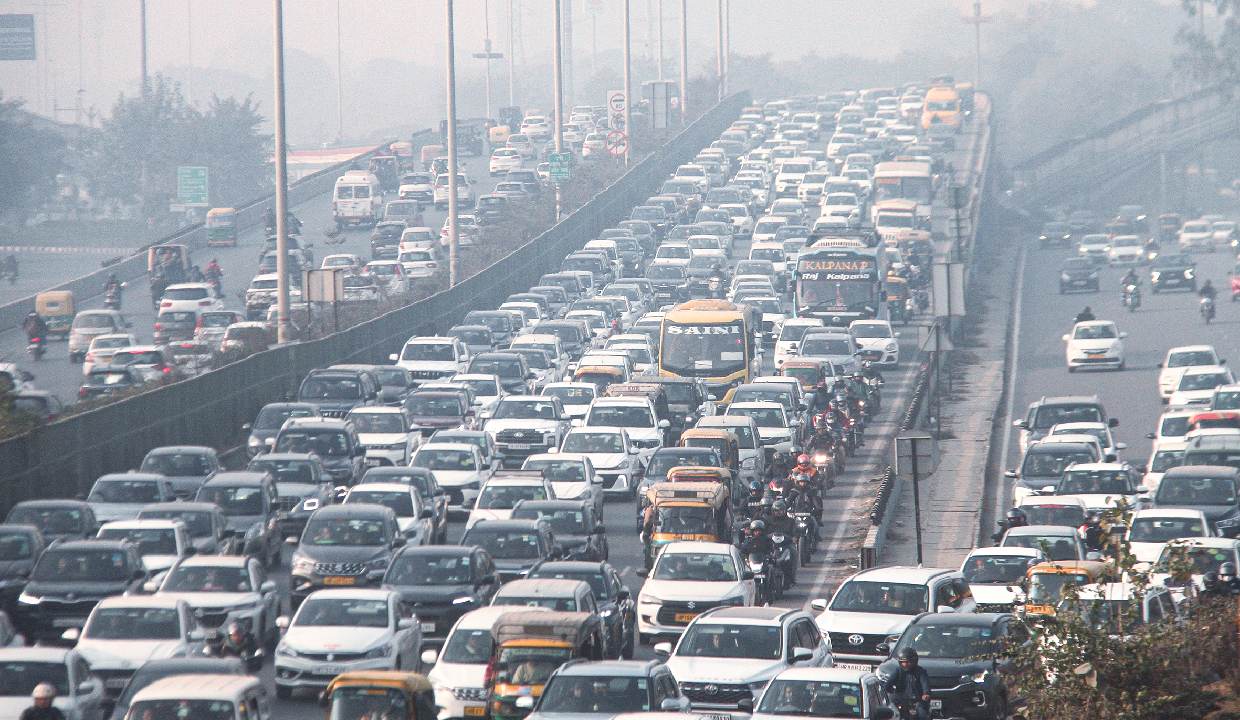
The Commission for Air Quality Management (CAQM) has flagged serious and widespread failures in the implementation of the Graded Response Action Plan (GRAP) across Delhi-NCR.
The commission noted shortfalls ranging from 7 per cent to as high as 99.6 per cent during periods of ‘Severe’ and ‘Severe+’ air quality. A performance review of the Delhi Pollution Control Committee (DPCC) and State Pollution Control Boards (SPCBs) shows that key pollution-control actions were either poorly executed or not implemented at all during critical Stage-III and Stage-IV GRAP periods.
The review, based on daily monitoring by CAQM’s GRAP Monitoring Control Room, also found alarmingly high pendency of public complaints, with 47 per cent to 100 per cent of grievances remaining unresolved. The findings raised concerns over weak enforcement and ineffective grievance redressal systems at a time when pollution levels demanded the strictest action.
According to CAQM, inspections of large construction and demolition (C&D) sites, one of the most critical GRAP measures, revealed glaring gaps. During Stage-III GRAP, Delhi recorded an 87 per cent shortfall in inspections of C&D sites measuring 500 square metres and above. Haryana (NCR) performed worse, with a 99.6 per cent gap, followed by Rajasthan (NCR) at 84 per cent and Uttar Pradesh (NCR) at 96 per cent. Similar failures continued during Stage IV, with inspection gaps remaining at 87 per cent in Delhi, 100 per cent in Haryana (NCR), 79 per cent in Rajasthan (NCR) and 97 per cent in Uttar Pradesh (NCR).
Mechanical road sweeping, another mandatory GRAP measure, also fell far short of prescribed levels. During Stage III, the length of roads mechanically swept showed gaps of 69 per cent in Delhi and Haryana (NCR) and 31 per cent in Rajasthan (NCR), while Uttar Pradesh (NCR) marginally exceeded the target by 4 per cent. In Stage IV, the gap widened further, with a 70 per cent shortfall in Delhi and 68 per cent in Haryana (NCR). Rajasthan (NCR) showed only a marginal gap of 7 per cent, while Uttar Pradesh again exceeded targets.
The deployment of Mechanical Road Sweeping Machines (MRSMs) mirrored these inconsistencies. Delhi recorded an average shortfall of 59-60 per cent, and Haryana (NCR) between 13 per cent and 40 per cent, across Stages III and IV. In contrast, Rajasthan (NCR) and Uttar Pradesh (NCR) exceeded deployment norms by large margins, raising questions about uneven enforcement across the region.
Public complaint handling emerged as another major weak spot. During Stage III, Delhi resolved only 53 per cent of 115 complaints, while 47 per cent remained pending. Haryana (NCR) resolved 43 per cent, Uttar Pradesh (NCR) only 29 per cent, and Rajasthan (NCR) failed to resolve its lone complaint. The situation worsened during Stage IV, when Delhi resolved just 32 per cent of complaints, Haryana 29 per cent, and Uttar Pradesh a mere 19 per cent, leaving the majority unresolved during peak pollution days.
CAQM has taken up the issue with the Chief Secretaries of Delhi, Haryana, Uttar Pradesh and Rajasthan, stressing that unresolved complaints directly undermine public trust and pollution-control efforts. The Commission has now directed DPCC and SPCBs to identify officers responsible for non-compliance and initiate disciplinary proceedings.
The Commission warned that repeated failures during severe pollution phases seriously compromise collective efforts to improve air quality.
CAQM reiterated that strict and timely implementation of GRAP is mandatory and legally binding and warned that continued lapses would invite stronger enforcement action.