Capital becomes first State to partner with Bharat Taxi
Delhi has become the first state in the country to formally partner with Bharat Taxi’s co-operative mobility platform.
The initiative aims to provide safe, reliable and transparent taxi services to tourists and residents alike, while strengthening the income, dignity and welfare of taxi drivers. The partnership marks an important step towards simultaneously advancing ease of living, ease of travel and ease of earning in the National Capital.
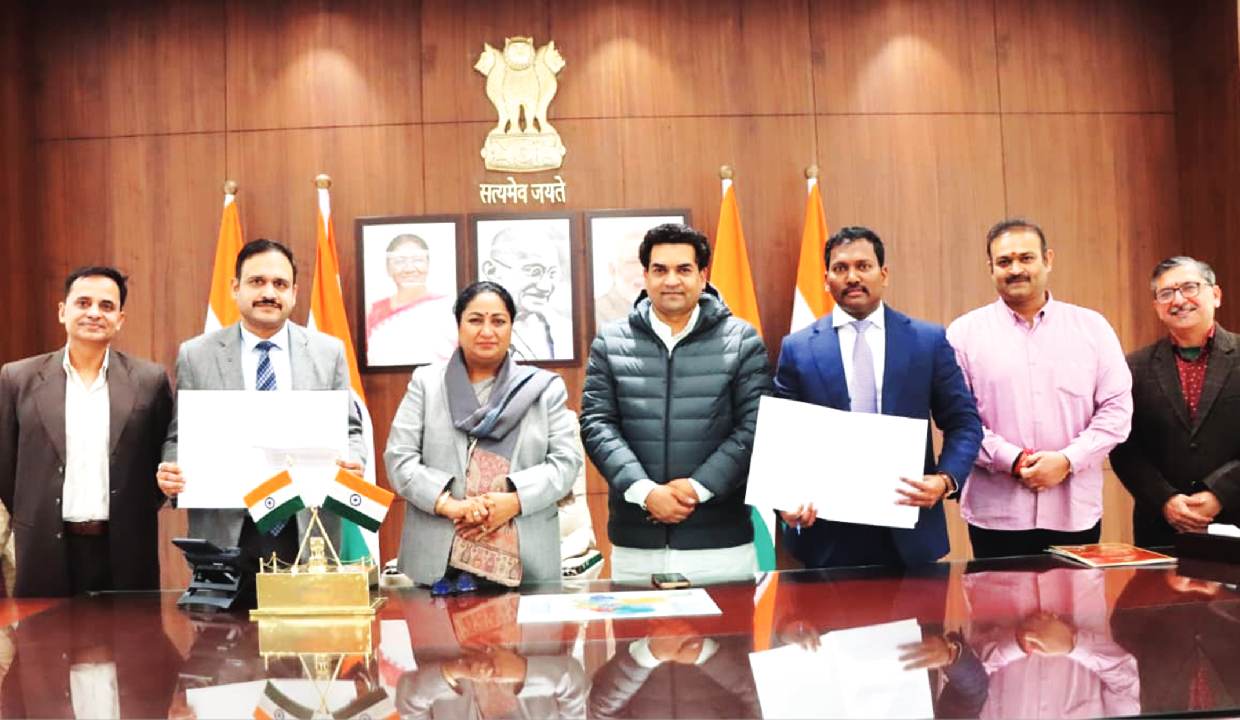
The Delhi Tourism and Transportation Development Corporation (DTTDC) on Friday signed a Memorandum of Understanding (MoU) with Sahkar Taxi Cooperative Limited (STCL), the cooperative arm of Bharat Taxi, to roll out technology-enabled taxi services across the National Capital. The MoU was signed in the presence of Chief Minister Rekha Gupta and Minister (Tourism) and Chairman, DTTDC Kapil Mishra.
Senior officials present included Managing Director, DTTDC Suneel Anchipaka, IAS, and General Manager, DTTDC D. Karthikeyan. STCL was represented by Vice Chairman Rohit Gupta, IRTS.
The partnership aligns the Delhi Government’s tourism and public service mandate with Bharat Taxi’s cooperative, driver-owned mobility model. Under the MoU, DTTDC will act as the tourism and branding partner, with a focus on upskilling drivers as the first point of contact for tourists. Drivers will be trained in soft skills and sensitized to Delhi’s culture, history, and heritage, positioning them as long-term brand ambassadors of Delhi Tourism.
Bharat Taxi, through STCL, will provide mobility services using its digital platform and cooperative driver network.
Officials stated that the initiative aims to provide structured and dependable taxi services for daily commuters and tourists, while addressing long-standing concerns related to driver earnings, service quality, and transparency.
As part of the agreement, curated taxi-based travel products will be introduced for tourists, including two-hour, four-hour, and full-day sightseeing circuits covering major attractions in and around Delhi. The partnership will also offer point-to-point city travel services to improve last-mile connectivity and commuter convenience.
Technology-enabled booking, transparent pricing, and standardised service protocols are expected to significantly enhance the travel experience for residents and visitors.
A key focus of the initiative is improving the livelihoods of taxi drivers. Under the cooperative ownership model, drivers retain a significantly higher share of their earnings compared to conventional aggregator platforms. Drivers are also stakeholders in the cooperative, ensuring greater participation in decision-making and access to organised support systems. Officials said the model promotes dignity of work, income stability, and long-term financial security for drivers.
For the Delhi Government, the partnership supports broader objectives of strengthening tourism infrastructure, improving urban mobility, and promoting inclusive economic growth. By aligning with a cooperative platform, the government seeks to encourage ethical and sustainable transport solutions while enhancing Delhi’s image as a tourist-friendly city.
The initiative is also expected to reduce dependence on unorganized taxi services and bring greater transparency and accountability to the sector.
With this MoU, Delhi, under the leadership of Chief Minister Rekha Gupta, has set a precedent for other states and Union Territories to explore cooperative-based mobility solutions that balance technology, public interest, and driver welfare.