Can education build minds that technology cannot replace?

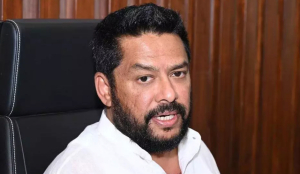
“Technology can transform industries, but it cannot replace sound judgement,” says Swami Mukundananda, Founder and Chairman of Jagadguru Kripalu University, in a conversation with The Pioneer, highlighting why education must build resilient minds alongside technological skills
As education becomes increasingly driven by AI, technology and employability, what do you believe is missing from the way we prepare young people for the future of work? How can universities ensure that students develop not only technical competence but also clarity of thought, emotional resilience, ethical judgement and the ability to make meaningful decisions?
While our education system has built technical expertise, it has not invested equally in developing emotionally resilient and ethically grounded individuals. Technology can transform industries, but it cannot replace sound judgement or the ability to manage one’s mind. Universities must nurture resilience, adaptability, creativity and lifelong learning alongside technical skills. Students should also develop ethical decision-making frameworks to navigate situations where technology alone cannot provide the right answers.
You often speak about mind management as an essential life skill. Should mind management and emotional wellbeing become a formal part of higher education? If so, what could universities realistically do to help students manage stress, anxiety, distractions and the pressure to constantly compete and succeed?
Mind management is a core life skill because technical knowledge is effective only when the mind is balanced. Universities should integrate structured programmes focused on emotional intelligence, self-awareness, mindfulness, mentorship and reflection. Students must learn to manage distractions, peer pressure and setbacks while measuring progress through personal growth rather than comparison with others. Such an approach prepares them to thrive both personally and professionally.
Jagadguru Kripalu University seeks to bring together contemporary, industry-relevant education and India’s knowledge traditions. How do you envision this integration working in the classroom without making traditional knowledge merely an additional subject, but instead making it relevant to how students think, learn and solve modern problems?
Indian knowledge traditions should enrich the way students think rather than exist as standalone subjects. Concepts from Yoga, the Bhagavad Gita and Ayurveda can offer valuable perspectives on leadership, ethics, wellbeing and decision-making while complementing modern education. Combined with interdisciplinary learning, experiential projects and industry collaboration, this approach enables students to solve real-world challenges with technical expertise, contextual understanding and social responsibility.
Teachers today are dealing with a generation that has grown up with smartphones, social media, AI tools and unprecedented access to information. What should fundamentally change in the role of a teacher from being a provider of knowledge to becoming a mentor, guide and facilitator of deeper thinking?
AI can provide information instantly, but it cannot develop wisdom or values. The teacher’s role must therefore evolve from delivering knowledge to nurturing discernment, critical thinking and ethical responsibility. By encouraging students to question, evaluate and apply information thoughtfully, teachers help them make conscious choices and use technology in ways that benefit society. Their greatest contribution is shaping character, not just careers.
There is growing concern that higher education is becoming too focused on degrees, placements and starting salaries. What, in your view, should universities do to help students define success beyond a job title or salary package and develop a stronger sense of purpose and social responsibility?
Employability is important, but success should not be measured solely by salary or designation. Universities should encourage self-discovery, community engagement and purposeful careers by helping students align their strengths with meaningful contributions. Career guidance must also focus on values, impact and service, enabling students to understand that fulfilment comes from creating value for society, not merely accumulating achievements.
You have addressed students and professionals at leading institutions and organisations across India and abroad. What differences, if any, have you observed in the concerns and aspirations of young people today? And what is one quality you believe every student should consciously develop to remain relevant and grounded in a rapidly changing world?
Across geographies, young people seek meaningful work, continuous growth and a fulfilling life. In a rapidly changing world, the most important quality is learning agility - the willingness to continuously learn, unlearn and relearn. Universities can cultivate this through interdisciplinary learning, industry exposure, experiential education and regular reflection, ensuring graduates remain adaptable and future-ready.
Looking ahead to India’s ambition of becoming a developed nation by 2047, what kind of educational transformation do you believe is most urgent? What should universities, educators and policymakers prioritise today if India is to create not just a skilled workforce, but a generation capable of responsible leadership and nation-building?
To realise the vision of Viksit Bharat 2047, education must shift from degree acquisition to capability building. Universities should emphasise problem-solving, creativity, entrepreneurship, collaboration and experiential learning through stronger industry partnerships. At the same time, technological progress must remain rooted in ethics, responsibility and India’s civilisational values. By combining innovation with character, education can nurture leaders who contribute not only to economic growth but also to a more inclusive, sustainable and purpose-driven nation.
Technical skill falls short on its own today. As AI changes how we work, universities must teach emotional strength and ethics. Combining timeless Indian wisdom with modern tools creates clear-headed leaders ready for real-world pressure