Blasé Capital NoC TO NSE
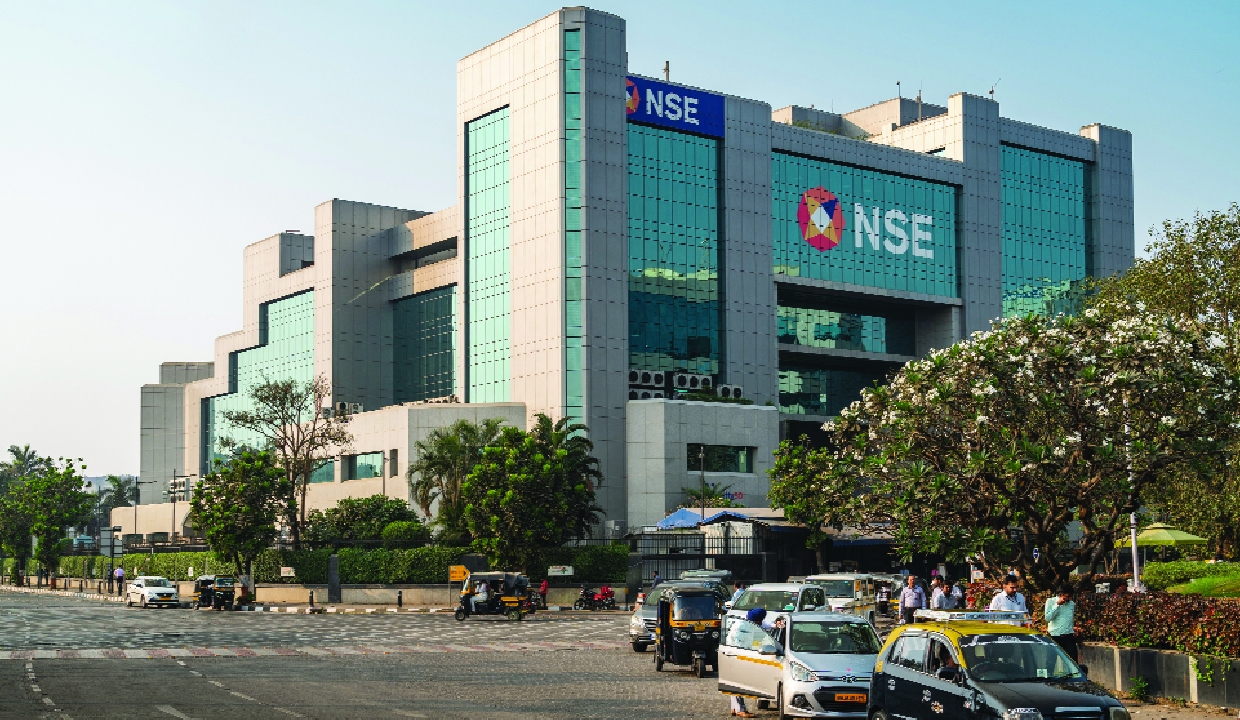
If things go forward in the same positive vein, the National Stock Exchange (NSE) may get rid of a sharp Damocles’ Sword that has menacingly hung over its head for a decade. According to media reports, the stock market regulator, Sebi, took the first crucial step in the resolution of the cases related to the fraudulent co-location and dark fibre cases. Its high-powered committee recommended a final settlement, which will be considered by a panel of two whole-time members. Last year, NSE offered almost Rs 1,400 crore to settle the matter. Sebi’s committee has come up with a higher figure, nearly Rs 1,900 crore, which includes Rs 1,200 crore “towards disgorgement,” Rs 380 crore in interest, and the remaining “under other settlement terms.” Base penalty, severity of the crimes, settlement timing, past violations, and other factors determine the final figure. NSE, which wants a speedy resolution, is likely to agree to the higher figure. The cases were among the major impediments that stalled its proposed IPO (Initial Public Offering) for years. Sebi’s chairman hinted several times in the recent past that the IPO will hit the market this year.
According to a media report, “The NSE faced allegations that some brokers got preferential access through the co-location facility at the stock exchange, early login and dark fibre, which can allow a trader a split-second faster access to the data feed of an exchange. Even a split-second faster access is considered to result in huge gains for a trader.” A whistle-blower revealed that a few brokers logged into the NSE systems “with better hardware specifications,” and used algorithmic trading to take advantage of the unfair, faster access. This allowed them to read the market situation faster, figure out buys and sells in queue, for example, and make the trades based on what was about to happen. In the US, traders try to locate closer to the tech headquarters of exchanges, lay down fibres at their own costs to find the shortest route to them, and use the latest equipment to achieve the same results. They get the information a second or maybe less than a second faster, which allows their computers to make faster trades, and even predict what will happen 5-10 seconds later. Many hedge funds were able to beat the big traders for a while till everyone caught on to the ‘trade’ secret.
Obviously, it is not over for the NSE. The so-called settlement figure of the committee will be sent to the two-member panel, which is the final authority on such issues. It has the “final authority to accept or reject the settlement application.” Once the settlement is approved, the two parties will agree to settle out of court, with the NSE neither admitting nor denying its guilt in the cases. The two parties will withdraw the cases from the Supreme Court, and pave the way for the final payment, and a successful settlement and resolution. According to an agency report, SEBI is likely to issue a demand letter to the NSE to deposit the money, before an order to finalise the settlement. Of course, it will open the gateway for the proposed IPO, which is eagerly awaited by a section of investors for years. As of yesterday, the share price of NSE ruled at just below Rs 2,000 in the grey market. From May 2021, it moved from below Rs 400 to a high of nearly Rs 2,400 in May 2025, before it began to slide downwards. In January 2026, it was 2,100, and lost almost five per cent, possibly due to the decline in the broad indices, and other stocks due to several reasons, including the Iran war.
With the Sebi development, a news report stated, “The NSE IPO has been one of India’s most closely-watched yet repeatedly delayed public offerings. Since filing its draft papers in 2016, the exchange has faced multiple roadblocks, including allegations in the co-location case, governance lapses, and concerns around technology infrastructure. These issues led Sebi to withhold approval, keeping the IPO in limbo for years.” Hence, there is excitement that “after nearly a decade, India’s largest stock exchange may finally be inching towards its long-awaited public listing.” The IPO is “back in focus after a key regulatory hurdle appears to have been cleared.” Some media reports indicate that it was due to the efforts of the new Sebi chairman, who set up an internal committee to “revisit the NSE IPO matter.” According to some estimates, the NSE IPO may be among the country’s largest-ever public offerings, “with a projected size of Rs 21,000-25,000 crore.” This may value the exchange at Rs 5,00,000 crore. “The development (IPO) also holds significant implications for three state-owned general insurance companies. It was earlier reported that National Insurance… Oriental Insurance… and United India Insurance sitting on sizable stakes in NSE could find unexpected relief from the bourse’s long-awaited listing,” states a media report. One needs to wait to know if the NSE IPO will be a purely offer-for-sale to offer exits to the existing investors. It is likely that the exchange will not want the money, unless it decides to invest in tech, and related infrastructure, and expand further.