BJP at 46: From Margins to Dominance
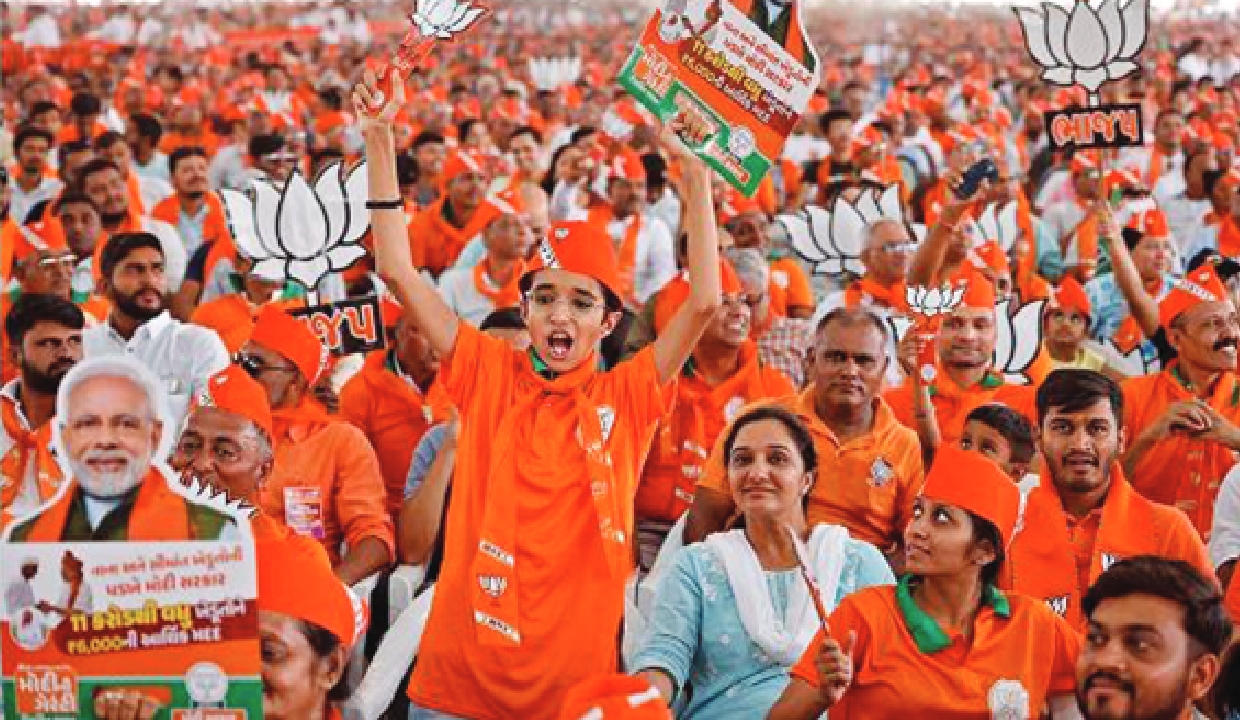
Few political transformations in independent India rival the journey of the Bharatiya Janata Party (BJP). What began in 1980 as a modest political formation with limited electoral presence has, over four and a half decades, evolved into the central pole of Indian politics. At 46, the BJP is no longer merely a participant in the political system-it is its defining force. This rise is not accidental; it is the outcome of ideological persistence, organizational discipline, and a capacity to adapt to shifting political currents.
From Margins to Mobilisation
The early years of the BJP were marked by conviction but constrained by circumstance. Emerging from the churn of post-Emergency politics, the party struggled to convert its ideological clarity into widespread electoral appeal. Throughout much of the 1980s, it remained on the margins, overshadowed by dominant national narratives and entrenched political forces.
Yet, even in this phase of limited success, the BJP distinguished itself through an unwavering commitment to long-term organizational building. Unlike parties that relied heavily on charismatic leadership or opportunistic alliances, it invested in constructing a disciplined cadre and a coherent ideological identity. This patient groundwork-often overlooked at the time-would later prove decisive. The emphasis on grassroots organization, ideological consistency, and internal cohesion created a foundation that allowed the party to scale rapidly when political opportunities emerged. It also fostered a culture of internal accountability and clarity that helped sustain the party through periods of electoral uncertainty.
The National Expansion
The 1990s marked a decisive turning point. Through sustained mass mobilization and strategic coalition-building, the BJP transitioned from the periphery to the mainstream. Its emergence as the leader of coalition governments at the Centre demonstrated not only electoral viability but also governance capability. This phase reshaped public perception: the BJP was no longer a fringe force, but a credible national alternative.
Over time, this expansion acquired a distinctly pan-Indian character. From the northern frontiers to the southern coasts, and across the Northeast to the western seaboard, the BJP's footprint now spans regions once considered politically inaccessible. This geographical spread is not merely the result of electoral victories; it reflects sustained organizational penetration and an ability to adapt messaging to diverse socio-political contexts. The party's ability to integrate regional aspirations within a broader national narrative has been central to this expansion.
Leadership as Force Multiplier
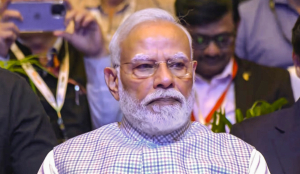
While the BJP's rise is rooted in decades of groundwork, the acceleration of its dominance in the past decade owes much to leadership. Under Narendra Modi, political communication has become sharper, more direct, and more expansive-reaching citizens beyond traditional intermediaries.
This shift has also redefined the relationship between governance and politics. Welfare delivery is no longer viewed in isolation; it is integrated into a broader narrative of aspiration and national progress. The articulation of an inclusive development framework-captured in the idea of "Sabka Saath, Sabka Vikas"-has allowed the party to bridge diverse voter expectations. Leadership, in this context, has functioned as a force multiplier, amplifying organizational strength rather than substituting it.
Having joined the party in 2022 after a career in the civil services, I have had the opportunity to observe first-hand the emphasis on organizational discipline and delivery-oriented governance that underpins this political trajectory. This internal coherence, often less visible in public discourse, remains one of the party's enduring strengths.
Governance and the Politics of Decisiveness
The consolidation of the BJP's position has been shaped by an emphasis on decisiveness in governance. A series of high-impact decisions have contributed to shaping its image as a party willing to undertake politically complex and often contentious measures. Whether in matters of constitutional change, national security posture, or economic reform, these decisions have reinforced a perception of clarity and resolve.
Economic initiatives such as the implementation of a unified tax regime, expansion of digital governance, and sustained investment in infrastructure have further strengthened the narrative of structural transformation. These measures are not without debate, but they have contributed to a sense of forward momentum. Importantly, the emphasis on direct benefit transfers and financial inclusion has sought to create a more immediate interface between the state and citizens, reducing leakages and enhancing delivery efficiency. Coupled with a more assertive global presence, these developments feed into a broader story of India's rise on the world stage.
Dominance and Democratic Debate
The scale of the BJP's success has inevitably generated scrutiny. Prolonged political dominance raises questions about the balance between central authority and federal dynamics, the health of democratic institutions, and the space available for dissenting voices.
These concerns are not unique to any single political formation. They reflect the natural tensions within a democracy adjusting to a new centre of gravity. Electoral success, repeatedly validated through democratic processes, reflects public endorsement. Yet, the durability of that endorsement depends on continued engagement with institutional norms, pluralism, and the expectations of an increasingly aware electorate.
The challenge, therefore, lies not in the existence of dominance itself, but in how it is exercised. Strength must not translate into rigidity, and authority must not overshadow accountability.
Beyond Elections: Structural Factors
To view the BJP's rise solely through the prism of leadership or electoral strategy would be incomplete. Its growth has been underpinned by structural factors: a cadre-based organization, disciplined messaging, effective use of communication platforms, and the ability to align governance delivery with political narrative.
Equally, the fragmentation and inconsistency of opposition forces have contributed to this consolidation. Political dominance is rarely created in isolation; it is shaped by both internal strengths and external dynamics. The BJP's experience illustrates how organizational continuity, when combined with adaptive strategy, can reshape the contours of national politics.
Towards 50: The Next Phase
As the BJP approaches its 50th year, the nature of its challenge is set to evolve. The journey from marginal presence to political dominance is, in many ways, complete. The more complex task now lies in transitioning from dominance to durable institutional legacy.
This transition will require a continued emphasis on inclusive growth, ensuring that economic progress translates into broad-based opportunity. It will also demand a careful balance between decisiveness and deliberation in a diverse and federal polity. Strengthening institutional autonomy, fostering cooperative federalism, and sustaining social cohesion will be critical. Equally important will be the ability to respond to emerging challenges-economic inequality, technological disruption, and shifting voter expectations-without diluting the coherence of its core political narrative.
In a political landscape defined by rising expectations and rapid change, adaptability will remain key. The BJP's success has thus far been built on its ability to evolve without losing coherence. The coming years will test whether it can sustain this balance while deepening its institutional footprint.
At 46, the BJP stands as a case study in political transformation-an organization that has moved from the margins of Indian politics to its very centre. The road ahead will determine not just the extent of its dominance, but the depth and durability of its legacy.
(Author is General Secretary BJP, Punjab. views are personal)