Six States sign MoU for Rs 15,624 crore Kishau dam project
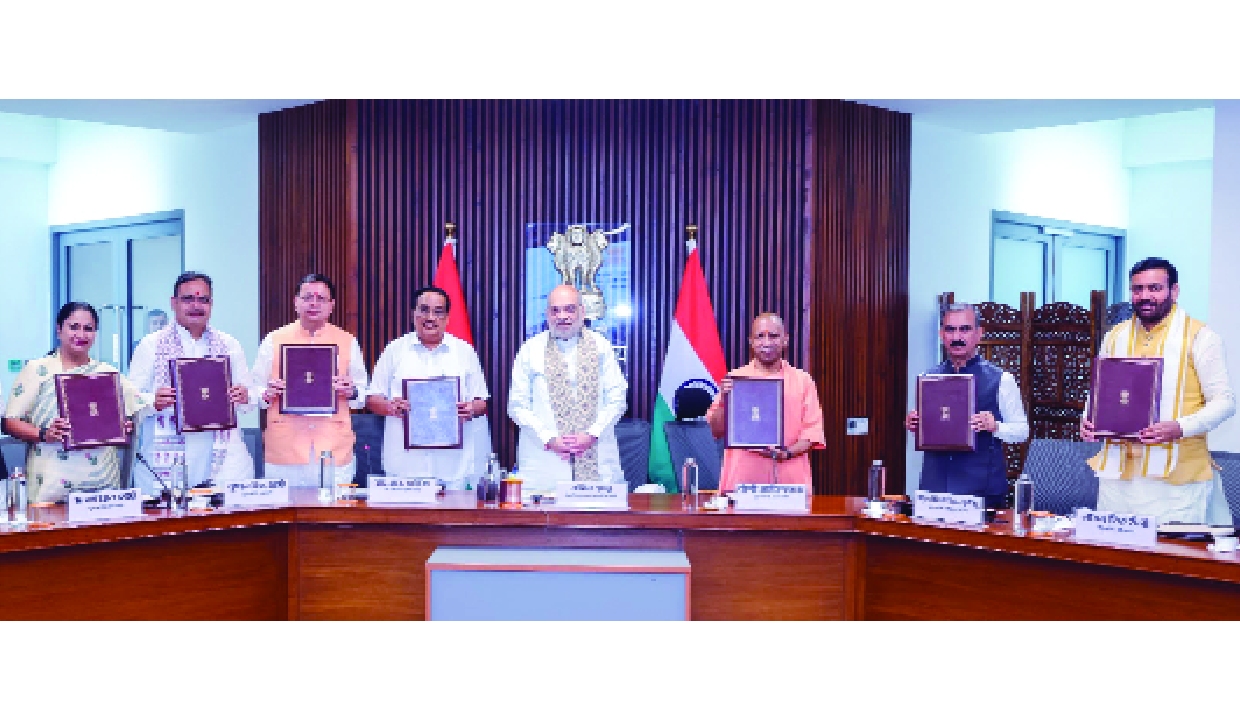
In a significant diplomatic and financial victory for Himachal Pradesh, a Memorandum of Understanding (MoU) was signed in the National Capital on Tuesday among six northern States to implement the long-pending Rs 15,624 crore Kishau Multi-Purpose Project.
The deal, signed in the presence of Union Home Minister Amit Shah, effectively ends an eight-year deadlock over cost-sharing mechanisms for the 422 MW project on the Tons River, bordering Uttarakhand and Himachal Pradesh.
Under the newly agreed terms, Himachal Pradesh successfully shifted a financial burden of nearly Rs 2,000 crore for its power component onto the primary water-beneficiary States — Delhi, Haryana, and Rajasthan.
The MoU was signed by Union Jal Shakti Minister CR Patil alongside Himachal Pradesh Chief Minister Thakur Sukhvinder Singh Sukhu, Haryana Chief Minister Nayab Singh Saini, Uttarakhand Chief Minister Pushkar Singh Dhami, Uttar Pradesh Chief Minister Yogi Adityanath, Delhi Chief Minister Rekha Gupta, and Rajasthan Chief Minister Bhajan Lal Sharma.
In a statement issued by the Chief Ministers’ Office, Delhi will receive an additional 109.9 million cubic metres (MCM) of water following the Kishau Multipurpose Project agreement. The Delhi Cabinet passed a resolution thanking Prime Minister Narendra Modi, Union Home Minister Amit Shah and Union Jal Shakti Minister CR Patil for finalising the long-pending water project.
“At the Cabinet meeting chaired by Chief Minister Rekha Gupta, the project was described as a solution to an issue that had remained unresolved for years. The Cabinet also appreciated the cooperation extended by the central Government and the states involved in reaching the agreement,” it said.
The Chief Minister said the Kishau project would provide significant support in meeting Delhi’s drinking water requirements while also helping improve the environmental flow of the Yamuna. She said water shortage remained one of Delhi’s major challenges, and progress on the project would strengthen the capital’s water security by making additional raw water available during periods of low availability.
The Chief Minister said the project’s significance extended beyond the additional water allocated to Delhi, noting that it would also help improve the Yamuna’s environmental flow, an important factor for the river’s rejuvenation and conservation.
Addressing the media after the signing, Himachal Pradesh Chief Minister Sukhu highlighted that his Government took a firm stance during high-level negotiations, refusing to accept the Rs 800 crore State share that the previous regime had agreed to pay.
“The local population in our State will face displacement and bear the environmental impact of this project. It was entirely unfair to burden Himachal Pradesh financially when our contribution to the nation's energy and water security is paramount,” Sukhu stated.
Furthermore, Himachal Pradesh is set to receive 1,000 million units of power annually once the project is operational, generating over Rs 1,000 crore in annual revenue for the State exchequer. Senior state officials, including Chief Secretary KK Pant and Additional Chief Secretary RD Nazeem, accompanied the Chief Minister at the signing ceremony.