Birdwatchers disappointed as polluted Yamuna drives away migratory birds
Birdwatchers in the national Capital are a disappointed lot as winter migratory birds are not expected to flock in large numbers to the polluted River Yamuna next month.
The river traverses nearly 22 km through NCT-Delhi. Earlier, the Yamuna was very clean and undisturbed, attracting a wide and diverse species of birds. However, the situation is not favourable now due to the polluted river and making wetlands unsuitable for birds.
Moreover, global climate changes like late monsoon and delayed winter have impacted the arrival of resident water birds and long-distance winter migratory birds. Earlier, birds used to be here in November and December, according to TK Roy, Ecologist, Ornithologist, AWC State Coordinator, Delhi and Wetlands International South Asia.
Even in the forthcoming January winter 2026, we cannot expect much more species diversity in larger numbers during the annual Asian Waterbird Census (AWC) 2026, which is conducted in every January across Asia for overall waterbird species with number and the wetlands habitat to record with Wetlands International’s aim for global conservation, he said.
At both important points of the River Yamuna ie entry point in Delhi at Wazirabad Barrage and exit point from Delhi at Okhla Barrage, huge dirty white foam/froth of flowing water, poisonous fishing and disturbance caused by public to the birds at the wetlands are some of the main reasons for the dwindling number of their species, he noted.
Among the larger number of winter migratory water birds specially Black-headed Gulls and Brown-headed Gull, arrive and keep moving in search of food and in large flocks, specially seen adjacent to Crematorium Ghats, Wazirabad Barrage, where the public throws food for them. However, this time smallest number of the Gulls, mainly Black-headed Gulls, approximately about 300-400, have arrived and no winter migratory beautiful any duck species or Indian Spot-billed Duck have been sighted on the Yamuna, Roy said.
In AWC 2024, 22 water bird species, including resident and migratory, were recorded, while in AWC 2025 the number was 25 species, he said. At present, 12 species in smallest number of water birds observed, Roy said. The resident species include Grey Heron, a few numbers, Little Cormorant, a few numbers, Black-winged Stilt, below 100 in number, Indian Pond Heron a few numbers, River Lapwing a few numbers (NT Species), White-breasted Kingfisher a few numbers, Egrets few numbers, Red-wattled Lapwing, limited some in number and several other species not available, he said.
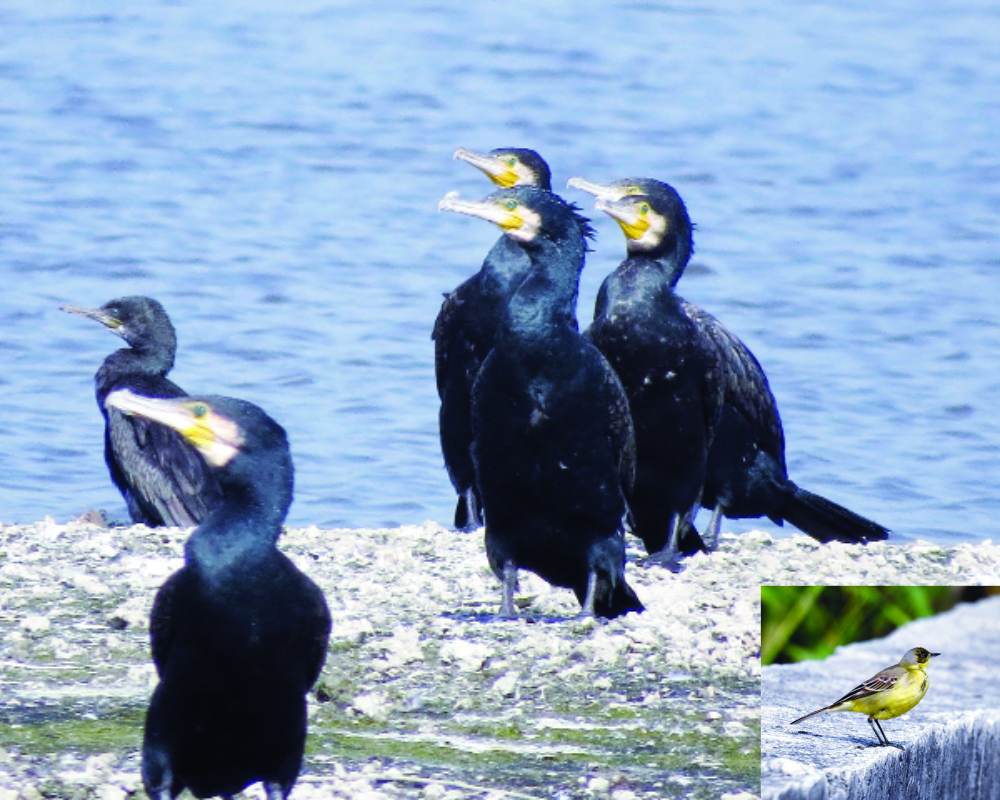
The Winter migratory species include Black-headed Gull — the smallest two flocks of approximately 300-500 in number, Great Cormorant, lesser in number below 60, Common Sandpiper a few in number, Yellow Wagtail a few numbers and several other species have not arrived at all, the ecologist said.