Bihar, Jharkhand sign pact to share Sone River water, resolve 25-year dispute
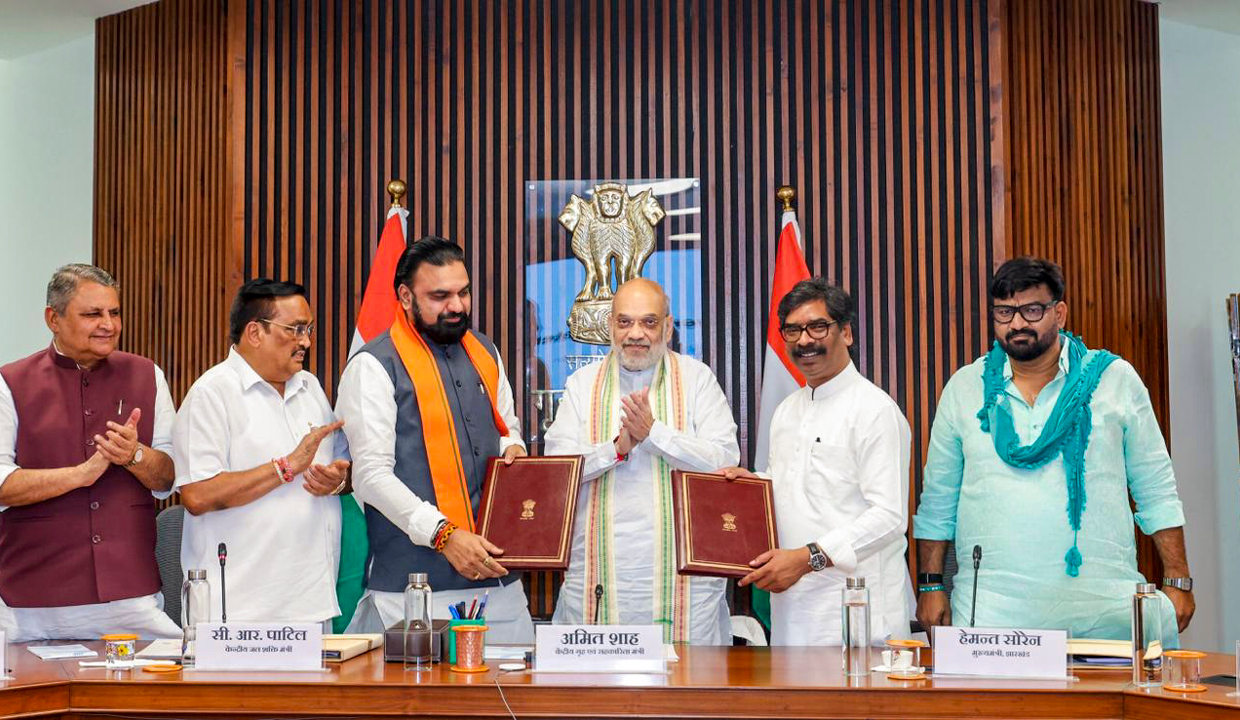
Bihar and Jharkhand on Monday signed a memorandum of understanding to share 7.75 million acre-feet of water from the Sone River, with Union Home Minister Amit Shah describing the agreement as a permanent resolution to the nearly 25-year-old dispute between the two states.
Jharkhand Chief Minister Hemant Soren, Bihar Chief Minister Samrat Choudhary, Union Jal Shakti Minister C R Patil, Bihar's deputy chief minister, the Union home secretary and senior officials from the Centre and both states attended the signing ceremony.
Shah said the agreement would ensure sufficient water for irrigation and drinking purposes for people in Bihar and Jharkhand. He said lakhs of farmers in both states would benefit from the pact and that it would support the development of rural areas.
Speaking at the ceremony, Shah said the agreement showed that long-standing disputes could be resolved through dialogue and cooperative federalism.
The dispute dates back to 2000, when Jharkhand was carved out of Bihar. Before that, Uttar Pradesh, Madhya Pradesh and undivided Bihar had signed an agreement in 1973 on sharing Sone River water and the cost of the Bansagar dam in Madhya Pradesh.
After the creation of Jharkhand, the state sought a larger share of water from the Bansagar project, pointing to the fact that a significant part of its catchment area fell within Jharkhand. Bihar, meanwhile, continued to rely on the 1973 agreement for its water-sharing claim.
Shah said the latest agreement was the fourth water-related agreement between states this year. He said it would provide irrigation water to farmers in rural areas of Bihar and Jharkhand and drinking water to their residents.
The home minister said the agreement would benefit districts including Bhojpur, Buxar, Rohtas, Kaimur, Aurangabad, Arwal, Gaya and Patna in Bihar. In Jharkhand, areas including Palamu and Garhwa would receive water for irrigation and drinking purposes, he said.
Shah described the pact as an example of 'Team Bharat' and cooperative federalism promoted by Prime Minister Narendra Modi. He said states could maintain their individual identities while working together within the larger national framework.
Soren and Choudhary thanked Modi and Shah for helping resolve the long-pending dispute, according to an official statement.
The statement said several inter-state disputes that had remained unresolved for decades were being addressed through the Inter-State Council, with four major agreements reached this year.
On July 7, a historic agreement regarding the settlement of outstanding payments was signed among the 'Narmada Award' beneficiary states -- Maharashtra, Gujarat, Rajasthan, and Madhya Pradesh, in the presence of the Union home minister.
On June 29, Rajasthan and Haryana signed an agreement regarding the construction and implementation of the Yamuna Water Project, enabling Rajasthan to effectively utilise the water allocated to it under the 1994 agreement regarding the sharing of usable surface water in the Upper Yamuna Basin.
A consensus was also reached on June 16 on the long-pending Kishau Multipurpose Dam Project. Himachal Pradesh, Uttarakhand, Delhi, Uttar Pradesh, Haryana and Rajasthan agreed to a memorandum of understanding for implementing the project. (with inputs from PTI)