Beyond placements & code
INTERVIEW / Building Engineers of Tomorrow
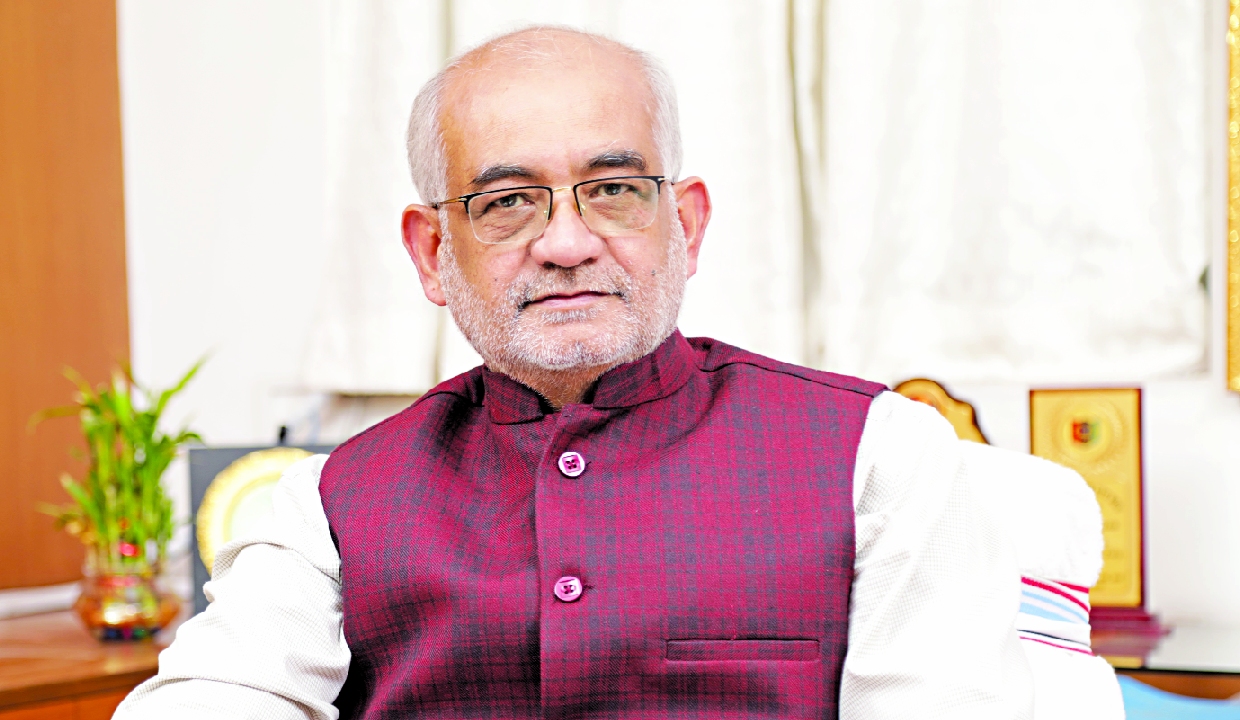
“A university built only for placement is a pipeline; one built for enterprise must give ideas the structure and space to survive,” states Prof Indranil Manna, Vice Chancellor of BIT Mesra. Having navigated both industry floors and elite academic corridors, the distinguished academic pioneer outlines a bold vision for India’s technical education. In an exclusive conversation with The Pioneer, Prof Manna discusses shifting corporate demands, the necessity of cross-disciplinary research, surviving the generative AI wave, and why tomorrow’s engineers must prioritise solving fundamental problems over chasing corporate titles.
Professor Manna, what is the biggest shift in what industries expect from engineering graduates today?
Engineering fundamentals have remained largely constant, but the tools and skills used to apply them have changed rapidly. From an era without computers or robotics, we have moved to IoT, parallel computing, GPUs and AI, which are reshaping even fundamental sciences. Having worked in industry before joining IIT Kharagpur in 1985, I have seen hiring expectations change too. Employers once recruited graduates for what they knew and trained them further; today, they value how quickly they can learn and adapt. The India Skills Report 2025 places engineering employability at 71.5 per cent, but a transcript alone is rarely enough. Recruiters look for articulation, integrity, adaptability, projects, and internships. Yet fundamentals remain non-negotiable: an engineer must still know the core principles of the discipline.
Why is cross-disciplinary innovation critical for students seeking high-impact careers today?
My own discipline settled this question long ago. Metallurgy became materials science by absorbing physics, chemistry and mechanical engineering, and is now incorporating machine learning for materials discovery and design. As National Coordinator of IMPRINT, I saw India’s engineering challenges mapped across ten domains, none of which could be addressed within a single department. IMPRINT-II reinforced this: proposals working at disciplinary interfaces and showing potential for application received backing. An affordable diagnostic device needs biology, electronics and data science; an electric powertrain brings together materials, power electronics and software. NEP 2020 now supports this approach through flexible credits and cross-stream learning. A student’s major provides depth, but future careers will depend on connecting that expertise across disciplines to create feasible, sustainable solutions.
How does BIT Mesra’s investment in advanced AI infrastructure enhance students’ global competitiveness and career readiness?
We have committed Rs 100 crore from our own resources to establish an NVIDIA-powered Centre of Excellence in Artificial Intelligence, operational by December 2026 with eight NVIDIA DGX B200 systems. It will serve nearly 12,000 students and 660 faculty members, while remaining accessible to researchers, startups, strategic departments, industry and other collaborators. My international research experience has shown that talent alone cannot produce globally competitive research; access to advanced facilities matters equally. Today, simulation and modelling are as critical as experimentation across fields from drug discovery and VLSI to climate science and manufacturing. Such computing infrastructure remains limited in Jharkhand and eastern India. Aligned with the IndiaAI and India Semiconductor Missions, the Centre forms part of BIT Mesra’s wider, sustained investment in research infrastructure and institutional partnerships.
How can academia encourage young engineers to choose research and innovation over immediate high-paying corporate careers?
I chose research in 1985, a career that has given me problems worth solving and the opportunity to mentor more than thirty doctoral scholars. Research and corporate careers appear unequal partly because placements receive greater visibility. Yet a doctorate today can lead to national missions in space, semiconductors and AI, industrial R&D centres and deep-tech startups. The funding environment has also changed: the Anusandhan National Research Foundation has a Rs 50,000-crore funding envelope for 2023-28, while the expanded Prime Minister’s Research Fellowship offers up to Rs 80,000 monthly and a Rs 2-lakh annual research grant. Academia must expose students to research early and celebrate fellowships alongside placements. Money matters, but creating knowledge, solving difficult problems and contributing to society offer rewards that cannot be measured by salary alone.
With the national focus heavily shifting toward self-reliance and innovation, how can technical institutions structurally evolve to train students to become risk-taking ‘job providers’ rather than just ‘job seekers’?
A university built only for placement is a pipeline; one built for enterprise must give ideas the structure and space to survive. The national foundation exists through Startup India, the Ministry of Education’s Innovation Cell and Atal Innovation Mission, but institutions must build the local ecosystem. BIT has done so for decades, establishing the country’s first Science and Technological Entrepreneurs Park on campus. Its student-run Entrepreneurship Development Cell has operated since 2007, while the Institute Innovation Center at STEP supports early ventures. This Foundation Day, distinguished alumnus Madan Mohan Mohanka of Tega Industries, from the 1964 batch, committed Rs 5 crore towards a Centre for Innovation and Entrepreneurship. Beyond the sum, students see that those who once occupied their classrooms can become job creators themselves.
What irreplaceable human skills must students develop to future-proof their careers in the age of generative AI?
Generative AI has commoditised the middle of intellectual work: drafting, routine analysis and the first version of almost everything. The two ends remain human-framing the right problem and judging whether an answer works in the real world. A model may propose a new alloy composition in seconds, but determining whether it can and should be made requires fundamentals, judgment and experimentation. The World Economic Forum expects 92 million roles to be displaced and 170 million created by 2030, with analytical thinking, resilience, flexibility and creative thinking among the most valued skills. Problem formulation, verification, ethical reasoning and adaptability will therefore matter greatly. You cannot audit a machine’s output without mastering the fundamentals yourself, and I do not foresee AI making human judgment, intervention or leadership redundant.
How should institutions make mental health and emotional resilience a core part of student development?
Behind every statistic on academic pressure is a young person, often away from home for the first time and carrying a family’s hopes. Institutions must recognise distress before it becomes a crisis. New UGC guidelines now require dedicated mental health centres, qualified counsellors and systems for early detection, but regulation only sets the floor. Prevention requires manageable academic structures, trained faculty and an environment where seeking help carries no stigma. At BIT, every student has a faculty adviser and meets them regularly to discuss academic progress, careers and well-being. Sports, NSS, NCC and over thirty student clubs, supported by more than Rs 1 crore, provide outlets beyond academics. An institution must be accountable not only for how its students perform, but also for how well they are supported.
What advice would you give engineering students to remain relevant, adaptable and resilient in a changing job market?
BIT encourages students to pursue a burgeoning professional career, not merely a job. After four decades of teaching, my advice is simple: master the fundamentals, learn how to learn, build deep competence alongside broad curiosity, and choose problems over titles.
My journey from an alloy factory in Hyderabad to laboratories in Germany, Britain and Singapore was carried forward by problems honestly solved, never designations. Use time wisely to build knowledge and character while protecting your health, friendships and integrity. Stay physically active and prepare to adapt to a changing job market. BIT also enables aspiring entrepreneurs to become job creators rather than job seekers.