How debate shapes future-ready talent
At 9:40 on a Monday morning in Gurugram, a young strategy analyst opens three market-entry reports her AI copilot generated overnight. Forty pages each. Fluent, structured, confident. At least one is subtly wrong. Her job is to work out which, and to defend that judgment before a client by noon.
This is the modern workplace in miniature. Today, generation is nearly free, and the binding constraint has moved up the stack: from access to assimilation, from producing answers to deciding between them. When machines write the first draft, human value concentrates in the skills of the second read, which is evaluation, synthesis, and judgment under pressure.
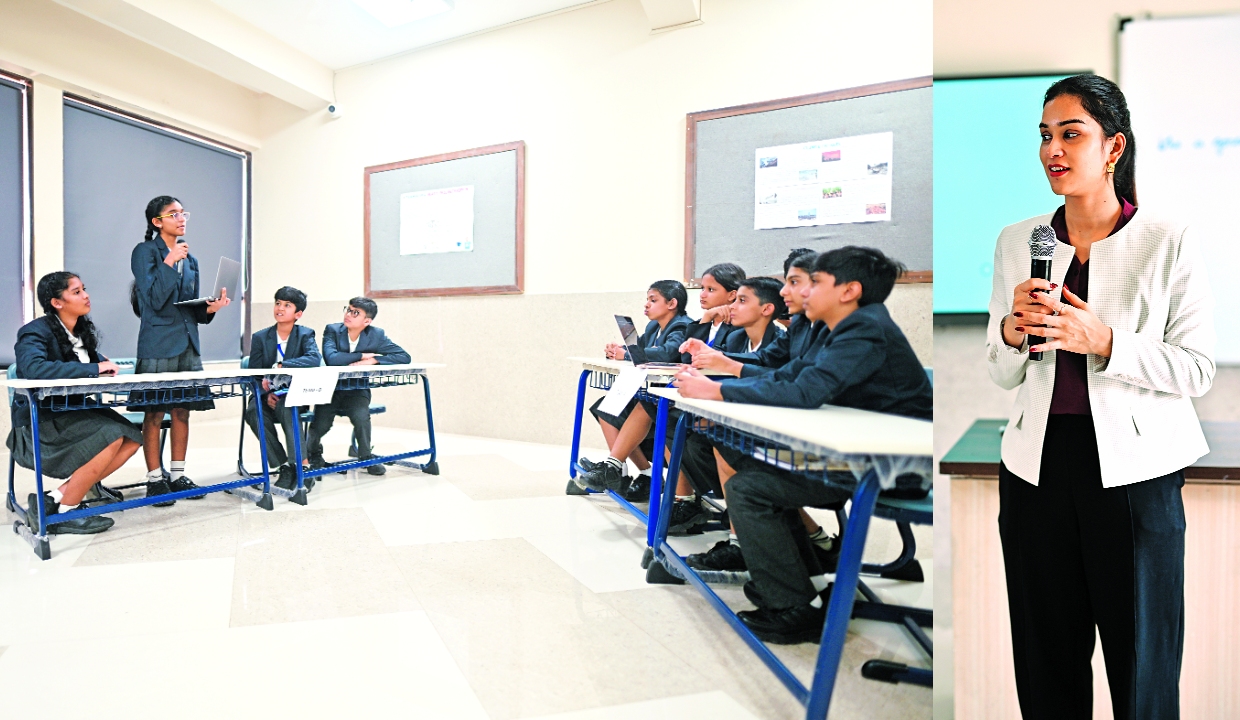
First, assimilation under overload. A debater receives a motion and limited preparation time, and must compress hours of research into a seven-minute case. This is triage, not accumulation: identifying the two or three arguments that decide the round and discarding the rest.
Second, outside-in thinking - the practice of approaching a problem from another person’s perspective rather than your own assumptions. Debaters are routinely assigned the side they did not choose and often do not believe. To win, they must reconstruct the strongest version of the opposing worldview, steelmanning, not caricature.
Third, decision-making when your team includes AI. When your colleague is a system that produces a plausible output without accountability, the human role migrates from generator to a decision maker: allocating burden of proof, testing internal consistency, detecting confidence error. Every rebuttal speech is an exercise in asking, “This sounds persuasive-but does it survive scrutiny?”
Fourth, “judgment itself”, the capacity to decide with incomplete information while being actively challenged. A point of information mid-speech is a live stress test: respond, concede, or refute, in seconds, in public.
The analyst in Gurugram will not be displaced by the machine that wrote her reports. If she is displaced at all, it will be by someone who learned- probably at sixteen, on a school stage, with a stopwatch running- how to decide which report to trust.
The writer is a Founder and CEO, Indian Debating League; Views presented are personal.