Air turbulence more frequent and violent in warming planet
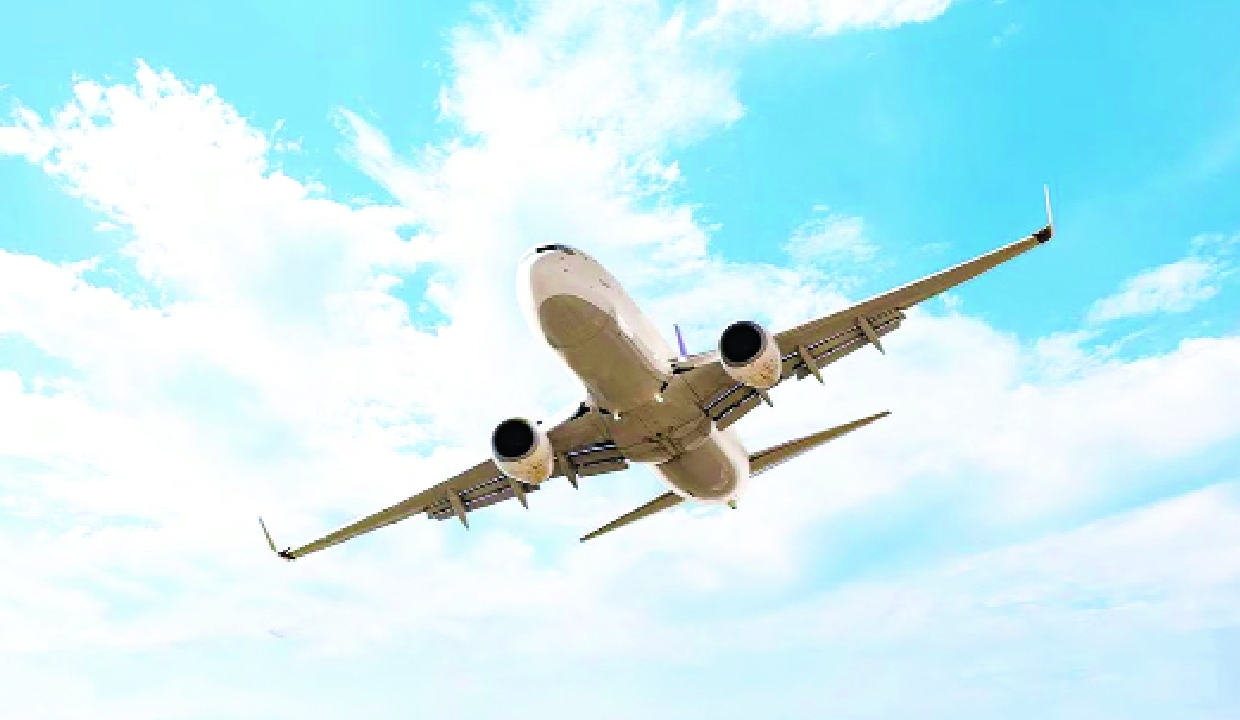
Turbulence avoidance is an important topic for research, and there are enough studies on North Atlantic and North Pacific routes. The relatively bump-free air experiences in future would need actionable forecasts using data on atmospheric information from many sources and artificial intelligence
While cruising through the clear sky, Air India flight AI2379 suddenly dropped 300 feet over Indian airspace over the Bay of Bengal and Odisha on 4th August, and the turbulence injured 24 persons, including four crew members on board. The pilot in command (PIC) is found to have failed a dope test twice. Sources said that he consumed marijuana and, for ‘high’ behaviour on the flight, crew members have complained against him. The co-pilot steadied the aircraft and landed at the destination, Delhi. PIC has to face an enquiry under DGCA rules. The incident is alarming, and DGCA has made dope test rules more stringent for the safety of passengers in the air. The process of detecting consumption of psychoactive substances is difficult to find in breath analyser tests. Frequent random dope tests are the only answer. Marijuana’s legal availability adds to the worries of airlines.
The aircraft is reported to have encountered air turbulence, leading to a few failures during the fall. The flight suffered triple hydraulic failure for a few seconds, which is rare. This system uses a fluid under pressure to drive machinery or move mechanical components to power critical elements like wheel brakes, nose wheel steering, landing gear retraction/extension, and flight control surfaces. Autopilot is also reported to have remained disengaged twice in that brief period.
The aircraft has also encountered negative G, for which pilots and crew could have been trained to handle, but not the passengers. DGCA’s enquiry would reveal the extent to which the impact of the incident was avoidable, but let me examine in this piece how the warming planet would cause more serious bumps in air travel on some routes. There are two types of turbulence. One is convective turbulence, which is displayed by airborne weather radar, and the pilot has time to change the course, and the other is clear-air turbulence (CAT) generated by jet streams (narrow and fast-moving rivers of high-altitude winds) that are invisible to radar.
As the Indian sub-continent heats up from April till mid-June, moisture-laden air from the sea surface is moved up high in the atmosphere, forming cumulonimbus clouds stretching from a few thousand to 50,000 feet, influencing the movement of passenger jets. With the rise in temperature, more water evaporates from the sea surfaces, forming more intense clouds. Inside these clouds are lightning and hail, often forming a chain of cells, and pilots call the chain a squall line. The convective turbulence is thus captured by radar and visible on the cockpit screen. CAT, however, occurs above 15,000 feet due to sharp differences in the speed and direction of jet streams between adjacent layers, creating violent wind shear. Also, where fast and slow currents interact, eddies and whirlpools develop, and the aircraft encounters them in the sky. Scientific studies have found that climate change is increasing the temperature difference between
tropical and polar air masses, causing the collision of the two at that altitude. It destabilises the jet stream, resulting in more turbulence. It is clear-air turbulence taking place without any cloud in the sky, and the pilots do not get any indication. The jet stream shear and the resulting turbulence do not show any sign on the cockpit screen, and can only be known from the bulletins issued by Significant Meteorological Information bulletins, which are issued to notify areas that are likely to be affected by jet stream turbulence.
The jet stream is a mid-latitude phenomenon and can impact the region in North India. It is a matter of enquiry whether the pilot missed the signal and failed to change the course. The turbulence recorded over the sea and in peninsular India is generally of the convective type. Sometimes even convective turbulence is not recorded on radar and gives no signal on the cockpit screen.
It happens when fast-growing cells do not pick up enough moisture and fail to show on radar. This can happen during nights, especially when the aircraft flies in and out of the cloud.
How does climate change influence turbulence? First of all, it does not impact the atmosphere above all regions uniformly. It is because the jet stream shear has varying magnitude and direction across the regions. Across North Atlantic and North Pacific aviation routes, the wind shear is substantial due to climate change, and the aircraft encounters relatively high turbulence. Also, the routes over the mountains such as the Alps, Rockies, Andes and Himalayas find strong winds forced over high terrain, making it more turbulent, and flights experience frequent and intense bumps.
The warming planet makes even convective turbulence more intense in tropical regions. Powerful thunderstorms may intensify due to high energy and more moisture pumped into the atmosphere from warmer sea surfaces. Though it can be visualised by the pilots in the cockpit and also confirmed on the screen and becomes unavoidable, the passengers have to face a bumpier flight, and the injuries can be avoided only when everyone has fastened their seat belts.
Turbulence avoidance is an important topic for research, and there are enough studies on North Atlantic and North Pacific routes. The relatively bump-free air experiences in future would need actionable forecasts using data on atmospheric information from many sources and artificial intelligence. A company known as ‘SkyPath’ is leading the studies, which integrates data from weather forecasts, satellite observations and aircraft measurements to understand and identify the regions which are/are likely to be impacted by turbulence. Airlines and travellers would benefit from this. Airlines can certainly use the results in optimising flight paths and minimising operational costs. The results would also be useful in working out passengers’ comfort.
The airspace in the Indian sub-continent is quite critical for similar studies. The physical mechanisms causing turbulence in Indian airspace have not been studied in detail. Aviation research must focus on the region. Indian airspace faces many turbulence-generating processes: mid-latitude clear-sky jet stream shears in North India, Himalayan Mountain ranges and intense tropical convective turbulence.
Convective turbulence during late summer and monsoon season in the tropical region of India is a serious concern for our airspace. Deep thunderstorms produce powerful updrafts and downdrafts. As the warmer climate holds more moisture and energy, the convective system intensifies. Further, jet streams and wind shear are also impacted by large-scale monsoon wind circulation systems. More data from flight operations in Indian airspace and climate simulations need to be studied using AI to quantify the intensity. It will help airlines to minimise their operational costs and choose optimum flight paths.
Air turbulence is the reality of the warming planet, and it must be recognised. The physical mechanisms that are enhancing the impacts and the physics behind its generation must be clearly understood. More studies and research are needed for the complete understanding of the mechanism and accurate forecasting.
The August 4th, Air India flight AI2379, after a mid-air scare due to the turbulence, landed at the destination safely. The passengers were terrified. Some of them experienced it for the first time and must have been caught off-guard when the aircraft suddenly lost 300 feet of altitude. It is necessary to understand that aircraft are built to withstand far more severe shocks than what turbulence can produce. The wings are subjected to loads far greater than what is produced by turbulence. During testing, the wings are subjected to several feet of bend to ensure that the structure has sufficient safety margin. The structural limits are tested before it is certified to be airworthy and can carry passengers. The greatest risk is injury to unsecured people who can be thrown around the cabin and struck by loose objects. Passengers must secure themselves throughout the flight by fastening seat belts. Even when seat-belt signs are switched off, it is wiser to keep them loosely fastened.
There are two types of turbulence. One is convective turbulence, which is displayed by airborne weather radar, and the pilot has time to change the course, and the other is clear-air turbulence (CAT) generated by jet streams (narrow and fast-moving rivers of high-altitude winds) that are invisible to radar
The writer is Retired Head of Forest Force, Karnataka, and teaches Economics at Karnataka Forest Academy; Views presented are personal.