A ghazal baithak that made paintings breathe
Nisschal Zaveri’s Ghazal Baithak fused Amrita Sher-Gil’s paintings with live Urdu poetry, proving masterpieces only wait for the right rhythm
Visual art and live music rarely share the exact same emotional space, yet the Liszt Institute engineered a brilliant collision of both last week. The Hungarian Cultural Centre in Delhi was completely transformed into an immersive setting for Echoes - A Ghazal Baithak by Nisschal Zaveri, where the profound visual legacy of painter Amrita Sher-Gil met the raw ache of live Urdu poetry.
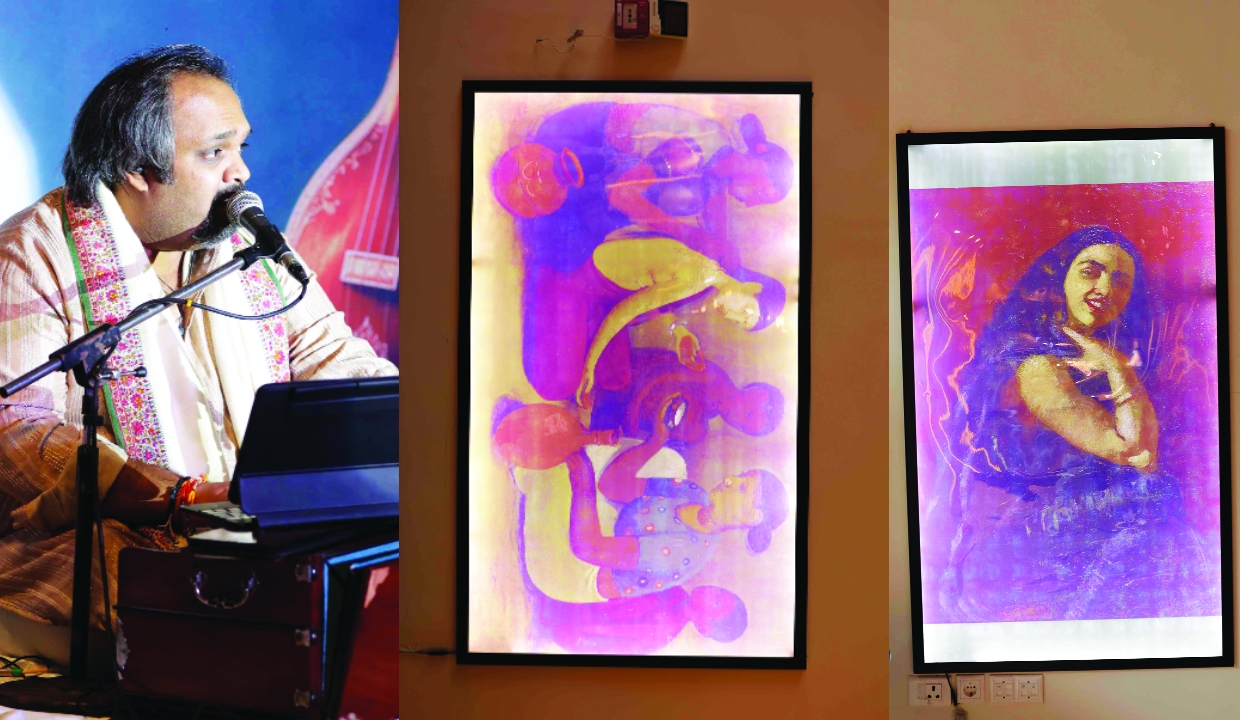
Singer and composer Nisschal Zaveri anchored the room by pouring his rigorous Patiala and Kirana gharana training straight into the verses of Mirza Ghalib and Faiz Ahmed Faiz. He effortlessly layered traditional thumri with sharp piano chords while illuminated projections of Sher-Gil’s finest paintings watched over the crowd, sparking a beautiful conversation between completely different artistic languages. A glowing self-portrait of the painter seemed to absorb the exact mood of his voice, and projections featuring a melancholy resting woman alongside quiet, shadowed rural figures offered a stunning visual counterpoint to every heavy pause and deep breath the singer took on stage. It was a physical manifestation of his own artistic philosophy: “A ghazal is not just to be sung. It is to be lived-with every pause, every note, every breath.”
Sher-Gil bridged European technique with the earthy reality of Indian subjects. Zaveri carries that exact dual nature forward today by wrapping ancient Urdu verses inside modern orchestral arrangements. Seeing her iconic brushstrokes seem to vibrate against live classical vocals proved a simple point. Masterpieces remain frozen under glass - they are simply waiting for the right rhythm to pull them back into the room.
Singer Nisschal Zaveri wraps heavy classical vocals in sharp piano, breathing raw life into ancient poetry