1,300 pink e-autos for women, transgender drivers to boost safe last-mile rides
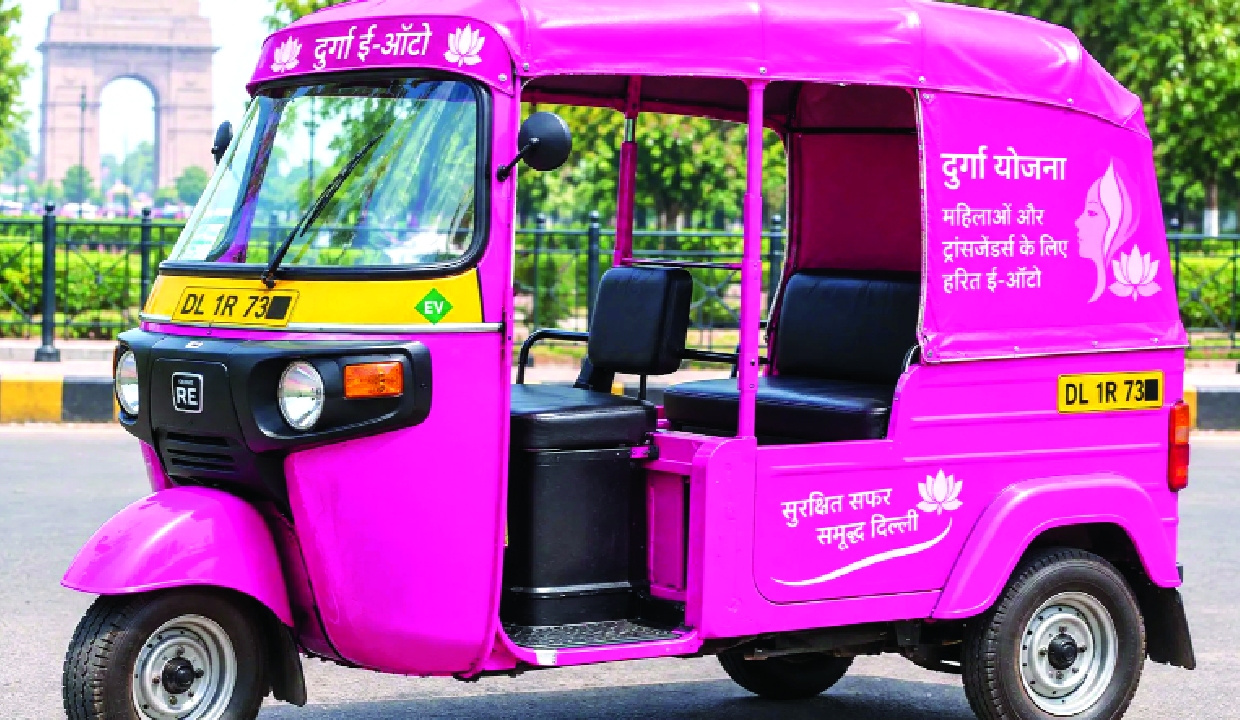
A pink electric auto, driven by a woman or a transgender person, could soon become a familiar, reassuring sight on Delhi’s streets during the early morning rush or the uneasy hours after dark.
The Delhi Government prepares to roll out its DURGA E-Auto Scheme, putting 1,300 such vehicles into the hands of first-time owner-drivers from these communities.
The scheme, approved by the Delhi Cabinet under Chief Minister Rekha Gupta, stands for Driving, Upliftment and Rozgar for Women and Transgender persons.
In its first phase, 1,170 electric autos will be reserved for women beneficiaries and 130 for transgender beneficiaries, who will own and operate the vehicles themselves.
Transport Minister Pankaj Kumar Singh said the scheme was designed to go beyond simply handing out vehicles.
“It is about creating opportunities for women and transgender persons to build independent livelihoods, participate more actively in the transport sector and become self-reliant,” he said, adding that the initiative was also meant to strengthen public confidence in cleaner, more inclusive last-mile mobility.
Under the first phase, each revenue district will receive a maximum of 90 electric autos for women and up to 10 for transgender beneficiaries, based on prescribed district-wise quotas and eligibility conditions.
The allocation process has been designed to run through a dedicated digital portal built by the National Informatics Centre, Delhi. Applications will be scrutinised by district-level committees headed by the respective District Magistrates, with verification carried out weekly.
Where eligible applications exceed a district’s quota, selection will be made through an online draw of lots to keep the process transparent.
Selected beneficiaries will receive Letters of Intent, along with identification cards, DURGA jackets and caps marking them as registered owners of the e-autos.
They will also be eligible for purchase incentives available under the Delhi EV Policy 2026, and aggregators have been asked to provide free onboarding and subscription support, helping drivers connect to digital mobility platforms from the outset.
Singh said the scheme was expected to particularly improve commuter confidence during early morning and late evening hours, when women passengers often feel least secure using last-mile transport options. Women- and transgender-driven autos, he said, were intended to make these hours more accessible and safer for commuters across the city.
To support operations, the Transport Department has sought dedicated parking and charging slots from the Delhi Metro Rail Corporation and the National Capital Region Transport Corporation at Metro stations and Namo Bharat RRTS stations, giving the new fleet of drivers reliable infrastructure to work from.
The Government has also planned a two-phase socio-economic impact assessment to track the scheme’s outcomes and measure how it changes the livelihoods and economic standing of its beneficiaries over time.