Protesters hide in gurudwara, washrooms to dodge detention
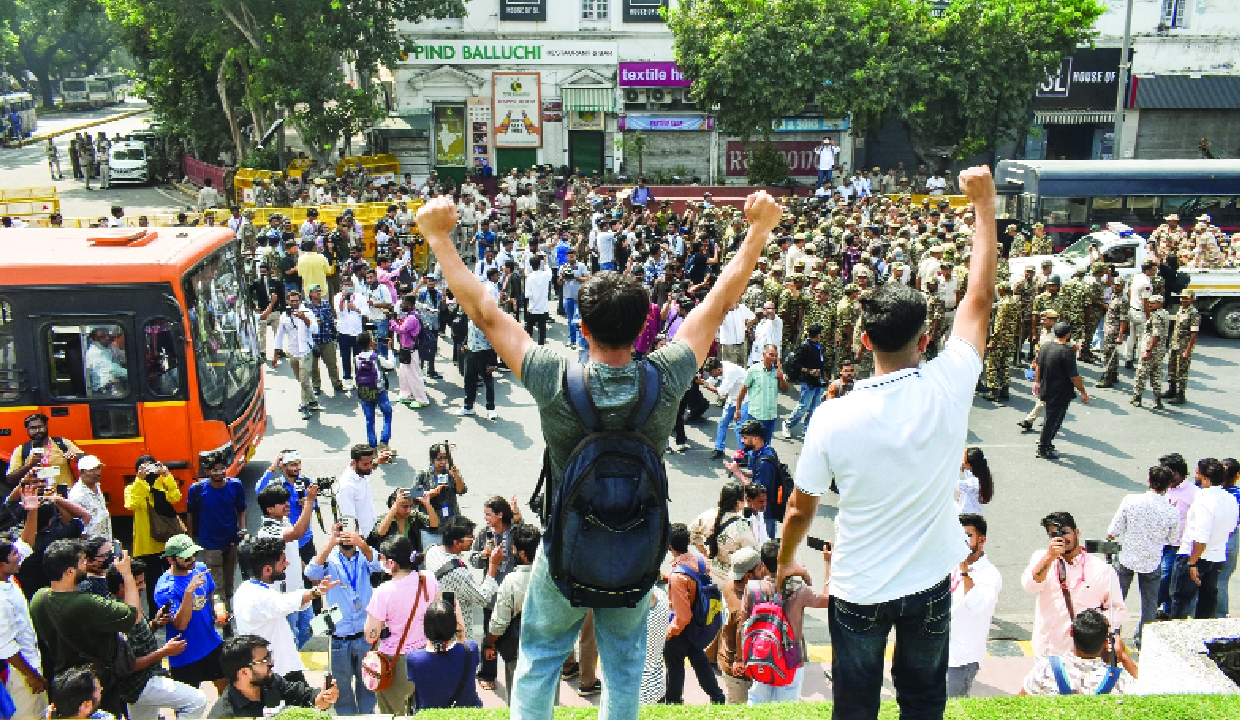
They hid in public washrooms, took shelter overnight in a gurudwara and slipped in and out of its gates as police closed in, turning the crackdown during the CJP protest in Delhi into an elaborate game of hide-and-seek.
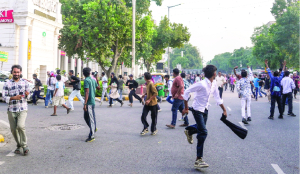
Delhi Police chased Cockroach Janta Party (CJP) protesters attempting to reach Jantar Mantar, detaining several as they regrouped and tried to evade the security cordon. Some scrambled to evade detention, using public washrooms and taking shelter in a gurudwara, slipping in and out of its gates to lie low.
The protest was scheduled to begin at 10.30 am. Still, the police and paramilitary forces deterred the participants from reaching the Jantar Mantar site, which has been turned into a fortress, by detaining several and sending back many more. As protesters, many of them women, attempted to regroup at different locations, police chased them down and detained them in buses.
One of the most unusual scenes unfolded at an NDMC washroom in Connaught Place, where more than 20 young protesters had hidden overnight, hoping to sneak through the extensive security arrangements ahead of the march to Jantar Mantar.
The group gradually gathered overnight after the city announced restrictions on Friday. The washrooms, locked at 10 pm and reopening at 6 am, offered a temporary hiding place until police checks in the morning thwarted their plan.
During an inspection, police found the protesters inside the washroom. Some allegedly forced the door open to get in. The protesters were rounded up and bundled into detention vehicles.
Most had their faces covered. Even after being detained, they continued raising slogans and banging against the interiors of the police vehicles, their voices carrying through the netted windows that shielded those insides from public view.
The episode at Connaught Place was one of several scenes across central Delhi where protesters tried to avoid police custody, only to return to the streets as soon as they saw an opportunity.
At Gurudwara Bangla Sahib, young protesters who had taken shelter overnight repeatedly emerged from the premises to join demonstrations before retreating inside as police personnel pursued them. The cycle continued as the two sides moved back and forth around the gurdwara, with protesters attempting to evade detention.
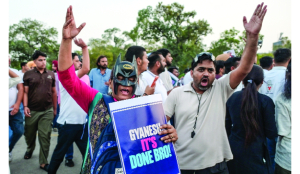
Slogans of “Inquilab Zindabad” and “Jai Bhim” rang out in the lane outside the gurudwara as a large group of protesters poured onto the street. Within minutes, police detained several of them.
The gurudwara had offered refuge to student protesters earlier in July, when they were demanding the resignation of erstwhile Union Education Minister Dharmendra Pradhan. This time, protesters took shelter there after citywide restrictions were announced on Friday, preparing to join Saturday’s demonstration.
Police also approached representatives of Bangla Sahib and asked them not to allow protesters onto the premises, according to those familiar with the exchanges. The gurudwara representatives refused, saying the protesters were unarmed and were not raising slogans inside.
“We won’t let police enter the premises. Protesters are unarmed and not raising slogans inside the premises, so we are not against them,” a representative said.
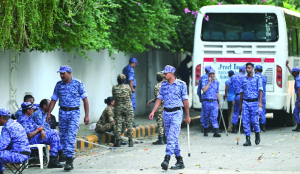
The presence of police personnel carrying lathis near the place of worship and the detention of young protesters drew criticism from some visitors, who called the action shameful and questioned the decision to pursue demonstrators in the vicinity of a religious site.
The protesters’ attempts to find refuge were not confined to the gurdwara. Several youth organisations and student groups marched from Baba Kharak Singh Road to Ashoka Road, as police personnel moved in to detain them. Some protesters ran into the gurudwara premises as officers approached, seeking shelter before attempting to return to the demonstration.
At Kerala House, several CPI(M) leaders, including former chief ministers of different states, had been staying since Friday night. Police detained them on Saturday when they stepped out to join the protest.
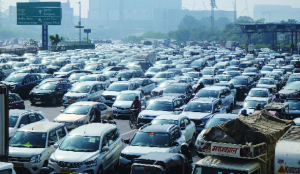
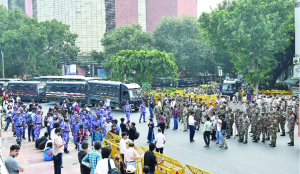
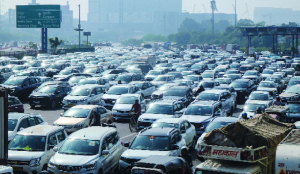
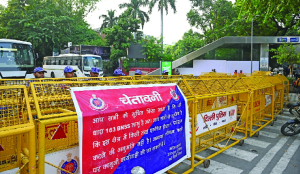
The scenes played out against an unprecedented security deployment around the planned demonstration, called by the CJP and other Left organisations to demand Kumar’s resignation over alleged irregularities in the SIR exercise. Over 30,000 police and paramilitary personnel were deployed across the Capital, while 45 metro stations were closed and traffic restrictions imposed on 30 road stretches around Jantar Mantar. Police pickets dotted the city, with identity checks and vehicle inspections at border points, railway stations, bus terminals, hotels, and other sensitive locations.
Police also placed steel spikes on some roads to prevent vehicles from forcing their way through checkpoints without inspection.
Yet, despite the barricades, checks and heavy deployment, protesters continued to find ways to assemble, disappear into places of refuge and emerge again to join the demonstrations -- turning a day of tight security into a running contest between those trying to exercise their right to protest and the police attempting to detain them.