Zero coal leakage drive: CISF faces hurdles in Jharkhand, West Bengal
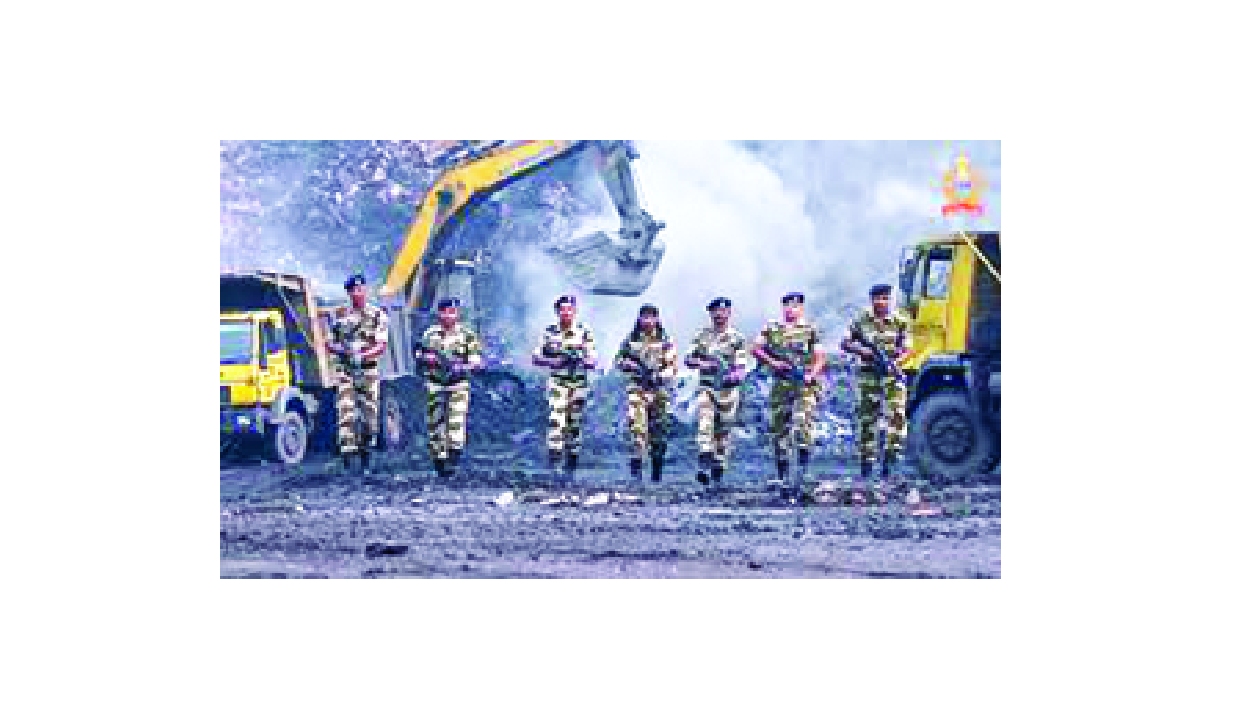
A month after the Union Government launched a ‘zero coal leakage’ drive, the Central Industrial Security Force (CISF) flagged several obstructions, including a lack of “timely and adequate” logistical support from coal field managements, manpower shortages and a dearth of necessary funds and legal powers across Jharkhand and West Bengal.
The paramilitary force’s field formations have written to the Bharat Coking Coal Limited (BCCL), Eastern Coalfields Limited (ECL), Central Coalfields Limited (CCL) and the CISF headquarters in Delhi apprising them of these issues.
Despite these challenges, official sources and documents accessed by PTI state that the central force has recovered over 6,171 metric tonnes of coal that was either pilfered or stolen, sealed 106 illegal mines and registered 229 FIRs since the drive began a month ago on July 4.
The CISF is entrusted with guarding the country’s major coal fields. The Union Government recently authorised the CISF as a designated agency to undertake search and seizure operations under the Mines and Minerals (Development and Regulation) Act, 1957 (MMDR) to check coal theft from the coalfields under its jurisdiction.
The Ministry of Home Affairs (MHA) directed the force to launch a special drive against the coal mafia and criminals to achieve the target of ‘zero coal leakage’.
Official sources said the CISF had to delay or postpone raids at a number of places for periods ranging between seven and ten days due to a “lack of timely and adequate logistical support” from the coal field managements.
Sources said there are not enough secure and dedicated premises for storing the equipment and vehicles seized during these raids. The force has seized about 200 vehicles, both small and large, as part of this drive so far.
Certain coal field managements have not circulated the prescribed format of the Act Contravention Certificate (ACC), which itemises the seizure, details its valuation and is an important document for filing a police FIR in coal theft cases, the sources said.
At several locations, CISF teams are not receiving the required “cooperation” from the police and forest department authorities regarding case registration and initiating action against the criminals.
Furthermore, vehicles for quick reaction teams (QRTs), tasked with pursuing criminals and conducting searches, are not being provided to them by the coalfield managements, they said.
The sources said that when enforcement operations are undertaken in remote and forest areas, ensuring the presence of the district mining officer (DMO) becomes difficult, as these officials are usually posted at the district headquarters.
Certain managements have not yet designated technical officers, such as mining engineers, mine managers and surveyors, whose assistance is vital for the CISF during inspections and seizures of illegal coal, they said.
Some CISF units are also facing non-availability of an “imprest fund”, which covers day-to-day operational expenditures incurred during enforcement actions under the MMDR Act, such as documentation, legal formalities and other incidental expenses.
The sources said certain CISF units are also facing a lack of manpower because the force’s area of operations and duties were “widely” enhanced after the MMDR Act notification.
Currently, only Gazetted CISF officers are notified as “Authorised Officials” under the MMDR Act, which causes authorisation issues during simultaneous raids. Field formations have stated that subordinate officers of the force should also be designated as the authority to carry out such action.
The CISF has also sought clarification on the notified jurisdiction, specifically whether it covers only the mining lease/ surface rights or also transportation routes, coal handling facilities, approach roads and adjoining national/State highways to avoid jurisdictional overlap with the local police.
It has also been stated that competent courts for trying these coal crimes are located as far as Ranchi and Chatra (both in Jharkhand) and regular travel of its officials for filing complaints and attending court proceedings was “adversely” impacting the operational deployment of the CISF.