You take this one, I use that one
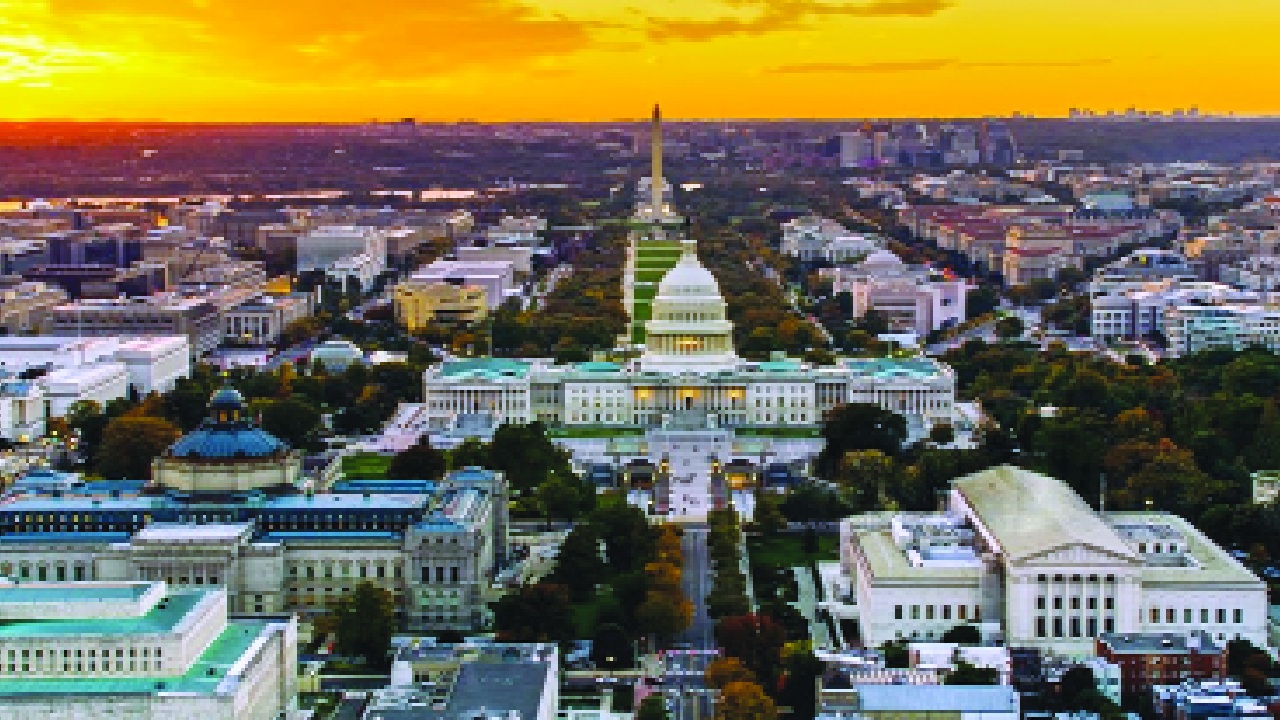
Hours after the US Supreme Court rebuked President Donald Trump for his tariffs, and ruled that the latter exceeded his authority, the president imposed another round of tariffs. The new order used the Section 122 of the Trade Act, 1974, a rarely used law that allows short-term duties, but requires an approval of the Congress in 150 days. How is this possible when the apex court concluded that Trump cannot use executive powers without the approval of the legislature? The short answer: the decision does not dismantle the tariff regime. It reshapes it, closes the huge legal door, but leaves open a few small windows.
In essence, the Supreme Court responded to a narrow debate. It said that the president does not have the powers to impose tariffs, duties, or taxes under the International Emergency Economic Powers Act (IEEPA). This law is what Trump used. But the Court kept intact other myriad laws, like the temporary ones under Section 122. In effect, Trump still possesses a few powers. In fact, he can use the IEEPA law too, if he takes the permission of the Congress. The reason: Congress can impose taxes under it, and this is what the lawmakers had in mind.
A close reading of the order (170-pages long, including the majority, and minority rulings) shows that it did not declare tariffs unconstitutional. It did not bar the executive from using tariffs. What it stated was limited to the tariffs under IEEPA. In legal terms, the tariffs failed not because of their intent, but because of their legal foundation. This matters because, in the Court’s words, the regime was not the target. The object of interest was an enlarged framework, global in scope, adaptable at an individual’s discretion, and justified through the flexible language of an ‘actual,’ ‘imagined’, or unrelated emergency.
Of course, there are no doubts that even the latest action under Section 122 will be legally contested. The criticism has begun. For example, Gita Gopinath, former chief economist of IMF, maintains that this is an illegal move. First, as another critic noted, the Supreme Court order lays it bare that an okay from the Congress is mandatory for sweeping tariffs. However, this will apply to Section 122 after 150 days, within which Trump needs this. Second, Trump’s legal team had argued before the Supreme Court that the powers under this Section of the relevant trade Act did not apply in the current situation.
Here is how it works. Trump used IEEPA to tackle the twin issues of narcotics (duties on Canada, Mexico, and China for smuggling of fentanyl), and looming trade deficits (low tariffs led to trade imbalances, and surpluses for other nations). Let us forget fentanyl for the moment, as it is applicable to a few nations. During the IEEPA hearings, the Department of Justice (DoJ) argued that Trump used IEEPA, and not Section 122 because the latter did not apply to trade deficits. Now, the president has imposed new tariffs under it, and to tackle the growing economic menace of trade deficits.
As one critic responded through a social media post, “Seems hard for a President to rely on the… statute (Section 122) when his DoJ… told the Court the opposite.” Gopinath the economist makes another distinction. She indirectly hints that the DoJ’s claim in the court was correct because Section 122 applies in cases of balance-of-payment (BoP) deficits, and not trade deficits. The two deficits seem to be linked, but they are not the same. Trade deficits can lead to BoP deficits, which may be caused by several factors. The former is a mere difference between imports and exports. The latter includes outflows of foreign exchange via trade deficits, investments, and capital transfers.
The pivot to Section 122 underscores the differences. IEEPA is activated by a presidential declaration of a national emergency tied to an “unusual and extraordinary threat” with a foreign nexus. Once triggered, its language grants wide discretion over economic transactions such as regulation, importation, and others, but not tariffs and taxes, as the Court ruled. This flexibility made it attractive for Trump. Section 122 is grounded not in emergency rhetoric, but in BoP logic. It allows temporary surcharges to address the issue with clear caps on rates and duration. Section 122 is limited. One can say metaphorically that it is a bridge, and not a destination.
Of course, there are other laws that the president has used, and can use in the future. Section 301 of the Trade Act allows tariffs after official investigations into unfair trade practices. Section 232 allows them on the grounds of national security after a stated process by the commerce department. Antidumping and countervailing duties apply at the product or firm level through quasi-judicial proceedings. Each of these tools remains intact after the recent Supreme Court ruling on IEEPA. What changes is the balance between speed and durability. Emergency-based tariffs can be imposed quickly and adjusted easily.
Statute-based tariffs under the relevant sections require investigations, findings, reports and, in some cases, congressional engagement. They are slower, more transparent, and vulnerable to legal challenges. Or at least this is what Trump thought before the Supreme Court order. Clearly, he can now either opt to approach the Congress, or follow the rigid procedures in the other statutes and laws. He cannot eat his tariff cake, and eat it too. For the world at large, including businesses, statute-based measures eradicate or reduce volatility, disruptions, sudden overnight duties, and frequent and unilateral changes.
Instead of one sweeping executive action, nations and businesses may face a sequence of narrower measures, like the temporary Section 122 surcharge. In comparison, an investigation under Section 301 can take months, an action under Section 232 focuses on specific sectors, and parallel litigations can challenge these steps. Although the policy risks do not disappear, they become episodic. Over the past decade, the US assets and trade flows carried an implicit policy volatility premium, which reflected the risk that trade policy can shift abruptly. By narrowing the executive’s discretion, the Supreme Court reduces the probability of at least the shock of sudden tariffs.
But, rest assured, the court ruling on IEEPA introduces new uncertainties. Temporary measures create deadlines. Deadlines create negotiations. Negotiations create speculation. A 150-day surcharge under Section 122, for instance, is not a long-term policy. For nations this means more decision points. In addition, there is a message for the US presidents, who may wish to use emergency and national-security statutes, and bypass and sidestep the Congress.