Woke is not awake in America
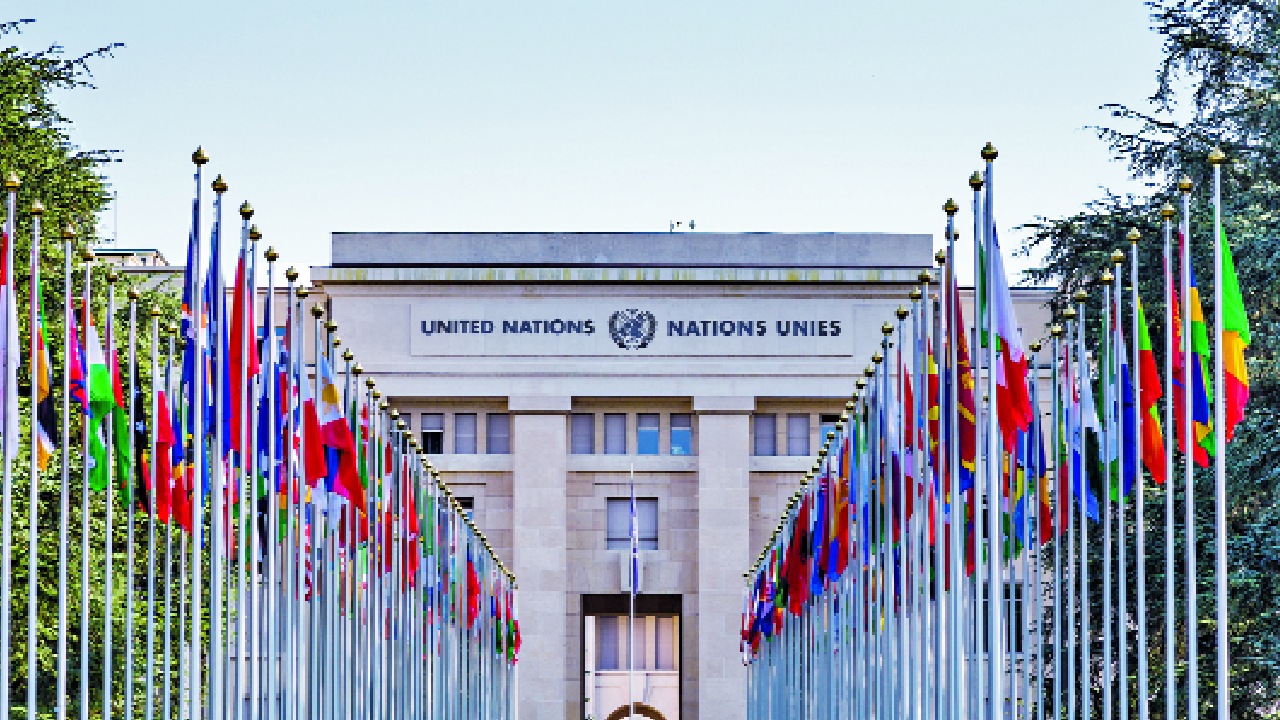
United States President Donald Trump means business, and this is reflected in his rage against global causes. He wants to ‘Make America Great Again,’ ‘Make America Affordable Again,’ and believes in ‘America First.’ He abhors multilateral forums, and pins his hopes on bilateral ties. Hence, it was not surprising that he ordered America to walk out of 66 ‘woke’ global organisations, 31 of which were under the ambit of the United Nations, and the others that were spearheaded by different multilateral forces.
However, the pattern was evident. He targeted ‘woke’ institutions that appeal to the causes of gender, human rights, exploited children, and poor nations and continents. Of course, those related to Climate Change, end-of-fossil-fuels, and use of green energy were ‘woked.’ Democracy, culture, migration, piracy, and population have little role in his scheme of things. When it comes to flashpoints like Ukraine, Latin America, South Africa, and a few Asian nations, the president feels that he can resolve them single-handedly, and does not need the help, support, and backing of the multilateral agencies.
Let us first look at nations, regions, and continents. Clearly, the White House does not like President Volodymyr Zelensky of Ukraine, nor Trump is not enthusiastic about NATO that Kiev wants to embrace. Hence, out goes a non-UN entity, Science and Technology Centre in Ukraine, which is mentioned in the latest list. Although South Africa-elated institutions are not on the list, Trump posted on his social media site last year that the Nation was “confiscating land, and treating certain classes of people VERY BADLY.” He announced that he “will be cutting off all future funding to South Africa until a full investigation of this situation has been completed.”
According to the Time magazine, Trump and his allies, particularly the earlier loyalist, the South Africa-born billionaire, Elon Musk, ramped up rhetoric against South Africa in reaction to the recently enacted Expropriation Act of 2024, a law aimed at solving the nation’s land ownership inequality problem. The magazine stated that the law was criticised for risking and disregarding private property rights, particularly those of South Africa’s white minority, as it permits land seizures by the state without compensation. However, Africa features prominently in Trump’s ban-list.
During his first term, the president threatened to slash aid budgets to Africa. Recent reports suggest that the US embassies in Africa are understaffed and, according to a media report, China is the most popular power centre in the continent. Despite this China game, Trump Not surprisingly, there are several Africa-related UN entities that the US has refused to be a part of, especially those related to the economic and social council, Office of the Special Advisor on Africa, and Permanent Forum on People of African Descent.
As the raid in Venezuela raid, and abduction of its leader shows, drug trafficking and narco-terrorism is on top of Trump’s agenda. He has issued warnings to other nations, especially in Latin America such as Colombia, Cuba, and Mexico, apart from Greenland, and Iran. The larger objective here is to capture the natural resources in the neighbourhood, and beyond. Venezuela and Iran are about oil reserves. Greenland, which Trump wanted to buy, and was refused by Denmark, a NATO member, is about natural resources and strategic location. Columbia and Cuba may be collateral damages.
Hence, America opted out of the UN-related Economic Commission for Latin America and the Caribbean. Since, in the US president’s mind, fossil fuels are more crucial than the emphasis on green energy, since he hates the Climate Change advocacy, there are repercussions on energy forums, and those related to climate, and biodiversity. Hence, there is no room for America’s presence in non-UN International Energy Forum, and UN-sponsored UN Energy. Gone are some of the crucial multilateral alliances on green energy. These include the non-UN 24/7 Carbon-Free Energy Compact, Renewable Energy Policy Network, and International Solar Alliance.
The last, the solar alliance, was launched by India and France in 2015, with the headquarters in Gurugram, which is in Delhi NCR. According to reports, it serves as a “strategic tool for India’s outreach to Africa, and other developing nations,” and symbolises India’s commitment for green energy in the Global South. New Delhi champions several initiatives like ‘One Sun, One World, One Grid’ for “seamless solar power flow, and frameworks for solar energy. The aim is to raise $1 trillion to meet the investment needs.
If fossil fuels are Trump’s favourites, along with green energy, gone are the global efforts to manage Climate Change crises. Most forums related to climate research, sustainable mining and development, conserving nature and forests, reducing emissions, and managing human settlements and population are out of America’s vision. Earlier, during his first term as the president, Trump had triumphantly walked out of the negotiations under the Paris Climate Agreement, which created a global furor. Experts said that this was possibly one of the biggest setbacks to global efforts on Climate Change.
During the first term, Trump gave enough indications that he was not interested, or probably disgusted, with foreign aid to protect human rights, freedom rights and democracies elsewhere, safeguard the general violence suffered by children, and their travails in armed conflicts, gender equality, and women empowerment. In the first term, the US withdrew from the UN Human Rights Council. This time, early on, he again targeted the council, and the UN Relief and Works Agency for Palestine Refugees in the Near East (UNRWA).
America felt that the Council “protected human rights abusers.” It stated that “UNRWA has reportedly been infiltrated by members of groups long designated by the (US) Secretary of State as foreign terrorist organisations, and UNRWA employees were involved in the October 7, 2023, Hamas attack on Israel.” The US halted the funds of the United States Agency for International Development (USAID). Set up under the Foreign Assistance Act of 1961, it supported development agendas during the Cold War. The focus shifted to human rights, and human crises in a new avatar.
It is not surprising that similar global entities are not in favour in the present list. Think of several UN-related ones such as Office of the Special Representative of the Secretary General for Children in Armed Conflicts, and UN Register of Conventional Arms. There are others related to the rights of the children, and women, along with those on online coalition for freedom, community engagement, and democracy and electoral assistance. In essence, the president is not interested in such issues, unless they are negotiated bilaterally, and make sense for America to deal specifically.