Win the war, lose the peace?
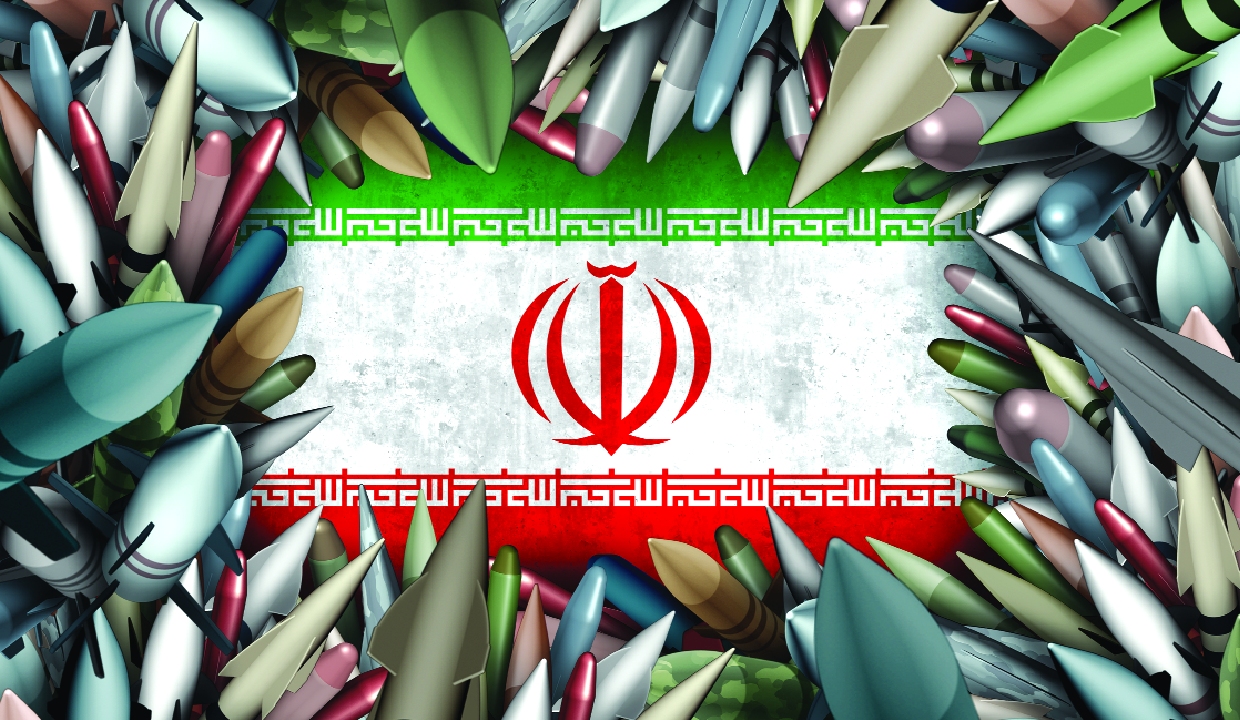
Iran may bend in the end but it will not break due to the creek
The headline we have used is a subhead that appears in a recent article in Foreign Affairs magazine on the possibility of a Third Islamic Republic in Iran and on the “war’s unintended consequences for Iran, the Middle East, and the global order.” Written by Suzanne Maloney, who works at the Brookings Institution, it explores the various dimensions of the war in terms of future gains and losses for the various participants, stakeholders, and mere observers. Our strapline borrows from the first line after the sub-head, which reads, “Although they may bend, Iran’s power brokers are unlikely to break.”
War, and the hard line that the Iranian leaders adopted this time, by proving that they can “impose painful costs on the global economy,” will enable them, or at least the hardliners hope, to re-establish their “regional sway.” Something they lost in the past decade or two. For years, Iran has believed that the world, especially the Western powers, owes a lot to it. This time, if the nation emerges intact from the war, and still in a position to choke the Strait of Hormuz and Red Sea, as it seems, it intends to “collect on that (decades-old) debt.”
Of course, if this happens, there is a huge scare among the neighbours in the Middle East that Iran will emerge weaker but also “emboldened.” Its economy will be in a bad shape, and require money from the West (definitely the US) and East (maybe China, even Russia), but it will be aware that it can push the world on its knees. “An occasional drone crashing through the window of a luxury hotel or into a busy airport will be more than sufficient to raise the risk premium for investors, and prompt second thoughts among tourists,” writes Maloney.
The fact is that Tehran is surrounded by powerful and influential nations, whose combined military powers may be immense, especially as they are backed by the US, but whose sprawling economies are somehow fragile with a few weak spots. These were evident as Iran randomly bombarded airports and residential areas, apart from energy infrastructure in Dubai, Saudi Arabia, and Qatar. Not just foreigners, but even residents fled, and sought refuge in either quieter places within the nations, or outside. Several Indians in Dubai immediately relocated to their Indian homes after years and decades.
Yet, as Maloney warns, Iran cannot be complacent, and sense victory in every possible outcome to the war. There are enough reasons to conclude that it can miscalculate. “The regime may have mounted an effective asymmetric counterattack that threatens to wreak havoc on the global economy, but its conventional military capabilities were largely destroyed, and the steady erosion of an entire echelon of senior leaders will take a significant toll on its operational and governing capabilities,” feels Maloney. Some experts contend that the loss of leaders is a boon in disguise for the radicals, as it marks the entry of a stauncher and conservative son of the dead Iranian Supreme Leader.
“It is also possible that Tehran will win the war but lose the peace, as a result of its recalcitrance, unfounded optimism, or internal disarray, just as previous Iranian leaders did at crucial juncture in the war with Iraq (in the 1980s),” writes Maloney. During the beginning of that war, the Gulf nations offered a solution to end it. They offered USD 25 billion as reparations to Iran, which insisted that the figure needs to be six times higher, and continued the war. The following six years destroyed Iran, even as it devastated Iraq. This time, as the Iran-US talks continue and falter, Iran needs to be smarter and know when to withdraw militarily to enrich itself financially and industrially.
The US may need to learn to live with the geopolitical tensions around the world. Whatever may be the peaceful solutions, Iran may give indirect support to others who wish to disrupt the global order. After these events, Russia is unlikely to accept any plan to end the Ukraine war that does not lead to the appropriation of huge territories. The Houthis in Yemen may become fiercer, even if they lose the support from Iran. Israel will wield its military power, yet again, soon in the future. Even regional powers like Pakistan will make their moves, even as a superpower like China plays its own version of a chess-like game.
Europe may forever be squeezed between the moves made by Russia and China in the future, and what happens in the Middle East. The former will hope that NATO does not degrade, and remains in place despite Donald Trump’s anger and warnings, or else it will need to beef up its military, energy, and other levels of security. Although the Iran war hurt the Asian consumers the most, Europe was terribly hit by the Russia-Ukraine war. Even in the present case, if the Iran war continues for another month, Europe will feel the heat, or lack of it.
What is of utmost interest, at least in regional terms, will be a key question on most minds. Will the conflict lead to a Third Islamic Republic? If it does, the future may be highly uncertain for the Middle East, the US, Europe, and Asia, apart from Central Asia. Some experts contend, as mentioned earlier, Iran will become more radical under Mojtaba Khamenei, the son of the dead Supreme Leader. The war enabled a smoother-than-expected succession.
Others indicate that it will lead to a power vacuum once the war ends.
“Finally, even if the Islamic Republic holds out through the active phase of conflict (as it seems it will), the aftermath could spell its undoing. At present, there may be no coherent, competent political organisation that can mount a meaningful challenge to even a war-weakened regime. But the tremors from the conflict will be long-lasting, and their impact will unfold, and probably magnify over time,” predicts Maloney. Hence, their current victory, which is what will be called whatever may be the solution, may “well sow the seeds of the regime’s demise” in the future.
Yet another article in the same issue of the Foreign Affairs magazine pins the hope on the younger generation, a Tehran Spring along the lines of the Arab Spring years ago. “Iran’s younger generation could also prove to be a potent ally. The young have connections to the 1979 revolution, and know the regime only for corruption and cruelty,” writes the author. They need someone to lead them to political salvation.