Why India-US trade talks matter more than ever in 2026
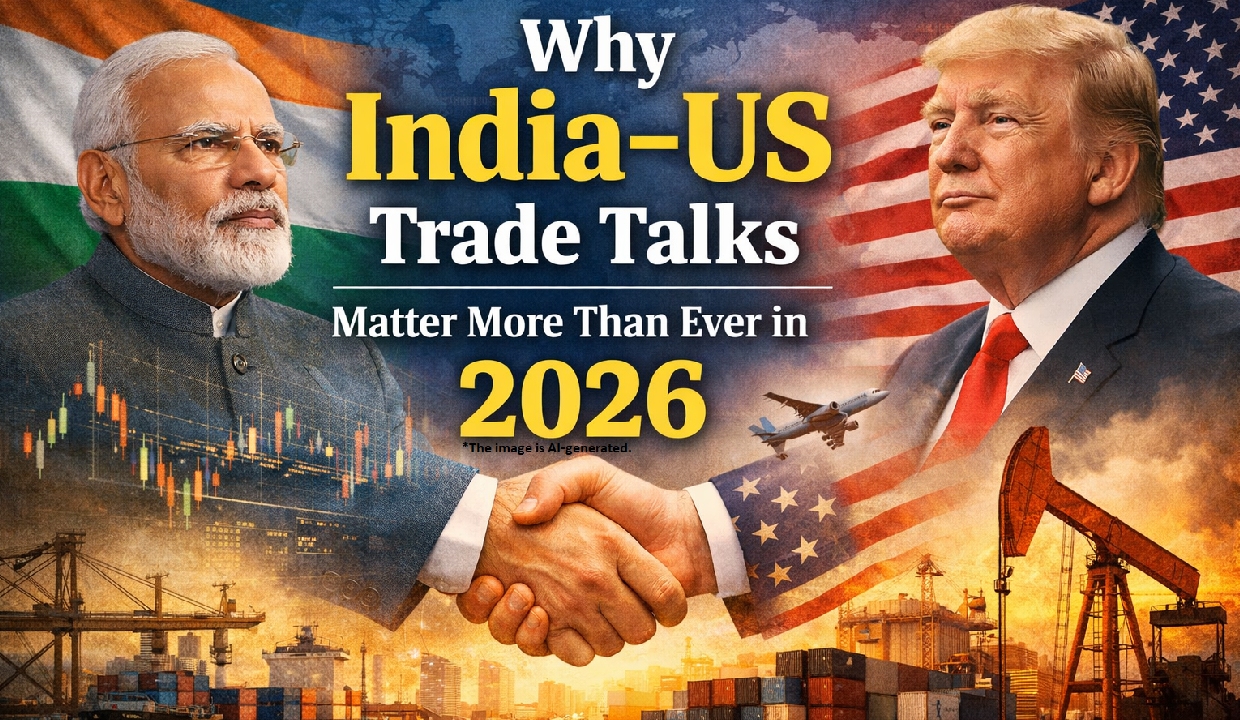
In April 2026, India and the United States are trying to turn a fragile trade truce into something more durable. An interim agreement reached in February stopped a sharper break, and fresh talks are set to resume in Washington after weeks of delay.
At the same time, contact between Prime Minister Narendra Modi and President Donald Trump has helped keep the wider relationship from sliding further. That matters because this dispute is no longer only about customs duties.
It now touches trust, supply chains, energy buying, defence links, and each side’s view of the other as a long-term partner.
Several rounds of talks have already taken place, yet the hard choices remain. The immediate crisis has eased, but the real test lies ahead. The interim deal bought time after a period of sharp friction.
In early February, both Governments announced a framework that paired Indian tariff cuts and large US purchases with a planned reduction in US duties on Indian goods, from 25 percent to 18 percent. That calmed markets and gave exporters some relief. Still, the truce never settled the deepest disputes.
The signing slipped after a US Supreme Court ruling cast doubt on parts of Trump’s emergency tariff framework. New investigations by the Trump administration, including subsidy-related action on Indian solar cells, added to the confusion.
By April 10, India had decided to send another delegation to Washington to seek clarity before moving further.
The February framework changed the mood first. It lowered immediate pressure and created a path toward a broader trade pact. India also signaled a willingness to buy more US goods over five years, including energy, aircraft parts, and technology.
That gave Washington a visible gain, while New Delhi secured at least a temporary easing of tariff pain. Yet the framework remained only a bridge.
The implementation slowed because Washington’s tariff rules were no longer fully clear after the court ruling. India wanted to know which rates would apply, and when. That question remains open in April. There is also no final date for signing a full agreement. Piyush Goyal had earlier suggested the pact could be operational by April. That deadline has passed.
So, the interim deal prevented a rupture, but it did not deliver closure. Why uncertainty still hangs over the negotiations. Washington’s message has been mixed. On one side, US officials have sounded upbeat.
The White House has said it is still working with India on finalizing a deal, and recent meetings with US Trade Representative Jamieson Greer were described as productive. On the other side, extra duties, new probes, and sector-specific penalties have stayed in play. That gap between tone and action has fed Indian frustration. New Delhi has held back from public anger, but the patience has limits. Goyal’s line has been simple, if the United States is satisfied, it should sign.
Until then, optimism will remain thin. Warm statements have kept the relationship afloat, but policy uncertainty has kept the deal unfinished.
Trade tensions now bleed into foreign policy. That is why the hardest issues have proved harder than tariff bargaining alone. India wants closer economic ties with the United States, but it does not want those ties to narrow its choices on energy, regulation, or diplomacy. Russian oil became the biggest test of political trust US pressure over India’s purchases of Russian crude turned trade talks into a test of sovereignty.
Reports around the February framework suggested India would reduce reliance on Russian oil while buying more US energy. For Washington, that looked like a strategic win. For New Delhi, it raised a sharper question, who decides India’s energy mix? India’s answer has stayed consistent.
It will engage the United States closely, but energy decisions must serve domestic needs first. That line reflects both economics and politics. India is a major importer, and price matters.
A sudden shift imposed from outside would carry costs at home. The timing of Vladimir Putin’s visit to India added another layer. It reminded Western Capitals that India still values long-standing ties with Russia, even while expanding defense and technology links with the United States. In that sense, oil became more than a commodity. It became a measure of whether Washington can accept India’s independent choices. The most stubborn fights are often hidden behind technical rules. Tariffs make headlines, but licensing systems, product standards, customs procedures, and regulatory barriers can block trade just as effectively.
That is why the April talks are expected to cover non-tariff barriers, Section 232 and 301 issues, and disputes around medical devices. Medical devices are a good example because they sit at the meeting point of public health, pricing, and market access.
Technology goods raise similar tensions. The United States wants fewer restrictions and clearer rules. India wants room to protect domestic firms, manage prices, and avoid opening politically sensitive sectors too fast.
Other issues also sit on the table, including customs rules, services, and intellectual property. These are harder to solve than one tariff cut because they reach into domestic law and State policy.
They ask each side to change how its system works, not simply how much tax it collects at the border. Even after months of strain, neither side can afford to give up on the relationship.
The United States remains India’s top export market, and both Governments still talk about lifting two-way trade sharply by 2030.
For India, that means jobs, factory orders, and investor confidence. For the United States, it means access to a large market and a partner that matters in supply chains, defence production, and Asia strategy. The numbers explain the urgency.
A long tariff fight in 2025 was estimated in Indian policy circles to have shaved 60 to 80 basis points from growth. In plain terms, that means slower output, weaker export momentum, and less confidence among firms planning new investment.
That drag matters because India’s export sectors, from apparel and leather to seafood and gems, rely heavily on access to the US market. Even a modest rise in tariffs can reduce margins fast. Meanwhile, prolonged uncertainty makes companies wait before adding capacity or hiring workers. So, the case for a deal is not abstract. It sits in factories, ports, and boardrooms.
On the other hand — India’s foreign policy is built on multi-alignment, not bloc politics. It is pursuing talks with the European Union, keeping a limited diplomatic opening with China, and maintaining ties with Russia.
At the same time, it continues to deepen defence and technology cooperation with the United States.
That mix is not a passing tactic. It is the core of India’s external strategy. The real test for Washington is whether it can work with India as an independent partner, rather than treat trade access as a tool for broader political obedience.
If it can, the relationship will grow on firmer ground. If it cannot, each round of trade friction will spill into larger mistrust. The interim agreement, and the Modi-Trump channel behind it, have stopped a bad stretch from turning into a deeper rupture.
Yet the strain remains because trade, energy, and geopolitics are now tied together far more tightly than before. That leaves the relationship at an awkward middle point. Bilateral ties are still strong enough to absorb shocks, but not yet stable enough to rise above them.
The next phase will depend less on upbeat language and more on whether both Governments can convert a temporary patch into a durable bargain that respects each side’s core interests.
The writer is a veteran journalist and freelance writer based in Brampton Canada; Views presented are personal.