War of words, a world of wars
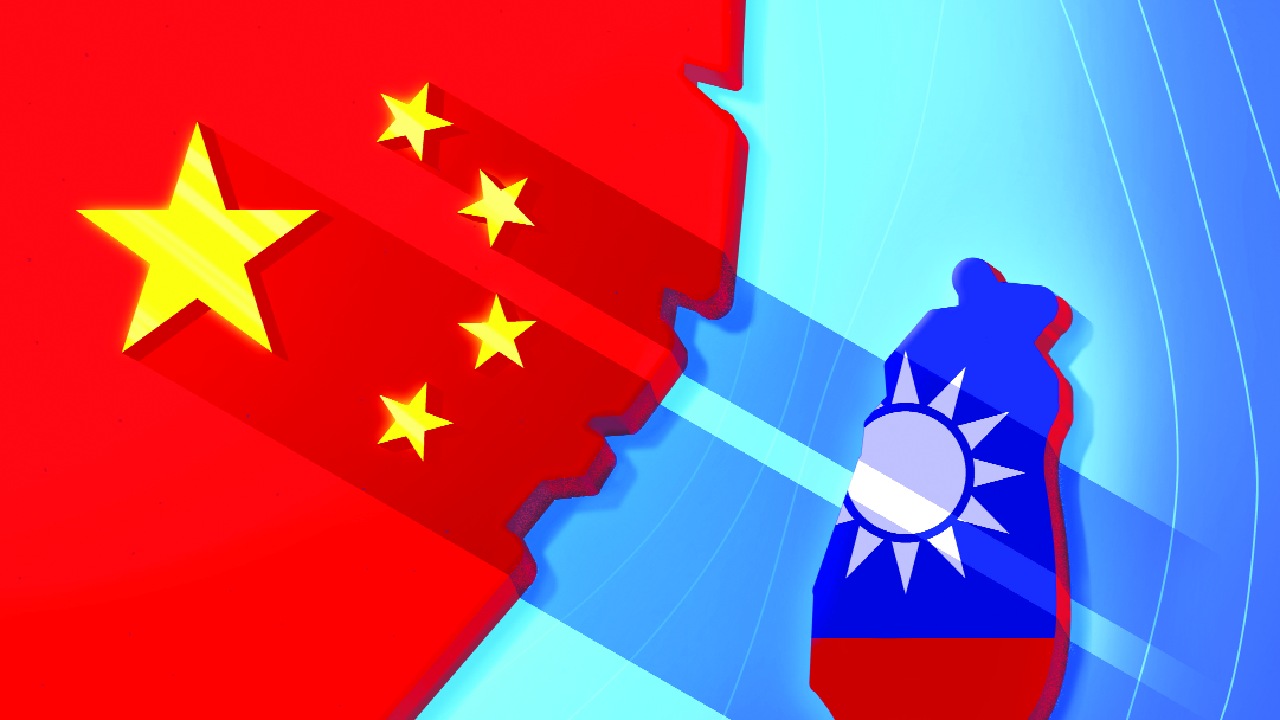
Although America and China announced a temporary economic and business truce, both upped the ante in terms of security, and military issues. The main point of contention is obviously Taiwan. A recent 29-page document, ‘National Security Strategy of the United States of America,’ insisted, “In the long term, maintaining American economic and technological preeminence is the surest way to deter and prevent a large-scale military conflict.” The reference was, among other things, to Taiwan, and South China Sea.
Washington later approved a record-breaking arms sale to Taiwan. The military package, valued at over $11 billion, is the single-largest arms sale to the island. It includes advanced artillery systems, High Mobility Artillery Rocket Systems (HIMARS), howitzer artillery, anti-tank missiles, drones, and spare parts for helicopters and anti -ship missiles. Many of the weapons are similar to those supplied to Ukraine, which signals a significant enhancement of Taiwan’s military capabilities to deter potential aggression. One of Taiwan’s immediate and most-important enemies is, of course, China.
Both the moves angered Beijing, which reiterated that resolving the Taiwan question is solely a matter of the Chinese people, “which brooks no external interference.” The rebuttal came from China’s foreign ministry spokesperson, Guo Jiakun, who was asked by the media to respond to the US national security report. “China will never flinch in defending its sovereignty and territorial integrity,” Guo stressed. Reports add that the spokesperson claimed Taiwan as an inalienable part of China's territory. The Taiwan question, he said, is at the core of China's core interests, and the first red line that must not be crossed in China-US relations.
As far as the arms sales were concerned, Beijing responded with strong condemnation, and called it a serious threat to regional peace and stability. In retaliation, it imposed sanctions on US companies involved in the deal, and vowed decisive countermeasures. China escalated the military pressures in the region, and conducted large-scale live-fire drills and naval exercises near Taiwan, often using the operations as a pretext to challenge freedom of navigation in these waters. America’s allies like Japan and the Philippines increased their military presence in response to the tensions.
China saw crimson in Japan’s Prime Minister Sanae Takaichi statement last month that a potential Chinese military attack on Taiwan, which may involve battleships and the use of force, could constitute an “existential crisis” warranting Japan’s exercise of collective self-defense under its 2015 security legislation. This marked a shift from Tokyo’s policy of strategic ambiguity regarding Taiwan, and was seen as the strongest Japanese official statement supporting possible military involvement in a contingency. The statement indicated a rise in Tokyo’s aggression.
However, the roots of the regional security ambitions involve a complex centuries-old history of cultural exchanges and rivalry. After its victory in the First Sino-Japanese War, Taiwan was ceded to Japan in 1895. After World War II, it was handed over to the Republic of China (ROC). The Chinese civil war led to the ROC losing mainland China in 1949, and retreating to Taiwan. Japan formally renounced claims to Taiwan. Although the latter’s sovereignty may be considered unresolved internationally, it is democratically governed, and strongly asserts its sovereignty.
The China-Philippines confrontation in the South China Sea centres on competing sovereignty claims over strategic maritime features, and has significant implications for regional security and international law. In the recent past, tensions escalated with frequent maritime confrontations. According to the US security paper, “A favorable conventional military balance remains an essential component of strategic competition. There is, rightly, much focus on Taiwan, partly because of Taiwan’s dominance of semiconductor production, but mostly because Taiwan provides direct access to the Second Island Chain, and splits Northeast and Southeast Asia into two distinct theatres.”
Given that a third of global shipping passes annually through the South China Sea, this has major implications for the US economy. Hence, the strategy paper insists that “deterring a conflict over Taiwan, ideally by preserving military overmatch, is a priority. We will also maintain our longstanding declaratory policy on Taiwan, meaning that the United States does not support any unilateral change to the status quo in the Taiwan Strait.” The First Island Chain is a string of Pacific archipelagos from the Kamchatka Peninsula, through Japan, Ryukyu Islands, Taiwan, northern Philippines, and down to Borneo and Malay Peninsula.
The First Chain serves as both a natural barrier, platform for power projection, anchors Washington’s alliances, and contains Beijing’s influence in the western Pacific. The Second Island Chain refers to a strategic maritime defence line that includes Japan, Guam, and Micronesia, which serves as a secondary defensive perimeter for the US, particularly in response to China's military capabilities. Hence, the US security document states, “We will build a military capable of denying aggression anywhere in the First Island Chain. But the American military cannot, and should not have to, do this alone.”
America wants the allies to spend more for collective defence. Diplomatic efforts should focus on pressing the US’ First Island Chain allies and partners to allow the US military greater access to ports and other facilities, spend more on their own defense, and most importantly to invest in capabilities aimed at deterring aggression. “This will interlink maritime security issues along the First Island Chain while reinforcing US and allies’ capacity to deny any attempt to seize Taiwan or achieve a balance of forces so unfavorable to us as to make defending that island impossible,” it adds.
Given President Donald Trump’s insistence on higher burden-sharing by Japan and South Korea, “we (America) must urge these countries to increase defence spending, with a focus on the capabilities, including new capabilities, necessary to deter adversaries, and protect the First Island Chain. We will also harden and strengthen our military presence in the Western Pacific, while in our dealings with Taiwan and Australia we maintain our determined rhetoric on increased defense spending.” Such efforts to prevent “conflict requires a vigilant posture in the Indo-Pacific, a renewed defence industrial base, greater military investment from ourselves and from allies and partners, and winning the economic and technological competition over the long term.”
Clearly, the thinking within Washington’s security think tank, and policy-makers, and China’s responses highlight the deeply-entrenched conflict in the Indo-Pacific, with Taiwan at its centre. The dispute over Taiwan’s status involves concerns about sovereignty, regional security, and global power balance. The rise in military activities by the US, China, and regional states risks escalation while maintaining an ongoing message of deterrence and readiness on all sides. This is a major flashpoint that may erupt in 2026.
(The author has more than three decades of experience across print, TV, and digital media); views are personal