Vinaya: Strategies to reinforce a Responsible and Disciplined Society

The power of the state is rooted in self-discipline, which brings security and prosperity to the citizens. (Kautilya's Arthashastra: 1.05.02)
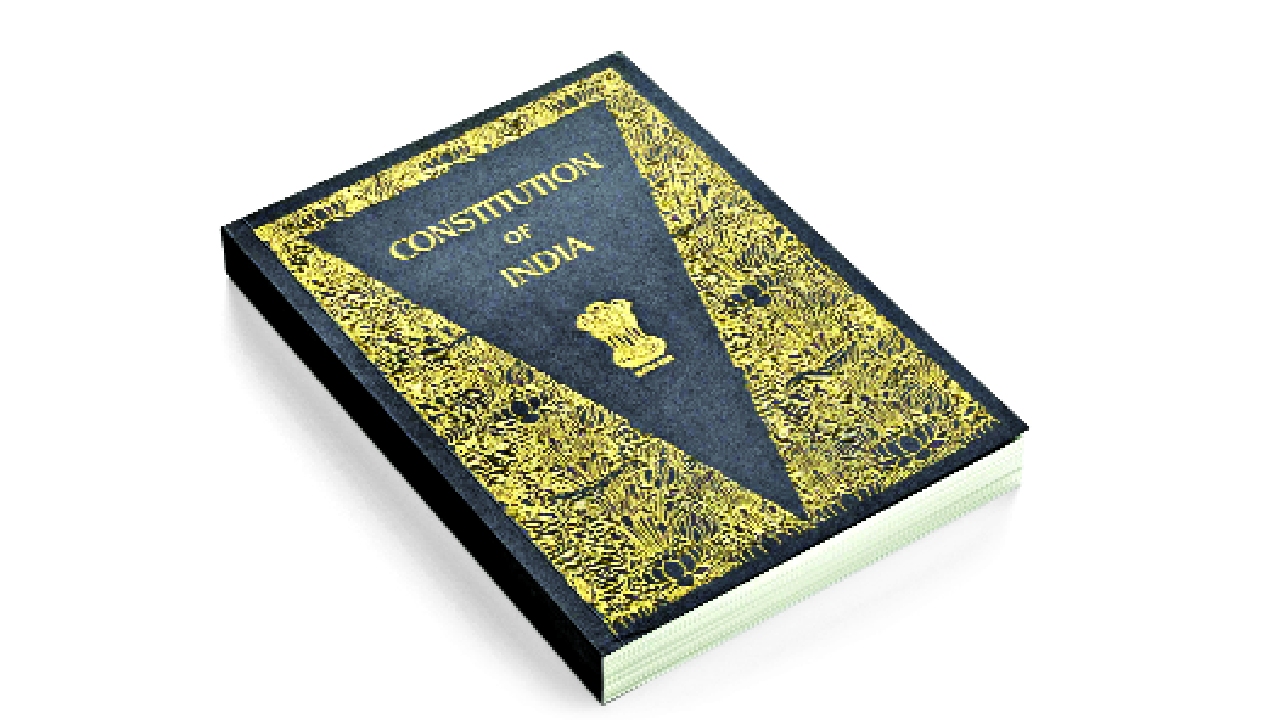
As India awoke to "life and freedom" after the British Raj ended and was replaced by Independent India, the framers of the Constitution bore great responsibility. This constitution, that shall define this country for centuries to come, was supposed to carve out a Democratic Republic from an erstwhile colony, and citizens with rights and respect from erstwhile subjects without any. The Constitution of the Republic of India was written in the shadows of two centuries of oppression, suppressed individual and collective identities, and erasure of cultural heritage. A carefully crafted, living document was being created to ensure no voice is left unheard, no stomach goes empty to sleep, no childhood passes without education, and no old age without familial warmth. This document, the longest constitution in the world, was not just drafted for a newly independent country. It was drafted for a dream: India, that is Bharat.
The exclusion of Fundamental Duties from the initial Constitution was not an omission, but a deliberate choice. "Subjects" who were forced to follow colonial orders and decrees with minimal rights to be identified as humans, let alone citizens, were at the base of this dream. Citizens of this new country were expected to innately love and respect what was hard earned; hence, citizens' duties were considered unsaid moral obligations. However, as a dynamic document, when the need arose, the Swaran Singh Committee suggested that Fundamental Duties be a part of the Constitution. As part of the landmark 42nd Amendment Act in 1976, 10 Fundamental Duties were added as Part IV - A of the Indian Constitution. In 2002, one more duty was added by the 86th Amendment Act - finalising 11 Fundamental Duties for the citizens of India.
These 11 duties are the moral, social, and national obligations of every citizen of this country - thus "fundamental" in nature. The Supreme Court's Ranganath Mishra judgment 2003 held that Fundamental Duties should not only be enforced by legal sanctions but also by social sanctions. As we celebrate 77 years of being the Republic of India, we carry on our shoulders the heritage of 5000 years of civilisational grandeur despite centuries of challenging seasons that have threatened this heritage. This responsibility is to be shouldered at a national level - but more so at an individual level. The Republic of India is a cumulative whole of 1.4 billion Indians that carry this legacy from its past and shape its journey in the future.
While laying emphasis on self-discipline being at the root of any prosperous society, and an essential characteristic of any leader, Kautilya in his Arthashastra points out that this may not always be innate, but is also acquired. This leader-like stature is developed through vinaya or training and education. The 11th Fundamental Duty added in 2002 (as a citizen's responsibility enforcing the Right to Education Act, 2002) incidentally happens to have acknowledged this aspect. Kautilya suggests that this education shall involve four elements: anvikshiki, trayi, varta, and dandaniti. Each of these withhold timeless relevance and adequate parallels with modern requirements.
Anvikshiki or logical reasoning is the primary element sowing the seeds of curiosity in every individual - the rationale to question, verify, judge, and act, parting ways from a herd mentality. An act of selfless service or an act of self-reliance germinates through logical thinking, which may not be crumbled under the rote learning frameworks that make securing 90 per cent marks the end goal. This needs to be founded on robust knowledge or Trayi which encompasses training in fundamental secular and cultural knowledge, such that manipulation of the self becomes difficult.
With information overload in the 21st century, most societal damage emerges from unawareness and a lack of purpose. Situating one's situational awareness within the ideals of the Constitution, cultural plurality, and civilisational grandeur helps guide one's curiosity and judgement as a society. A primer could be ensuring moral science lessons are re-inculcated in school syllabi in more thoughtful forms, to adapt to the needs of Gen-Alphas, for the development of strength in character as they grow up.
Employable training that shall secure the youth financially, and by consequence socially and politically, is the second element of Kautilya's system of training. Varta or a training in secular sciences, forms the third crucial element of Kautilya's training schedule. The final element essentially holds the three and their relevance together - Dandaniti. Danda acts as the protector of order and faith in justice. The National Education Policy of 2020 envisioned similar reforms and brought to the table a fresh outlook on pedagogy and knowledge systems. Indigenous knowledge systems were offered space in school and college curriculum, creative learning and flexibility of choices for students collectively breathed fresh air into the long colonised structures of tutoring, instead of guided learning. Six years old, the Policy is a fresh idea with a wide horizon yet to be covered. Kauitlya's ideas - ancient, but of contemporary relevance - thus offer critical guides to ensure that good vinaya leads to acquired self-discipline in all citizens.

Having accomplished this, citizens become aware of the universe and themselves - developing a strength of character that makes them leaders, instead of blind followers. These leaders envision, craft, create, and drive themselves, while driving the country with them. These leaders are not affected by distractions. While taking responsibility and accountability, they drive the country forward. The spirit of the National Education Policy 2020 leads us in this direction, but a long walk lies waiting ahead, leading us to a Viksit Bharat. The dream of India, that is Bharat, is a magnificent dream that has to be seen by 1.4 billion pairs of eyes, every day, with conviction and onus of the country's future on every shoulder that breathes its name.
Author's Justice AK Sikri, Former Judge, Supreme Court of India | Tejusvi Shukla Assistant Director (Research), Bharat Ki Soch Foundation