US Court dismantles tariffs?
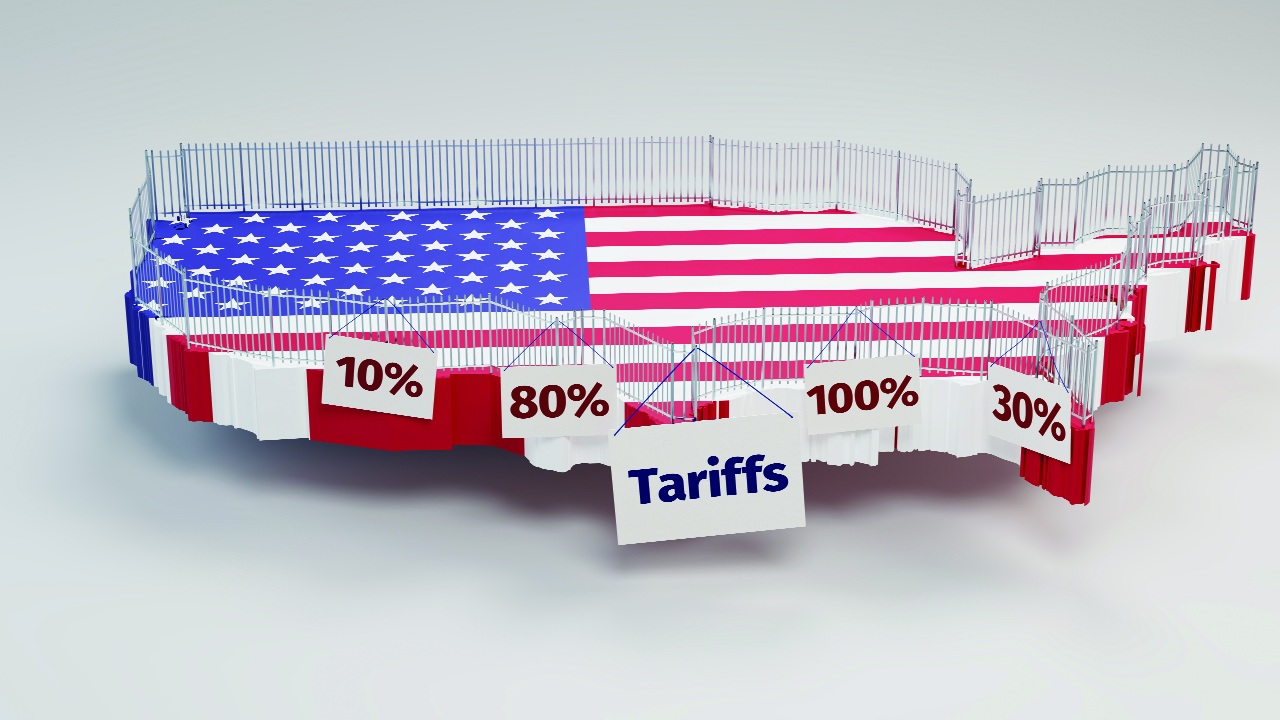
The US President Donald Trump did many things right, and followed the letter of the law. According to the Supreme Court’s order, he declared a national emergency, as was required under the International Emergency Economic Powers Act (IEEPA), which he used to impose tariffs against nations. He did define the “unusual and extraordinary” foreign threat to national security, foreign policy, and economy. This was in the form of narcotic smuggling, and looming bilateral trade deficits. He then imposed different tariffs to deal with each of them.
However, he got the spirit of the wrong. As the Court explains, the US Constitution gives the power to impose and collect taxes and duties, which tariffs are, to the legislature or Congress. This power, Article 1, Section 8, appears “first” and, according to one of the framers, Alexander Hamilton, is the “most important of the authorities proposed to be conferred upon the Union.” Hence, the power to impose tariffs was with the Congress for two reasons. One, the nation would depend on them for revenues for a long time. Two, the framers wanted the Congress “alone… access to the pockets of the people.”
This may explain why, during IEEPA’s “half-century of existence,” no president has ever invoked it to impose any tariffs, even limited ones, “let alone tariffs of this magnitude and scope.” In contrast, the presidents have used IEEPA for non-tax purposes. When they needed to introduce new taxes, they used other laws, but never IEEPA. This “’lack of historical precedent… coupled with the breadth of authority… is a telling indication’ that the tariffs (under IEEPA) extend beyond the President’s ‘legitimate reach’.” Trump simply does not have the powers to go ahead with tariffs without Congress’ formal nod.
More importantly, the scope and expanse of the tariffs is “‘extravagant’ by any measure.” This is evident from the earlier “boast” that its political and economic consequences are “astonishing.” According to the official projections, the tariffs that Trump imposed would reduce the national deficit by $4 trillion, and global deals influenced by them might be worth $15 trillion. The Court quoted the president, who had said that the tariffs could determine whether America remains rich or poor, a distinction that “hangs in the balance” at present. Tariffs was indeed a high-stakes drama enacted on the global stage.
Hence, any reasonable and rational interpreter cannot imagine that the Congress, while making IEEPA, wished to “’pawn’ such a big-time policy call… off to another branch (executive).” This explains why when it comes to the other laws, whenever the Congress has indeed delegated the tariff-making powers to the executive, it has done so in explicit terms, and subject to “strict limits.”
While it has included the word ‘duty’ in the laws, it has capped the amounts and durations. The word duty, tax, or tariff, as will be discussed in the second part of this analysis, do not find a mention in the clauses of IEEPA.
In addition, the Congress in other laws laid down a process before the tariffs were declared by the executive. These included investigations, public hearings, recommendations and findings of reports, consultations with the relevant nations and interested parties, and publication of the findings. Thus, the claim by Trump that the spirit of the law allows him to declare unilateral tariffs without consultations or debates seems facile and empty. Neither the framers of the Constitution nor those who wrote the laws, and passed them, wanted a president to wake up in the morning, and impose tariffs via a post on social media. Of course, the government lawyers argued that the spirit of the IEEPA is expansive, and its letters and words need to be “construed” or interpreted broadly and widely. Since the law deals with major problems such as national security, foreign policy, and the economy, there can be no doubt that it envisaged the delegation of major powers to the president. Even those “for which there may be a ‘colourable textual basis.’” In other words, even if the letters and words were hazy, opaque, or questionable, the intent may be read into them.
However, the Supreme Court rejected this logic and rationale. In fact, it turned the argument on its head, which surprised and shocked the government lawyers. The Court stated that it is precisely in such cases, where broad and major issues are involved that “we should be alert to claims that sweeping delegations, particularly delegations of core (tax-making) congressional powers, ‘lurk’ in ambiguous statutory texts.” In legal jargon, “There is no major questions exception to the major questions doctrine.” When the issue is about ‘major questions’ related to the nation, as Trump argues, the Court cannot allow non-existent and non-written major exceptions to the law, as the president wants.
Thus, the onus in such cases, and in the interpretation of such laws (like IEEPA), is on the president, or the person who claims an exception, to “justify his extraordinary assertion of the power to impose tariffs.” The individual needs to pinpoint specifics that prove that the lawmakers (Congress) wished to transfer such wide-ranging powers to another entity. In the IEEPA case, the Supreme Court was categorical. “He (president Trump) cannot (justify the exception.” Only what is written in the law will stand. What remains unwritten, but may be hinted in a complicit fashion, or via wider interpretation, will fall.
If one puts aside the need for specifics, either in terms of letters or words, and special written authority, and gives a president expansive powers, it will derail the workings of the nation. The president will be “unconstrained” by any process or procedures, and “free to issue a dizzying array of modifications at will.” A mere declaration of an emergency is enough. Nothing else is required by way of proof or evidence. The only way to stop this will be a “veto-proof majority in Congress.” While this was easier in the past, when congressional majorities were enormous, it is almost-impossible now that the differences between majority and minority are thin.
Obviously, such a view, as the president demands, is unacceptable. If accepted, it will represent a “transformative expansion” of the president’s control over tariffs. Through this means, he will have a complete and influential authority over the economy. There will be an explicit transfer of tax-making powers from the Congress to the president, from the legislature, the law-making body, to executive, the implementer. The so-called separation of powers will be destroyed.