Up in space with $1.5 trillion
Elon Musk, the world’s richest person with a personal net worth of more than $500 billion, has never been good at listening to others. He builds first, explains later, and then lets the stock markets argue about the valuations. When Tesla went public in 2010, skeptics dismissed it as an over-hyped electric car experiment. Fourteen years later, it is valued higher than most of the global automakers combined. The stock swings violently based on Musk’s tweets, successes, product delays, and regulatory scrutiny. On December 15, 2025, Musk’s net worth dropped by more than $9 billion in a day.
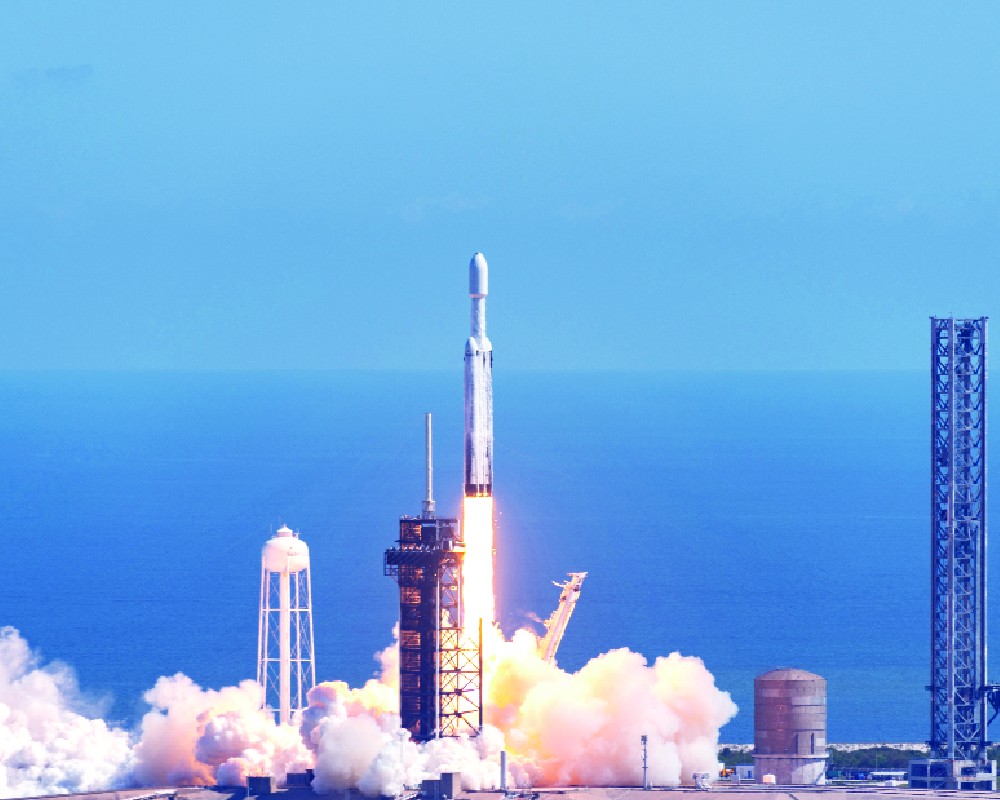
Now, Musk hopes to take his other venture, SpaceX, public. This time, the stakes are larger, numbers more extreme, and questions harder to ignore. The IPO (Initial Public Offering), which is expected in a year or so, may value the firm at $1-1.5 trillion depending on how aggressively the merchant bankers, and anchor investors price SpaceX’s satellite Internet arm, Starlink. At such a valuation, the issue will surpass the 2019 listing of Saudi Arabia’s Aramco, and become the largest IPO in history. Unlike Aramco, however, SpaceX does not sell oil, but offers access to outer orbits.
SpaceX is no longer a speculative R&D outfit. According to secondary market transactions, it was valued at $210 billion in 2023. Since then, its internal growth narrative has shifted decisively from rockets to recurring revenues. In recent times, the valuation has shot up to $350 billion. The centre of this shift among the investors is due to Starlink, SpaceX’s satellite broadband arm, which has quietly become its most important financial driver. Starlink operates the largest low-Earth-orbit (LEO) satellite constellation in the world, and accounts for most of the active LEO satellites in service.
Starlink’s footprint is spread across more than 150 nations. According to the analysts, its annual revenue may reach $15 billion in 2025, with projections of $22-24 billion by 2026. This increase will be driven by subscribers’ growth across residential, aviation, maritime, and government segments of users. This changes the IPO narrative. SpaceX’s rocket launches are capital-intensive, and cyclical. Starlink’s broadband subscriptions are predictable, scalable, and easier to model. SpaceX-Starlink is being reframed not as a space entity but as an infrastructure and data platform.
What complicates the IPO story is that recurring revenues do not translate into light capital requirements. Starlink’s growth depends on satellite replenishment, frequent launches, and constant upgrades to ground infrastructure. LEO satellites have shorter lifespans than the traditional geostationary systems, and will force Starlink into a cycle of recurring capital expenditure, although the number of subscribers may rise. This creates an unusual financial profile. On paper, it seems like a telecom or infra business. In practice, it behaves like a manufacturing and launch-heavy operation. The key question: can SpaceX-Starlink demonstrate sustained cash flows?
Tesla’s IPO valued the firm at $1.7 billion in 2010. Since then, its market cap crossed $800 billion at peaks, even though its annual vehicle sales remain far lower than legacy automakers like Toyota or Volkswagen. Markets rewarded Tesla for execution, and narrative dominance. Musk convinced the investors that it was not a carmaker, but a tech and energy platform. But his erratic behaviour introduced volatility, regulatory clashes, and governance concerns. SpaceX enters the IPO market with the same paradox. Musk’s presence inflates expectations, and compresses patience. But investors will price the ability to bend industries with the ability to attract controversies. The tension will shape SpaceX’s valuation.
Another risk that investors will need to price is SpaceX’s deep entanglement with the governments. A large portion of the launch business is tied to NASA, US Department of Defense, and allied agencies. Starlink is linked to military and strategic contexts, which blurs the line between commercial connectivity, and national security. Markets historically discount relationships subject to political shifts, budget cycles, and regulatory scrutiny. For SpaceX, this is both a strength and constraint. Government contracts provide credibility, and long-term demand, and they expose the firm to geopolitical risk, export controls, and policy interventions.
The timing of the IPO is not accidental. Space firms have struggled when risk appetite weakens, or capital becomes expensive. Unlike software firms, space businesses are unforgiving of missed timelines, and delayed returns. For Musk, listing SpaceX after 2026 may serve multiple purposes. It will provide access to deeper pools of capital when Starlink’s revenue visibility improves. It will allow the early investors and employees to gain liquidity. It can anchor SpaceX’s next phase of growth to public-market discipline. The risk, is that the markets may turn less patient precisely when SpaceX needs capital.
Unlike Tesla, which entered India hesitantly, SpaceX has laid the groundwork. Starlink has cleared key regulatory hurdles, and moved closer to commercial operations. It has begun hiring in Bengaluru, signaling long-term intent. Starlink has partnered with Bharti Airtel to distribute satellite broadband services. Airtel has deep exposure to satellite communications through OneWeb, giving it regulatory experience and institutional leverage. Reports point to broader industry engagement that can pull other telecom players into the ecosystem. For SpaceX, India offers massive demand, regulatory complexity, and geopolitical sensitivity. If Starlink can scale up, it strengthens its global investment thesis.
Starlink is unlikely to undercut competition on pricing. Instead, it may focus on coverage, speed of deployment, and specialised use cases such as aviation, maritime, defence, and remote enterprise connectivity. Regulation will be decisive. Spectrum allocation, security clearances, pricing oversight, and data localisation will determine whether the operations are mass-market services, or remain premium ones. Large parts of India remain uneconomical to connect. Satellite broadband offers reach without physical links. This aligns with India’s digital governance ambitions. Government platforms, emergency response systems, remote education, and healthcare services depend on reliable connectivity. Starlink may thus position as a complementary infrastructure.
Over the years, SpaceX has explored local manufacturing, and supply chain partnerships in India, particularly for satellite user terminals, and related hardware. For India, this fits neatly into the ‘Make in India,’ and technology sovereignty narrative. For SpaceX, localisation reduces costs, eases regulatory friction, and strengthens political alignment. Post-IPO, such decisions may not be internal strategy calls. They will imply disclosures, capital expenditure commitments, and shareholder talking points. India’s role can shift from being a customer to being a contributor in SpaceX’s global value chain. Post-IPO, the markets will demand board independence, clearer segment reporting, risk disclosures, and transparency.