Union budget 2026-27: From policy vision to scalable execution for Viksit Bharat 2047
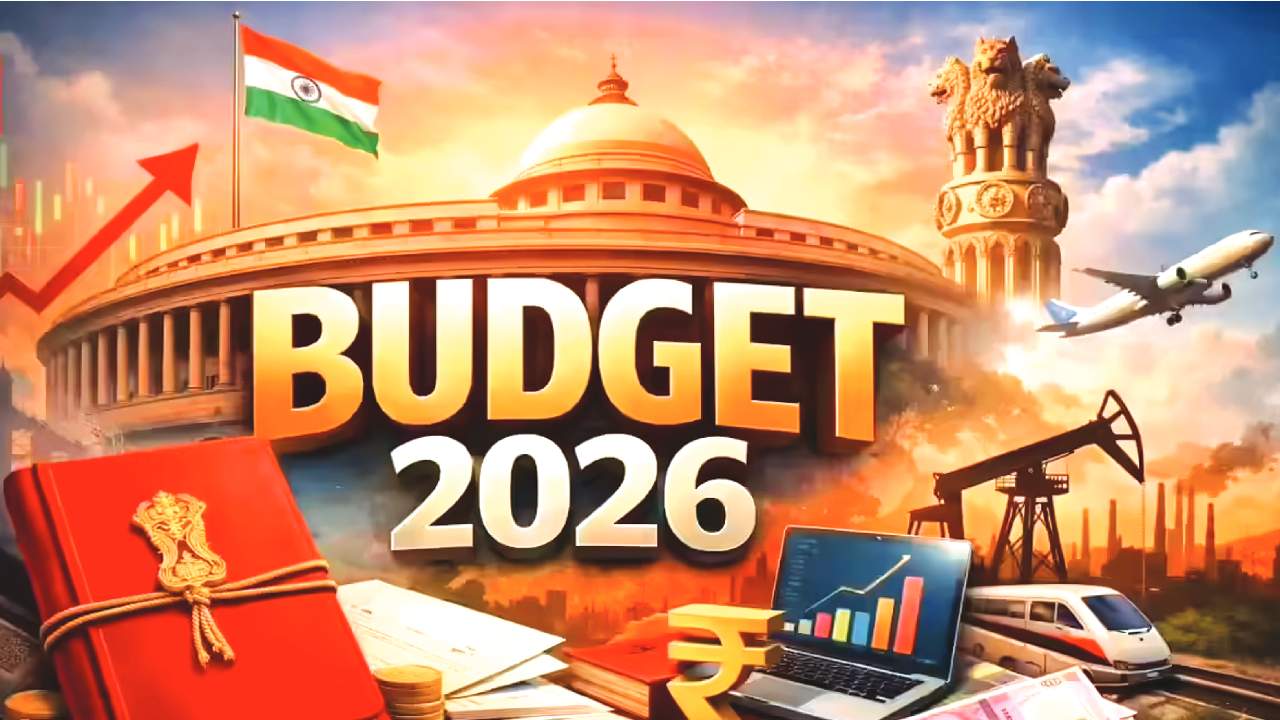
The Union Budget 2026-27, presented by Finance Minister Nirmala Sitharaman, marks a decisive shift in India’s economic journey-from intent to execution, from pilots to platforms. Anchored firmly in the vision of Viksit Bharat 2047, the Budget’s three Kartavyas-accelerating growth and competitiveness, empowering citizens through skills and participation, and ensuring inclusive development-offer a pragmatic and future-ready roadmap for India’s next phase of transformation.
Rewiring MSME finance through asset-backed marketplaces
One of the most consequential signals from the Budget is the emergence of a true asset-backed financial ecosystem for MSMEs. The Rs 10,000 crore SME Growth Fund, enhanced allocation to the Self-Reliant India Fund, mandatory CPSE onboarding on TREDS, credit guarantees for invoice discounting, GeM-TREDS integration, and-critically-the introduction of Asset-Backed Securities (ABS) for a secondary market together represent a structural reset of MSME credit.
This architecture enables receivables to become trusted, tradable financial assets, opening the door for fintech-led marketplaces powered by AI-driven risk intelligence, blockchain-backed invoice authenticity, and digital identity-led trust. It moves MSME finance from relationship-led lending to data-led liquidity-unlocking speed, scale, and resilience across the credit ecosystem.
Traceability-led growth for agriculture and rural MSMEs
The Budget also strengthens the case for traceability as economic infrastructure, especially across agriculture and MSME supply chains. Integrating the One District One Product (ODOP) programme with blockchain-enabled provenance can transform sectors such as coconut, cashew, textiles, and other agri-linked products. This directly improves price discovery, export readiness, ESG compliance, and access to formal credit.
Such traceability-led systems are critical for farmers, rural MSMEs, and youth in rural India, enabling them to participate meaningfully in national and global value chains. While agriculture continues to support nearly 45 per cent of India’s workforce, the next leap in farmer income will come from Agri-AI, supply-chain transparency, digital marketplaces, and agri-carbon credit platforms-areas ripe for innovation.
Sustainability, carbon markets, and digital MRV
On sustainability, the proposed Rs 20,000 crore outlay for Carbon Capture, Utilization and Storage (CCUS) across five sectors signals long-term seriousness toward India’s net-zero commitments. However, capital alone is not enough. Scalable impact will require digital Measurement, Reporting, and Verification (MRV) systems, AI-driven optimisation, and tokenised carbon assets to ensure transparency, credibility, and monetisation across industries.
This creates a powerful opportunity for startups and enterprises working in carbon accounting, ESG compliance, and climate fintech-positioning India as both a climate solutions market and a global provider of carbon infrastructure technologies.
India as a global digital infrastructure hub
A standout global signal from the Budget is the tax holiday until 2047 for global cloud service providers serving international clients using Indian data centres. This positions India as a trusted global digital infrastructure hub, aligned with data sovereignty, resilience, and scale-critical foundations for AI, fintech, and digital public infrastructure.
Parallel investments in ANRF, IndiaAI, quantum computing, and frontier technology research underline a strategic shift-from a services-led economy to an IP- and innovation-led nation. While India still trails the US and China in R&D intensity and patent creation, this Budget lays the groundwork for long-term indigenous technology readiness.
From allocations to execution: The role of IFIF 2026 Beyond numbers, Budget 2026-27 provides direction. It calls for convergence-between policymakers, banks, fintechs, startups, researchers, and global partners-to translate announcements into interoperable, trusted, and scalable digital systems.
IFIF 2026 is uniquely positioned to be that execution bridge:
- Showcasing real-world use cases beyond pilots.
- Enabling asset-backed MSME
- Marketplaces.
- Demonstrating traceable agri and MSME supply chains.
- Advancing AI, blockchain, carbon markets, and digital trust frameworks.
By leveraging AI, blockchain, digital identity, and asset-backed finance, India can empower MSMEs, farmers, and youth-building a resilient, inclusive, and globally competitive economy on the path to Viksit Bharat 2047.
Writer is a founder, India Finnovation Network and India Blockchain Forum Innovation Advisor, Union Bank of India
This article was originally published in The Core

India's biggest post-budget Finance & Innovation Forum over 3-days at WTC, Mumbai.
The Pioneer presents India Finance & Innovation Forum 2026 convenes policymakers, regulators, financial institutions, and industry leaders at a moment when India’s financial architecture is being actively reshaped. Over three days, the Forum will focus on fiscal and monetary priorities, capital markets, digital finance, and innovation-led growth—grounded in real-world challenges and institutional decision-making.
Designed for senior decision-makers, IFIF 2026 combines on-stage dialogue with curated networking, innovation labs, and collaborative working sessions. The focus is on understanding what is changing, what is working, and what comes next for India’s financial system.
CLICK HER to REGISTER NOW AND CLAIM YOUR PASS