Undoing missed forest reforms

As Uttarakhand marks 25 years of statehood, it faces a defining choice, which will impact the country’s future. Its forests, the greatest ecological, and economic asset of the state, are at risk. They may become a growing liability, as is evident currently from the catchy headlines of a forest fire, if the forest governance agencies in the state fail to adapt to the climate and local economic realities. Recent amendments to the Panchayati Van Niyamawali / Rules (PVN), 2024, which roll back years of ground-level and crucial reforms, may push Uttarakhand in the wrong direction.
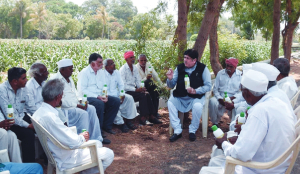
Van Panchayats are unique to the state. Created in 1931, they are among the country’s oldest institutions that are directly responsible for community forest governance. The Panchayats support the livelihoods of over a million rural families (as per Census 2011), and manage the state forests that generate ecosystem services valued at more than INR95,000 crore every year. Yet, instead of being strengthened, the Van Panchayats are being systematically weakened through policy regression. The new amendments and rules indicate the same progression, which may spell disaster.
Between 2020 and 2022, Uttarakhand undertook one of the most serious reform efforts in community forest governance anywhere in India. Long-standing errors in Van Panchayat land records were corrected. Elections were revived, which raised the compliance from a mere six per cent to an amazing 69 per cent within a few years. Robust electoral reforms were designed to prevent future mishandling. Most importantly, modern Composite Management Plan (CMP) frameworks were introduced, which aligned with the ecosystem services, and emerging green markets.
After three years of consultations with the various stakeholders on future reforms, a comprehensive Panchayati Van Niyamawali (2023) draft was ready for the approval of the state cabinet by March 2023. It contained 58 progressive amendments and rules. It was aimed to modernise governance, ensure transparency, decentralise decision-making, and prepare rural communities for an ecosystem-service–based incomes. It was truly comprehensive, even revolutionary. It presented Uttarakhand with an opportunity to demonstrate national leadership in linking community forestry with the green economy.
Instead, in March 2024, the state notified limited amendments, only to 15 rules, and without any public consultations. The new amendments, which were a diluted form of the 2023 holistic draft, ignored the entire reform blueprint, and reversed several field-tested reform provisions. What should have been an actual leap forward became a huge step backward. Many of the amendments are regressive, and dilute the independence and autonomy at the grassroot level, and ignore judicial precedents.
For example, the new 2024 amendments significantly centralise functional decisions on routine administrative and financial decisions. In addition, the financial limits for routine transactions remain unchanged since 2000, which ignore the economic realities related to inflation, and other operational facts. The progressive financial provision to link communities with the local ecosystem service market through “income and funds” was shifted again to the more bureaucratic and executive-led “grants and funds.” This will push the Van Panchayats into a dependency on the government.
The amendments directly weaken the forest protection, as local institutions lose the autonomy needed to respond quickly to issues such as forest fires, forest offences, human-wildlife conflicts, and others. The message to the communities seems unmistakable. The locals are no longer the trusted custodians of their ecosystem, and are merely regarded as passive recipients of executive orders. In other words, the state will decide on these crucial grassroot issues.
Perhaps the most serious regression of the new 2024 amendments is the extension of the cycles of the CMP from five to 10 years. This contradicts the Supreme Court directions under the Godavarman judgments, which mandate five-year management plans for the village forests. This change undermines scientific forest management, weakens accountability, and nullifies CMPs that were painstakingly prepared in 31 forest divisions using updated templates that integrated ecosystem services in the Van Panchayat operations. At a time when climate variability and unpredictability is accelerating, freezing community-linked management frameworks to a top-down guideline, and that too for a decade, reflects callousness, and is both unscientific and risky.
Across the Himalayan region, not just in Uttarakhand, ecosystem services, which include carbon, water, biodiversity, and landscape resilience, have emerged as the next frontier of sustainable growth. The state was, and is, well positioned to lead this direction. Hence, the 2023 (rejected) draft explicitly integrated ecosystem-service readiness into the Van Panchayat governance structure. The new 2024 amendments removed crucial and important provisions and clauses that defined ecosystem-services and their linked budgeting and audits. The draft talked about the convergence with the rural and urban local bodies, and direct fund and revenue channels for the Van Panchayats, which are gone in the amendments.
As a result, Uttarakhand has stalled its readiness for green credit markets, watershed payments, and carbon mechanisms that can generate stable rural incomes, and strengthen conservation. The timing could not be worse to the issues that the state faces now. Over a million forest-fringe families depend on the Van Panchayats. Yet the new 2024 amendments were notified without a single public consultation. Rectified Van Panchayat land records that were earlier made public, and management information systems that were installed for monitoring the reforms by 2022 were quietly removed from the official websites of the state’s forest department. This indicates a gross dilution in issues such as transparency, and oversight mechanisms that were an integral part since 2023.
The solutions to manage these problems that were created by the new 2024 amendments are clear and achievable. The state needs to withdraw the amendments in their current form. It should re-table the 2023 draft before the state cabinet which can re-look at it, and implement it. As per the Supreme Court judgments, the five-year CMP cycles need to be restored. Van Panchayat elections and management need to be back under the state’s forest department. The state should reinstate autonomy, transparency, and financial devolution. In addition, there is an urgent need to embed the ecosystem services into planning, budgeting, and income models, and to restore online access to land records and MIS systems.
These reforms are not administrative compulsions, but they will prove to be investments in the ecological future of Uttarakhand and nation for a climate-constrained future. At 25 years of age, the newer state of Uttarakhand must decide on what kind of ecological future it wants. It wishes to be a self-resilient state, or one where mis-administration, siloed thinking, and centralisation of power weakens the ecological resilience and prosperity of the mountain state. The window is narrow, and the stakes are high.
The author is former PCCF Van Panchayat, Uttarakhand, and was involved in Van Panchayat reforms (2020-22); views are personal
Leave a Comment
Comments (2)
A timely article, in the context that the 2023 Niyamawali marks a shift from “community-governed commons” to “administratively managed local forests.” Unless autonomy, fire protection duties, and ecological decision-making are restored to villagers, the reforms may undermine the very institution that made Uttarakhand’s forests resilient.
Very serious analysis of state of Van Panchayat system.