UGC conundrum: Inequality in name of equity
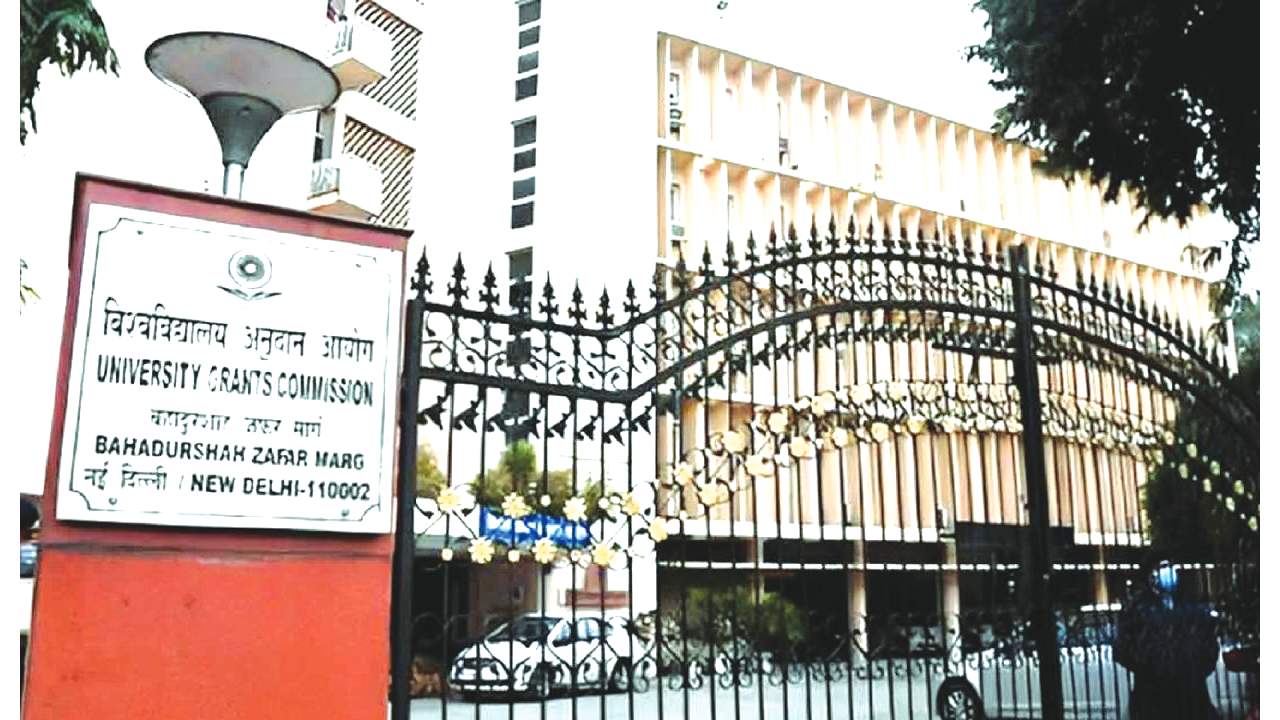
Recently, Supreme Court has rightly ordered to put controversial UGC Regulation in abeyance. Court suggested that Regulations must be revisited by committee comprising eminent jurists. Court observed that Regulations are prima facie vague and are capable of misuse. This regulation has initiated debate, on issue of discrimination, which by way of plenary reading, seems to be done only by students who are of General Category.
How far this is true, is subject of sociology but surely, it overlooks discrimination, of which General Category has been victim of, just to mention, Periyar Movement rewarded comrades who used to cut shikhas and janaeu (sacred thread) of brahmins. Above-mentioned regulation brought by University Grant Commission intends to break the golden thread of equality and equity, striking at core of constitution’s objective, ie, Fraternity, by creating divide among the students of Higher Education Institutions (HEI).
The regulation comes with a notion of “Presumption of guilt” in favour of students belonging to General Category. The regulation also undergoes some inherent flaws, which has been discussed by this author. Controversial rule, 3(c) of regulation includes students from Other Backward Classes. However, who may belong to OBC category in one state may not be OBC in another state, eg, Jats of some districts in Rajasthan are considered OBC while that of Haryana and Uttar Pradesh belongs to General Category.
Now imagine, a student from Jat Community in Uttar Pradesh, who belongs to General Category, enrols himself in HEI in Rajasthan and gets alleged by a Jat student of Rajasthan domicile, for caste discrimination; how far allegations will sustain, might be known only to God and framers of the regulation. This shows intellectual infirmity, which UGC is suffering from. Another evil provision of regulation is, rule 5(7) which mentions about the membership of Equity Committee, formed under rule 5(6). Under rule 5(5), the committee is vested with the responsibility to enquire the complaints of discrimination.
The committee shall mandatorily comprise of members belonging to OBC, SC, ST, PwD, and women. This gives committee a colour of caste and gender biasness, believing the notion that a person from other category of population won’t do a fair enquiry in complaints pertaining to discrimination. Drawing a parallel, there are special courts for adjudicating The Scheduled Castes and the Scheduled Tribes (Prevention of Atrocities) Act, 1989.
Those special courts may have judges from General Category, still we see convictions in those cases, denial of regular bail to the accused person who are invariably are from General Category. Furthermore, in above mentioned act, DSP/ACP rank officer is appointed as investigating officer.
No such mandatory provision is there to have a person from SC/ST community as investigating officer. Hence rule 5(7) which mandates caste specific membership does not adhere to the parliamentary practice of “assumption of neutrality” in favour of investigating and adjudicating authorities.
Rule 7(a) of the regulation reads “all students at the time of taking admission or renewal of admission and all faculty members and staff furnish an undertaking to the effect that he/she shall promote equity and will not indulge himself/herself in any form of discrimination”. Therefore, responsibility to maintain equity within HEI, is vested with all students and the undertaking not to indulge in any form of discrimination is directive, in disguise for all students, irrespective of caste.
Though uniform undertaking in place, its selective enforcement when it comes to “caste-based discrimination”, demonstrated, how irony died hundred deaths. Joint reading of rule 3(c) and 7(a), highlights selective penalisation when it comes to caste-based discrimination, eg, A general category student if passes casteist slurs to a student from SC/ST/OBC community, he invites an action against him, but the inverse, will never invite any action when it comes to “caste-based discrimination”.
Though, student from SC/ST/OBC community, had given undertaking as mandated under rule 7(a) to “promote equity” but just because general category fails to finds it place in rule 3(a) which is “Caste Based Discrimination”, the one who passed such slurs, will never be penalised. Notion on which the regulation rests is simple, a general category student can never face caste discrimination. This notion falls flat on face, if we apprise ourself of certain facts. In the month of April, 2025, during the Common Entrance Test, in the state of Karnataka, there were incidents of cutting sacred threads in name of checking in examination centres.
It is important to mention, a student named Akshat Shukla committed suicide after being continuously mocked for his “shikha” and “janaeu”, in his hostel in Dehradun, in the year 2023. Often the terms “Ponga pandit” to address brahmins are used, while who intends to save money are mocked by addressing word “baniya” in derogatory manner. We have seen, in Jawaharlal Nehru University, in the year 2022, there was mass agitation against general category students and on the doors of their hostel room was written “leave India”. The last incident is not only discriminatory but also intimidating.
Rule 8(a) of regulation mentions, identity of aggrieved person shall be kept confidential if requested by aggrieved person. This clause would act as an impediment in fair enquiry. It is pertinent to note, a fair enquiry mandates examination and cross examination of informant and witnesses, recording statements and listening to version of the accused, this is part of natural justice, demonstrating practice of proverb “nobody should be condemned unheard”.
If identity of informant, who is the victim itself is kept confidential, there can be no examination, cross examination or recording of statements. With help of example let us understand why this provision is not warranted and is a waste of ink; A student “A” passes casteist slurs to “B” who belongs to SC/ST/OBC community. “B” complains to equity committee about same and requests for anonymity.
The committee summons “A” and proceeds with enquiry. The time “A” receives summons to appear before committee is the time he knows who is complainant. We fail to understand, how this provision protects victim from clutches of accused ?
Rule 8(d) of regulation directs committee to submit report of enquiry within 15 days to head of the institution. It also mandates to give a copy of said report to aggrieved person. No such duty has been imposed on committee to supply copy of report to accused. This curtails right of accused to know grounds of him/her being held guilty and further might curtail them to go for appeal, procedure of which has been made under rule 9 of regulation.
This regulation serves no goodpurpose to get enforced. Caste discrimination being harsh reality, is practiced across India and is not only confined to any particular group of caste; though we should strive towards a society which is discrimination free. Also, caste-based discriminations changes with political dynamics and is deeply rooted in landholdings as highlighted by celebrated sociologist, Lt. Shri MN Srinivas. We as common citizen should refrain from being prey of such discriminatory regulation and strictly practice our fundamental duty, under article 51A(e) of Indian Constitution to promote the spirit of brotherhood.
Author is a Delhi based advocate