Two FTAs, a common lesson
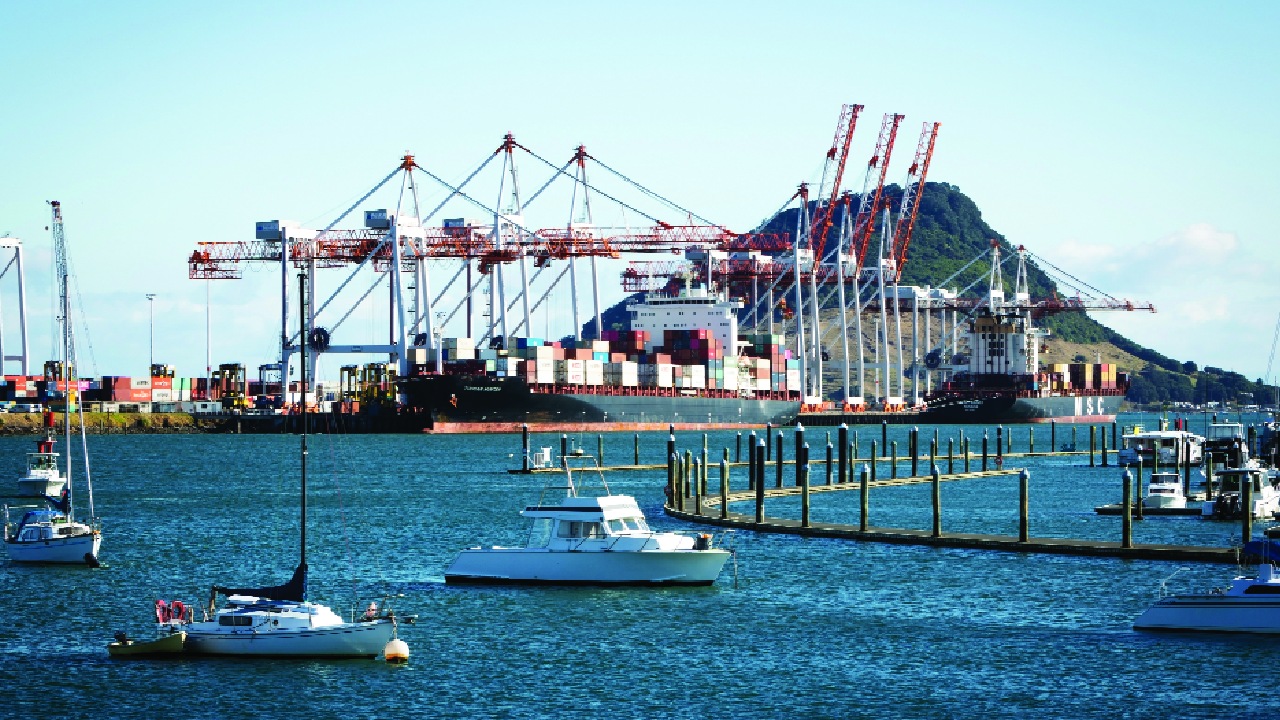
Within three months of the Trade and Economic Partnership Agreement (TEPA) with the European Free Trade Association, which kicked off on October 1, 2025, India concluded another free trade agreement with New Zealand. Called the Comprehensive Economic Cooperation Agreement (CECA), it includes, according to official releases, New Zealand’s commitment to facilitate $20 billion of foreign direct investment (FDI) over 15 years. The details of the agreement are currently being drafted. Unlike the $100 billion, and one million jobs commitments under TEPA, CECA’s pledge attracted less attention, perhaps because the figure is less dramatic.
However, there are two common features between the two promises. As in TEPA, there is no investor-state dispute settlement mechanism in CECA, and only private sector investments will be counted. There is a rebalancing mechanism under which India may withdraw the concessions if the investment targets are not met. However, in CECA, this may be overseen by a committee, rather than the allowance of an automatic grace period. The difference is that unlike TEPA, CECA does not include an explicit figure about jobs.
To assess potential investment flows under CECA, it is imperative to examine the nature and contours of New Zealand’s economy. It is dominated by services, and manufacturing accounts for nearly 10 per cent of the GDP. The latter is concentrated in low- to medium-technology activities such as food and beverage processing, wood products, and basic metal fabrication, which are closely linked to natural resource endowments. New Zealand’s strengths lie in agricultural science, food technology, veterinary science, and environmental management. This limits the scope for technology-intensive investments, except in niche areas or through the acquisition of existing assets rather than new expansion.
Expenditure on R&D is modest in New Zealand, and concentrated in agriculture, food systems, and selected services including computer-related activities. Beyond a few global leaders, such as Fonterra in dairy, and Fisher & Paykel Healthcare in medical devices, the private sector is dominated by small and medium enterprises with limited capacity for overseas expansion. This diminishes the likelihood that Zealand’s outward investment can involve large-scale industrial upgrading or significant technology transfer to India.
At first sight, average inflows of $1.33 billion per year do not appear impossible. But the issue is New Zealand’s capacity, and the past bilateral trends. Historically, the cumulative FDI is negligible. Official data show that between January 2000 and December 2024, equity inflows from New Zealand were nearly $87 million. In the past decade, the annual average was roughly $4.5 million. Of this figure, a small share went into manufacturing, with most of the money spread across services, advertising, and agriculture-related activities. With such a low base, future inflows or reinvested earnings are unlikely to emerge as major drivers for investments under CECA.
This is consistent with New Zealand’s overall outward investment pattern. Net outward FDI flows are small and volatile and, in some of the past years, they were negative. A large portion consists of reinvested earnings rather than new flows. Manufacturing accounts for a limited share, whereas wholesale trade and services dominate. Geographically, most of the outward FDI goes to Australia, and the United States, with smaller shares in other nations. This suggests that New Zealand’s investors seek large markets, advanced technologies, or institutional familiarity. India may only benefit because of its vast market, and growing middle class.
Against this background, a projected inflow of $20 billion over 15 years represents a sharp departure from historical behaviour, and New Zealand’s past investment relationship with India. Even if some increase occurs in the future, it is likely to be in areas where New Zealand has genuine strengths, such as agricultural technologies, renewable energy, and selected services. These can be useful, but they are unlikely to significantly strengthen India’s manufacturing and technological base, or aid the Make-in-India scheme.
As with TEPA, the mode of entry, sectoral focus, and patterns of divestments remain unclear. The CECA pledge, therefore, has a strong “Nando Raja Bhavi?yati” flavour to it. The jewellery is taken today, and comfort is drawn from the possibility that many things can happen tomorrow. There is a chance that the merchant may not return to settle the accounts. Hence, while it is a charming story, it is a risky basis for high expectations due to policy changes. New Zealand’s official responses placed little emphasis on the investment angle. Public statements focused mainly on the higher bilateral trade, and export gains for the New Zealand exporters.
Clearly, the bilateral partner’s existing economic structure, technological profile, innovation system, and outward investment patterns suggest that CECA is unlikely to emerge as a large or transformative source of industrial investments. In any case, an average annual inflow of $1.33 billion is unlikely to make a meaningful contribution to development unless it is tightly focused on greenfield investments in key capability-building sectors.
There is a deeper problem. Free trade agreements (FTAs) are instruments to reduce trade barriers such as tariffs and regulatory frictions that fall within the realm of governments. In contrast, investments are long-term strategic decisions of the private players, and are shaped by market size, infrastructure, skills, policy stability, and technological ecosystems. Trying to tie the two together through numerical commitments merges different logics. Trade concessions are immediate and binding, while investment commitments are soft and uncertain. While the first is akin to a bird in hand for the partners, the latter is an unknown number in the bush for India.
India needs to pause and consider whether quantitative investment commitments can be meaningfully made part of FTAs. There is a risk of exchanging the present and binding concessions for future and uncertain inflows, even with the rebalancing provisions. Nothing prevents India from giving more concessions under the FTAs, like lowering tariffs later, as was the case with TEPA. Three issues are crucial. First, India needs to stop focusing on the size of potential inflows, which is a feature since liberalisation began in 1991.
Second, India needs to reconsider adding investment commitments into FTAs. Such provisions include risks related to constraints in policy autonomy, and encourage governments to trade certain concessions for uncertain returns. Separating trade liberalisation from investment promotion will allow tariff policy to be guided mainly by economic merits. Finally, investment promotion needs to be organised around sectoral priorities rather than country frameworks. Sector-focused decisions can identify capability gaps, map global firms’ strengths, and design incentives linked to monitorable and development-relevant outcomes. While FDI can support development, it cannot substitute for domestic capabilities, institutions, and governance. The task is not to maximise inflows but to maximise learning, linkages, and long-term value.
Rao is Senior Research Fellow at the Academy of Business Studies, and Ranganathan is an independent researcher; views are personal