Twenty years after forced exile, Taslima Nasreen to return to Kolkata
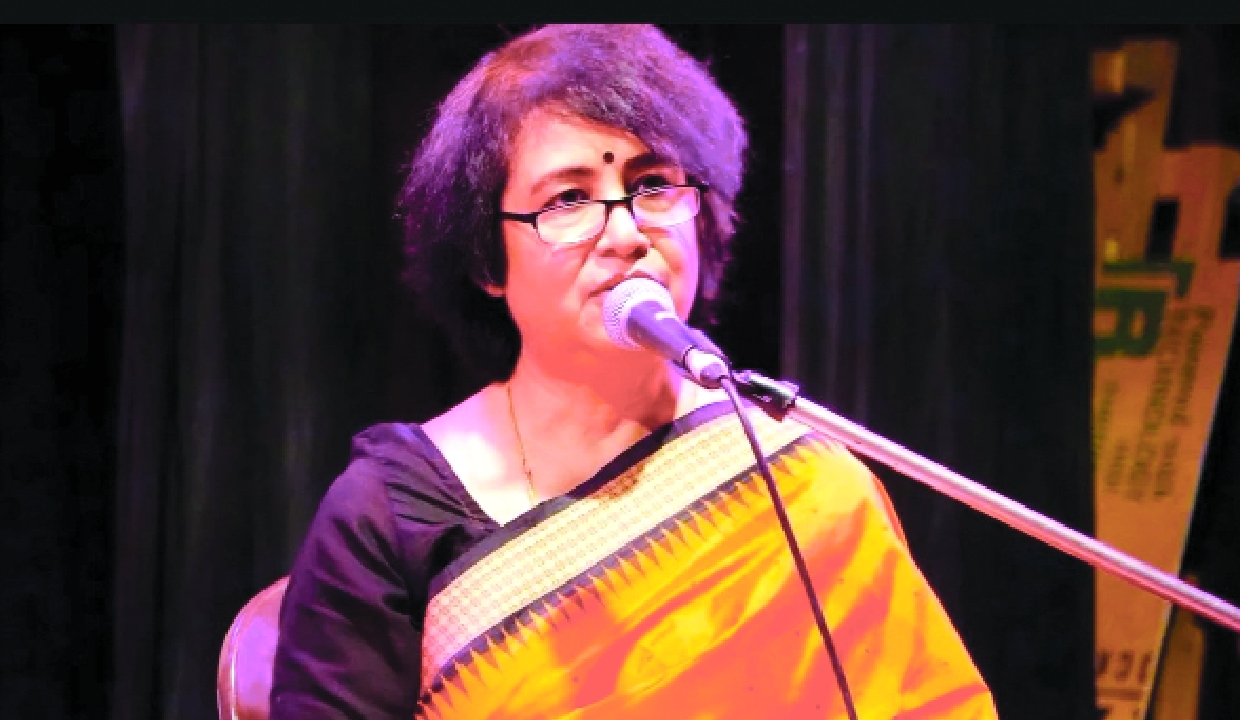
Exiled Bangladeshi writer Taslima Nasreen will set her foot in Kolkata after two decades of being coerced out of the city by the then Government led by Buddhadeb Bhattacharya on August 1. The writer of famed novel Dwikhondito (Bifurcated) is likely to take part in an anti-fundamentalist poets’ conference scheduled to organised at Rabindra Sadan auditorium.
Nasreen shared a post on social media that she would be in Kolkata on August 1 to participate in an anti-fundamentalist literary, where she is expected to recite poetry.
Nasreen’s arrival in the City of Joy turns out to be politically symbolic in the backdrop of the BJP coming to power in the state, with many a saffron leader often lambasting the Left and subsequently the Trinamool Congress (TMC) Government.
“We will celebrate Ms Nasreen’s coming to the city after 20 years as she was forced to leave Kolkata as the Left Government succumbed to the pressure of the fundamentalist forces. She will see that she has come to a new West Bengal,” said one of the members of Paschimbonger Jonno, is co-organising the August 1 conference.
A BJP leader and a Minister said, “We don’t want to recall the past, which is after all past. West Bengal and India have changed. We have woken up to our own free will and it demands a free society where anyone can put forward his or her views. Taslima Nasreen is one such progressive writer who has world appeal for her bold presence in literature and her concern for the women in obscurantist societies. We want she comes to Kolkata and talk, feel and eat.”
Last year, BJP MP and State party president Samik Bhattacharya too had urged the Union Government facilitate Nasreen’s return to Kolkata, considering her strong yet rare stand against Islamist fundamentalists.
At the time, the then TMC Government in the State had shown little inclination to act on the proposal, with Nasreen herself saying she no longer wished to be “kicked around like a football” by changing political dispensations. “I don’t want to get kicked around anymore. Instead, it would please me if the Governments allow me to travel to Kolkata to attend literature festivals and book fairs,” she had then said.
Nasreen, who rose to international prominence in the early 1990s through her feminist writings and uncompromising criticism of religious orthodoxy, fled Bangladesh in 1994 after multiple fatwas called for her death following the publication of her novel Lajja, which chronicled the persecution of Hindus in post-Babri Bangladesh.
After spending nearly a decade across Europe and the United States, she moved to India in 2004 and made Kolkata her home, describing the Bengali-speaking city as the closest cultural refuge she had found after exile.
That association ended abruptly in November 2007.
The publication of portions of her autobiographical work Dwikhandita triggered outrage among sections of Muslim organisations, culminating in violent protests across parts of Kolkata. The situation deteriorated to the point where Army deployment became necessary to restore order.
The then Left Front Government, headed by Bhattacharjee, subsequently asked Nasrin to leave Kolkata. She was shifted first to Jaipur and later to Delhi, where she initially remained under house arrest before eventually being granted a long-term resident permit and multiple-entry visa by the Centre.
The episode has since remained one of the most contentious chapters in West Bengal’s debate over free expression.