Trump, Xi find common ground on Iran
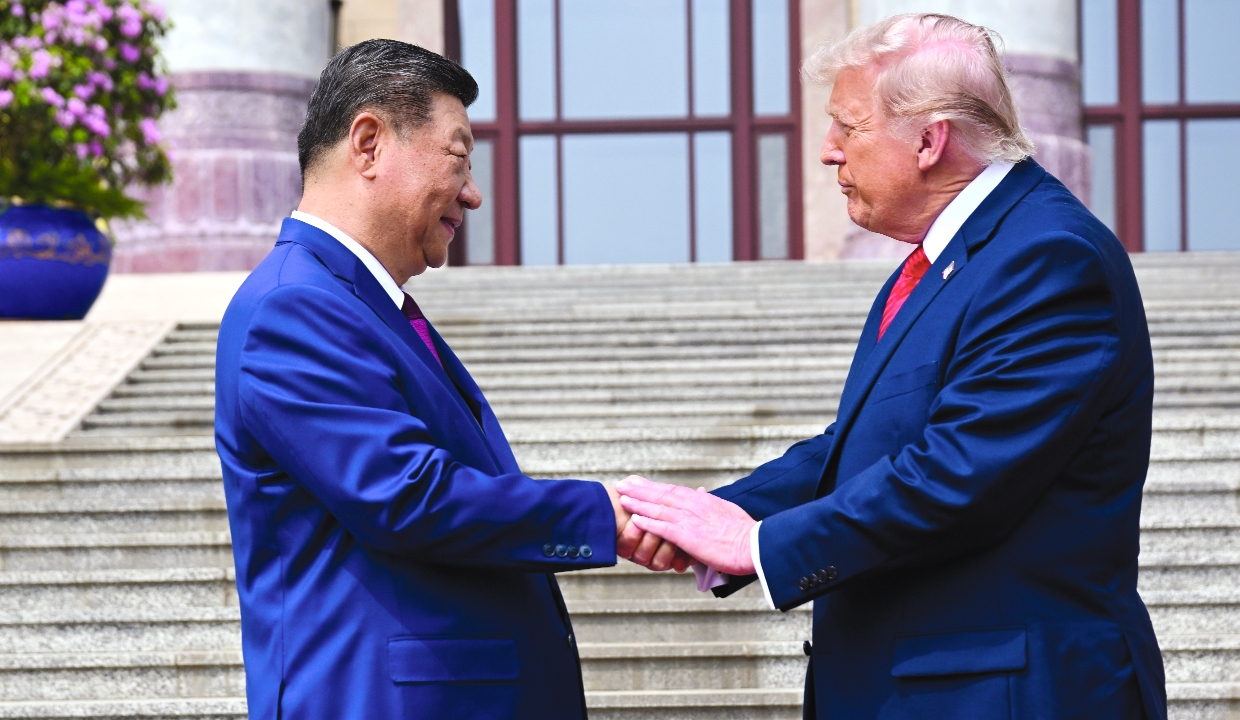
US President Donald Trump and Chinese President Xi Jinping agreed during high-level talks in Beijing on Thursday that the Strait of Hormuz must remain open and free from militarisation, amid rising global concern over the ongoing Iran conflict and disruptions to international energy supplies.
US Secretary of State Marco Rubio said both leaders also shared the view that Iran should not be allowed to develop nuclear weapons.
“The Chinese side said they are not in favour of militarising the Strait of Hormuz, and they are not in favour of a tolling system, and that is our position,” Rubio told NBC News after Trump and Xi held more than two hours of discussions with their delegations in Beijing.
The West Asia crisis emerged as a central issue during Trump’s long-delayed visit to China, which had reportedly been postponed by six weeks due to escalating tensions in the region.
Trump was widely expected to seek Beijing’s support in helping de-escalate the US-Israel-Iran conflict. However, Rubio clarified that Washington was not asking China to intervene directly.
“We’re not asking for China’s help. We don’t need their help,” Rubio said.
At the same time, he acknowledged the global impact of rising oil prices caused by instability in the region. “We are not immune to global oil prices at some point, because we do buy from the global market, but other countries around the world are paying a much higher price,” Rubio added.
Rubio said Trump and Xi found “common ground” on Iran’s nuclear ambitions, with both sides agreeing that Tehran must not acquire nuclear weapons.
Trump has repeatedly maintained that preventing Iran from obtaining a nuclear weapon remains a top foreign policy priority for his administration amid continuing regional tensions.
Rubio also defended Trump’s recent remarks dismissing concerns over domestic political pressure linked to rising energy costs during negotiations with Iran.
“What the president is making clear is, if the Iranians think they are going to use our domestic politics to pressure him into a bad deal, that’s not going to happen,” Rubio said.
China has consistently called for a diplomatic resolution to the conflict, which began escalating sharply on February 28.