Trump’s houses of cardboards
What grabs the headlines are the news related to the abduction and arrest of a president, and his wife, threats to nations like Cuba, Colombia, and Greenland about possible invasions and takeovers, and criticisms against NATO allies. Of course, there are the disruptions related to trade, tariffs, and investments. But the US President Donald Trump is equally keen on domestic issues, particularly the state of the US economy. More importantly, apart from ‘America First,’ and ‘Make America Great Again,’ he wants to ‘Make America Affordable Again’ for the middle and lower classes.
Recently, he declared, “In the coming weeks, I will be laying out even more plans to bring back affordability.” Indeed, in the same breath, he talks about how the word affordability is a “fake word” devised by the opposition to convince voters that the president is responsible for the current high prices of products and services. Latest data shows that consumer prices were up by 2.7 per cent during the past year of Trump’s leadership, i.e., between December 2024, and December 2025. But in the speech, he declared that ‘inflation is defeated.’
There are no doubts that the economy was a key reason for the president’s unexpected large victory margin in the 2024 presidential elections. Ordinary Americans were unhappy with their standards of living, and felt the pinch of inflation, flat wages, and extremely expensive housing which they could not afford. The issues remain high on the voters’ agenda, Recent polls in Michigan, where Trump gave the recent speech, show that two-thirds of the surveyed people think that prices are up, and nearly 50 per cent felt that the economy was weaker. However, 38 per cent said that it was stronger.
Given this mindset, wants to woo the middle and lower classes on the issue of affordability. Apart from inflation, his concerns relate to housing, and household credit. Hence, he announced that he will ban the purchases of single-family homes by corporate entities. He directed home-lending giants like Fannie Mae, and Freddie Mac to buy $200 billion in mortgage bonds to lower costs, and limit the interest rate on credit card payments to 10 per cent, or half or third of what people generally pay. According to media reports, the cap on credit card interest rate, and ban on corporate buying of the houses will require legislation, and cannot be done through executive orders.
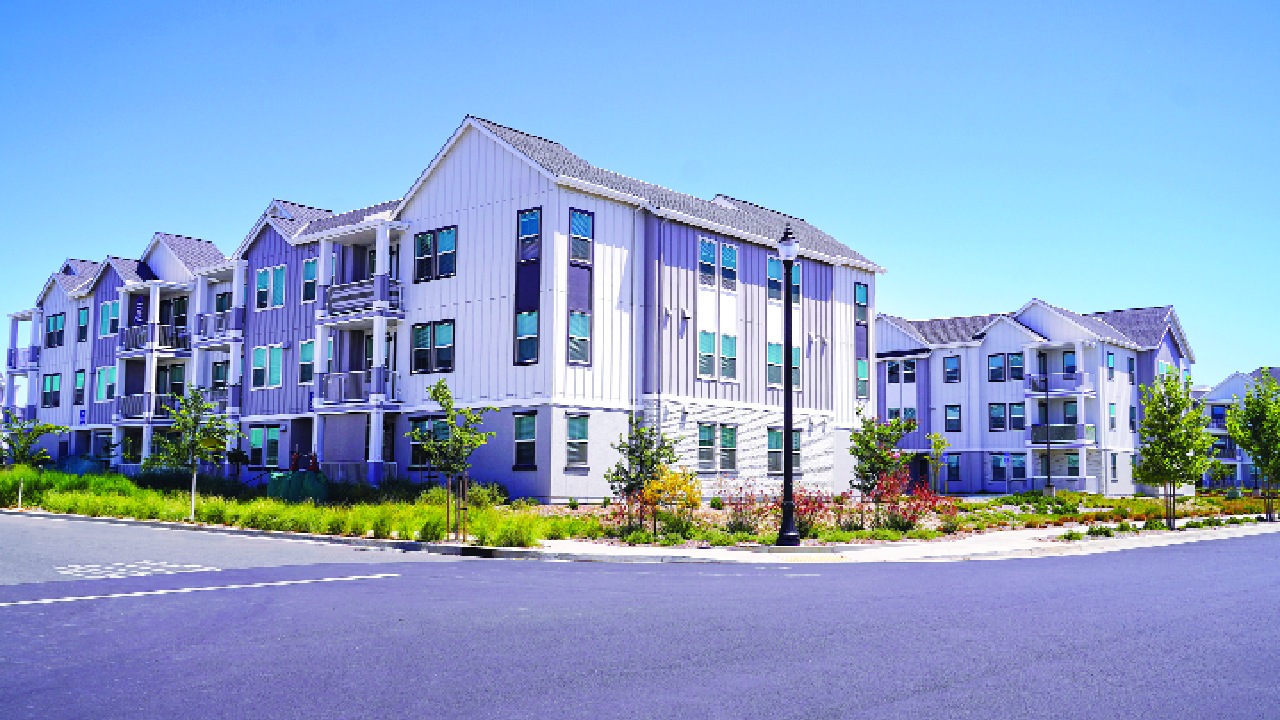
The truth is that the younger generation in America, especially the ones who are not in highly-skilled, and high-flying jobs like the ones in the Silicon Valley, find themselves in a bind when it comes to buying and owning a house. In a social media post, Trump said, “The American Dream is increasingly out of reach for far too many people, especially younger Americans. People live in homes, not corporations." Hence, people need to buy single-family houses, rather than the rich-and-wealthy firms, and investors. However, experts feel that the housing ban is not a realistic solution for several reasons.
For one, estimates indicate that corporate ownership of homes ranges from one per cent to 10 per cent, with most figures around 2-5 per cent in most of the American states. Most of this corporate ownership is historical, and traces back to the years after the financial meltdown of 2008, or the Great Recession, when Wall Street firms and banks were rescued because they were too big to fail. During the crisis, which was driven by home mortgages, tens of thousands of Americans lost their homes because they could not repay the loans.
This legacy carried forward in the next decade or so, and firms became the owners of single-family houses. These are now rented out to the normal American families. Ordinary people complain that the rentals are too high, and companies muscle in on the housing market, which was traditionally reserved for middle-class Americans. However, experts are skeptical that the emotions are connected to facts. One of them, who works with realtor.com, felt that Trump’s rhetoric was more of a political gesture, and may not work as corporate ownership represents a small share of the market.
Trump’s proposal is likely to have a modest economic impact, according to Jake Krimmel, a senior economist at Realtor.com. He adds, “The proposed ban might resonate politically, but the numbers suggest it would have limited reach and would not address the core shortage driving today's housing affordability issues. There are an estimated 80 million single-family homes in the US. The problem of affordability confronts the young Americans with modest incomes since the median price of a single-family home is about $4,50,000.”
Let us look at the second measure, which is to cap the interest rates on credit cards. Of course, if this happens, it will prove to be a massive boost for the middle-class Americans because most pay 20-30 per cent on credit cards. Current estimates reveal that about 185 million Americans have credit cards, sometimes multiple ones, and they pay $160 billion every year as interest. The accumulated loans, and interest on credit cards is more than $1.3 trillion. Obviously, if Trump reduces the interest rates, the move will be greatly appreciated by the working-class Americans.
Despite the enthusiasm from the MAGA base, and strong support for the move, there is widespread cynicism about it. First, as we mentioned earlier, Trump cannot do it, and it requires proper legislation. Analysts at the financial research firm, JD Bowen, agrees that “while this represents an escalation of headline risks for the credit card issuers, we believe that a card rate cap can only be done by Congress, not executive order. We ascribe a low probability of a cap getting passed legislatively at the federal level, (which is) similar to prior attempts to introduce a broad national rate cap.”
For the president, any movement on the housing and credit fronts are crucial for political reasons. Even if he knows he will not be able to push them, he will make noises about it, and try to push the Congressmen to think about them. The reason is that midterm elections are due in November, 2026, and many Senate and Congress seats will be up for grabs. At present, the Republicans have a narrow majority in both the houses, which allows them to push or stall critical legislation. If they lose the majorities in both the houses, Trump will become a lame-duck president. He cannot afford this.
The author has worked for leading media houses, authored two books, and is now Executive Director, C Voter Foundation; views are personal