Trump’s final frontier on Earth
“Space: the final frontier,” stated the opening line in the “Star Trek” series. For President Donald Trump’s vision for Venezuela, the iconic line may be rephrased as “Oil: the final frontier.” In the latter case, one can add that no man has ever gone there before, unlike the marines on board the USS Enterprise’s expeditions. The US sent troops to Venezuela to capture the latter’s president, Nicolas Maduro, a move that was dubbed as a campaign against drug trafficking, and “narco-terrorism.” Trump, who does not hold back his thoughts, spelt out an added US intent to capture the country’s oil.
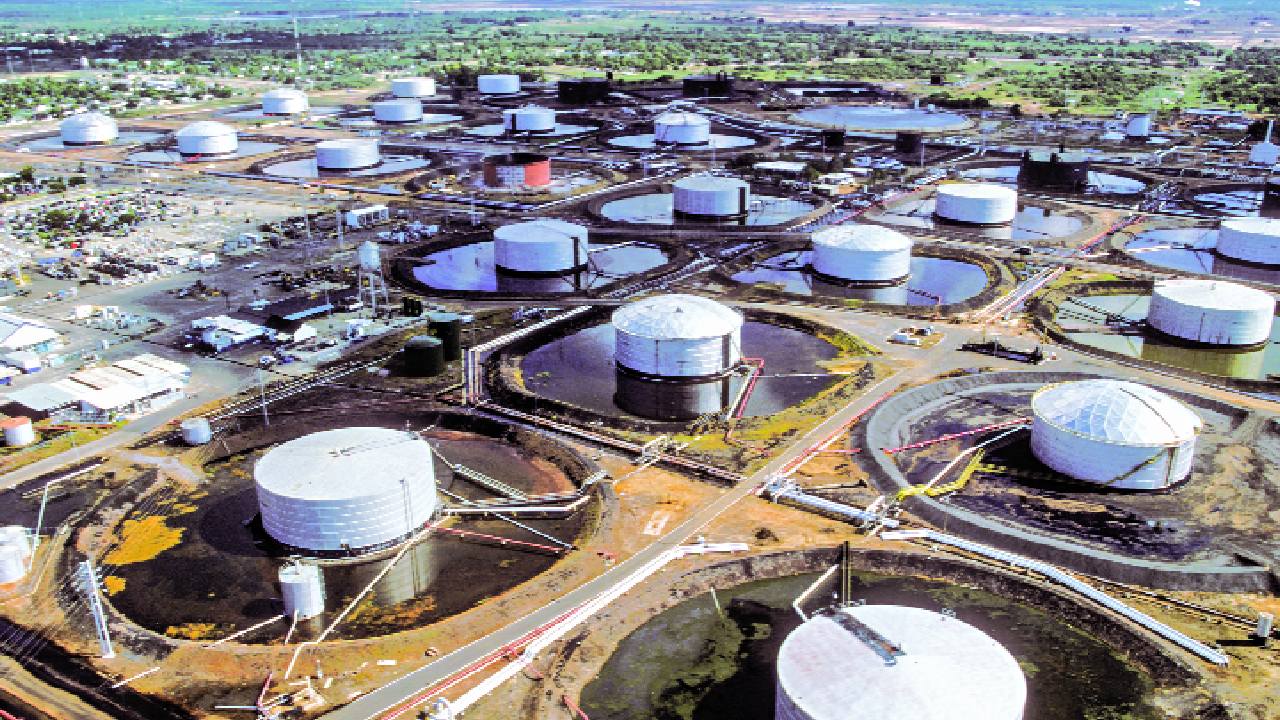
The US president hopes to send American oil giants to the world’s largest reservoir of crude oil, although extraction is a difficult proposition in Venezuela. The previous Venezuelan regime cost these giants massive amounts in losses, and foregone profits, as the latter’s assets were seized as part of the nation’s move to nationalise the oil resources in 2007 by the former president, Hugo Chavez. Chevron was the only US oil company to operate in Venezuela, and others like ExxonMobil, and Conoco were left with billions of dollars in outstanding and unpaid claims against Venezuela.
Now, Trump wants to quickly send these giants back, and invest huge amounts, and for Chevron to do the same to expand further. Many of the oil giants plan to exploit the huge resources, and earn super profits. However, after a meeting at the White House, ExxonMobil remained disinterested, and called the proposition “un-investable.” In a press statement, Darren Woods, chairman and CEO, ExxonMobil, explained, “We have had our assets seized there twice (since the 1940s). And so… to re-enter a third time would require some pretty significant changes from… what is currently the state. If we look at the legal and commercial constructs, framework, in place today in Venezuela, today it is un-investable.”
Woods added that only significant changes to the commercial frameworks, with “durable investment protections,” and a change in the hydrocarbon laws will goad him. He said, “We are confident that with this administration and President Trump working hand-in-hand with the Venezuelan government that those changes can be put in place.” Trump responded, “I did not like Exxon’s response. You know we have so many (oil companies) that want in. I would probably be inclined to keep Exxon out. They are playing too cute.” The president’s vision: “We’re going to have our very large United States oil companies, biggest anywhere in the world, go in, spend billions of dollars, fix the badly broken infrastructure, the oil infrastructure.”
Despite the world’s largest proven reserves, extraction of the oil remains a challenge in Venezuela. Though output rose slightly since the sanctions were eased, and interim leadership took over, it is far below the peak production of over three million barrels per day (bpd) in the 1990s. Current production is 7,00,000-8,00,000 bpd. Reports suggest that several factors deter production, including the oil being “thick, tar-like crude,” which requires expensive upgrading and blending with the lighter oil to be usable. Decades of corruption, underinvestment, and mismanagement left pipelines, refineries, and rigs in poor condition, with facilities “outdated or nonfunctional.”
During the Maduro regime, the global sanctions limited Venezuela’s ability to sell oil, access financing, and import technology. Political instability and economic collapse drove engineers and oil workers away. According to a Congressional document on Venezuela published on January 16, 2026, “The Trump Administration has designated Venezuela-linked criminal groups as terrorist organisations. The US Department of the Treasury has increased sanctions on individuals, firms, and tankers tied to Venezuela's oil trade. US officials have said they intend to pressure the acting government to, among other aims, allow the United States to direct oil sales and proceeds, thereby limiting the role of US adversaries.”
The document stated that the Venezuelan officials would turn over "Sanctioned Oil” (stet), reportedly worth $3 billion. According to the US-Venezuela energy deal, Washington would market and sell this oil, and deposit the proceeds into “US-controlled” accounts. Proceeds would be used for the benefit of the “American people and the Venezuelan people,” and the US hopes to consider “an expanded license for Chevron,” and issue “new licenses for other companies.” The Office of Foreign Assets Control (OFAC), part of the US Department of the Treasury, is responsible for administering and enforcing economic and trade sanctions based on Washington’s foreign policy and national security goals.
Trump later told the media, “We are dealing with the new President. We are dealing with a lot of the people who are running the country... they said… we have 50 million barrels of oil, and we have to get it processed immediately because we have no room. Will you take it? I said, we will take it. It is equivalent to $5.2 billion.” Venezuela’s “new President,” Delcy Rodriguez, had earlier directed a subsidiary of the state oil company, Citgo, to make a $5,00,000 donation to Trump’s inauguration. “With the socialist administration of Nicolas Maduro struggling to feed Venezuela, Rodríguez gambled on a deal that would have opened the door to American investment,” stated an earlier article in an American business magazine, Fortune.
“Around the same time, she saw that Trump’s ex-campaign manager was hired as a lobbyist for Citgo, courted Republicans in Congress, and tried to secure a meeting with the head of Exxon,” the article added. Though her efforts failed, with Marco Rubio, then a US senator, she urged Trump to focus on restoring democracy in Venezuela where Maduro was allegedly repressing the opposition. “But the outreach did bear fruit for Rodriguez, making her a prominent face in US business and political circles, and paving the way for her own rise,” the Fortune article stated.
Lately, her message that Venezuela is open for business assured Trump, who praised her. These are juxtaposed with threats if she chose to restrict US “total access” to Venezuela’s oil. Although Trump dubbed himself the “Acting President of Venezuela,” he rejected the choice of the opposition leader, María Corina Machado, who won the Nobel Prize, and presented her medal to the US president. Despite the grand gesture, Trump feels that she does not enjoy a popular following, despite winning the Nobel Prize. Hence, the final frontier remains within the grasp of two Venezuelan ladies, an interim President and an opposition leader, via Trump. For now, only one of the three is firmly seated in the captain’s seat.
(The author has more than three decades of experience across print, TV, and digital media); views are personal