Threads of the Golden age
The winter light in Delhi feels heavy. It’s January, so the sun struggles a bit against the haze, casting a gold glow that makes even the concrete look gentle. It’s perfect lighting for art. Inside the Travancore Palace this week, that atmospheric vibe was on full display.
Engendered, in association with the Embassy of the Netherlands, presents Inheritances of Light, Geographies of Loss functions as a restless and nearly uncomfortable site of convergence. Most visitors walk into the palace expecting the sterile, predictable reverence of a standard art show. Instead, curator Myna Mukherjee has staged a collision. She has effectively forced the ghosts of several centuries to occupy the same air.
The stakes center on the involvement of the Mauritshuis and the Drents Museum. These institutions serve as the literal gatekeepers of the Dutch Golden Age-the primary custodians of Rembrandt and Vermeer. They are here to witness a mutation: the quiet, 17th-century Dutch aesthetic being inhaled and exhaled by a contemporary Indian consciousness.
A bizarre but necessary friction exists in seeing these spirits filtered through a modern lens. The ‘Golden Age’ leans into a mirror and finds an Indian face staring back. It is a reckoning with legacy. This exhibition proves that history refuses to sit in a museum. It moves. It bleeds. It changes. This path of light eventually found its way into the 19th-century workspace of Raja Ravi Varma.
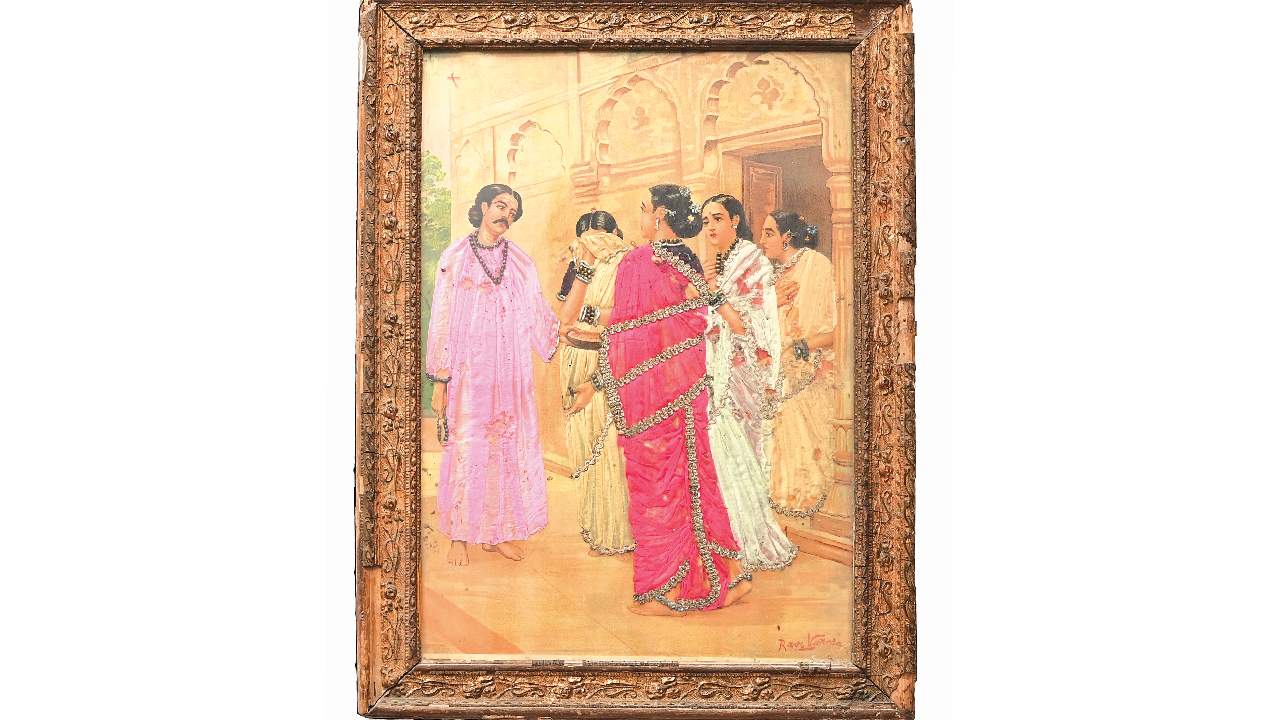
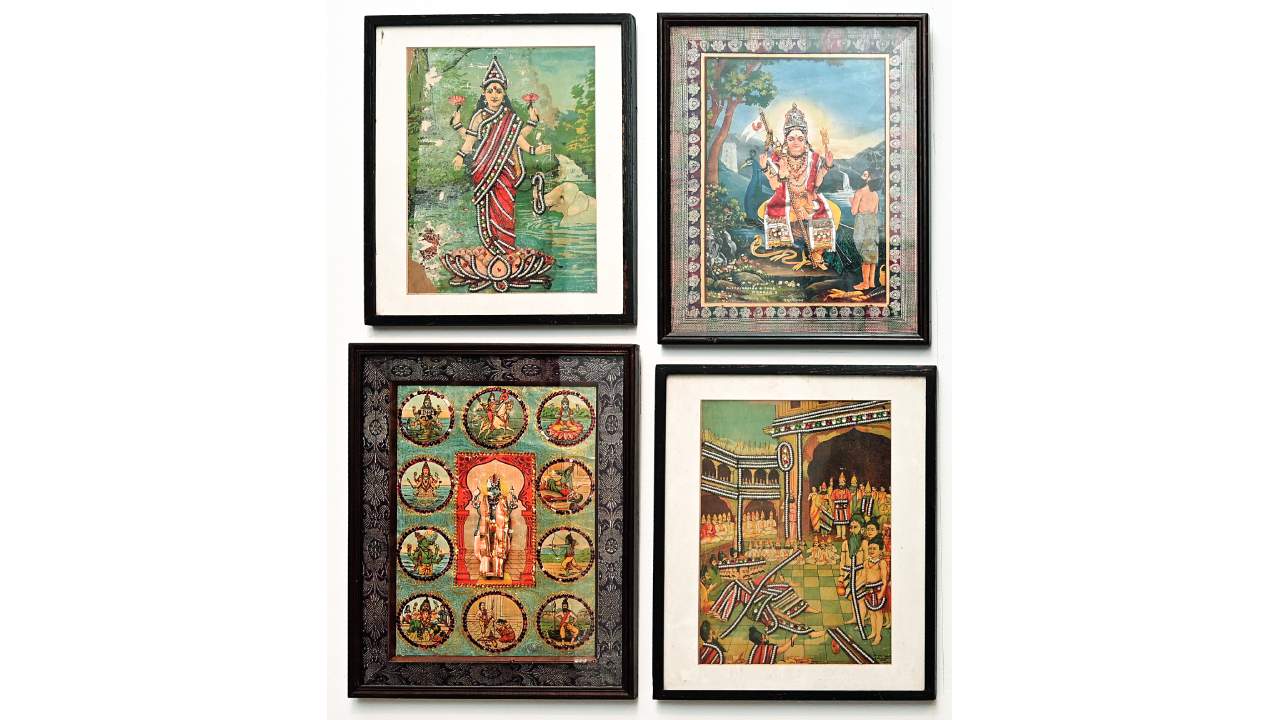
He was the pioneer who really grasped European realism, borrowing that sharp play of light and shadow from the Dutch masters to bring a new kind of life to the faces of Indian gods. Varma knew that to make a deity feel real to the human eye, the shadows had to be just right. Through those borrowed techniques, he gave India a new way to see its own stories. In his hands, ancient myths felt as real as the touch of silk on skin.
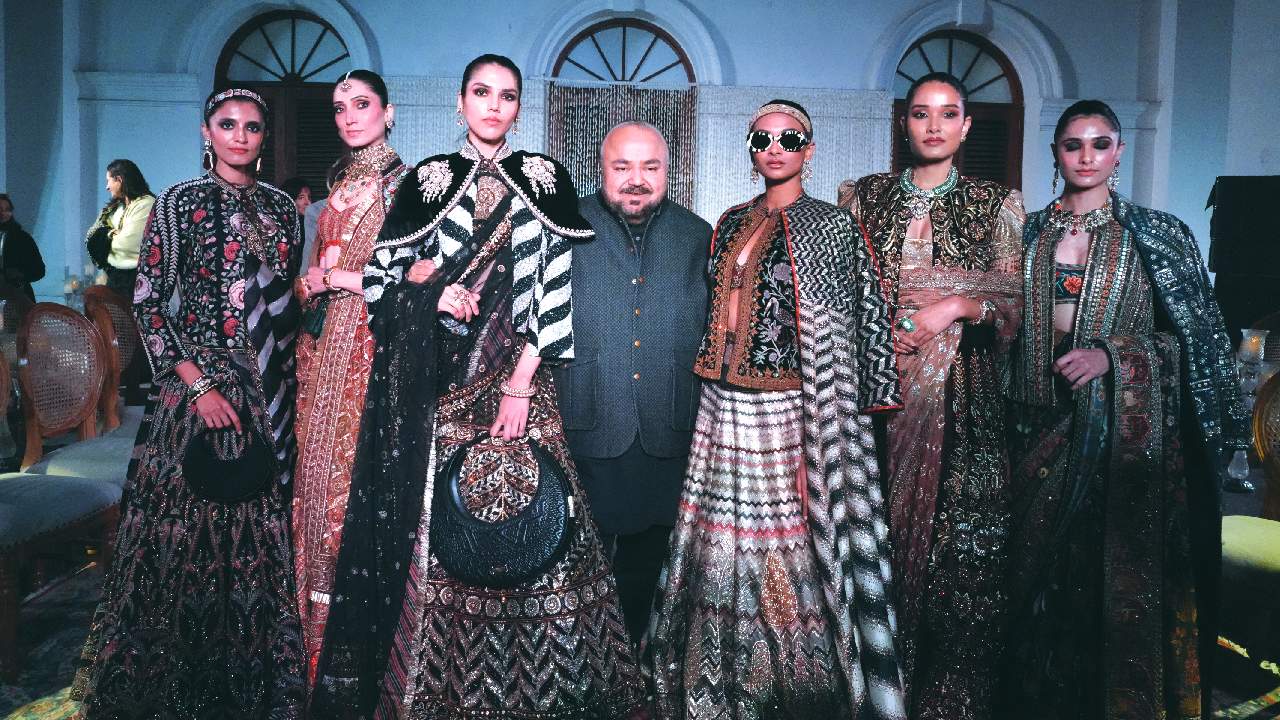
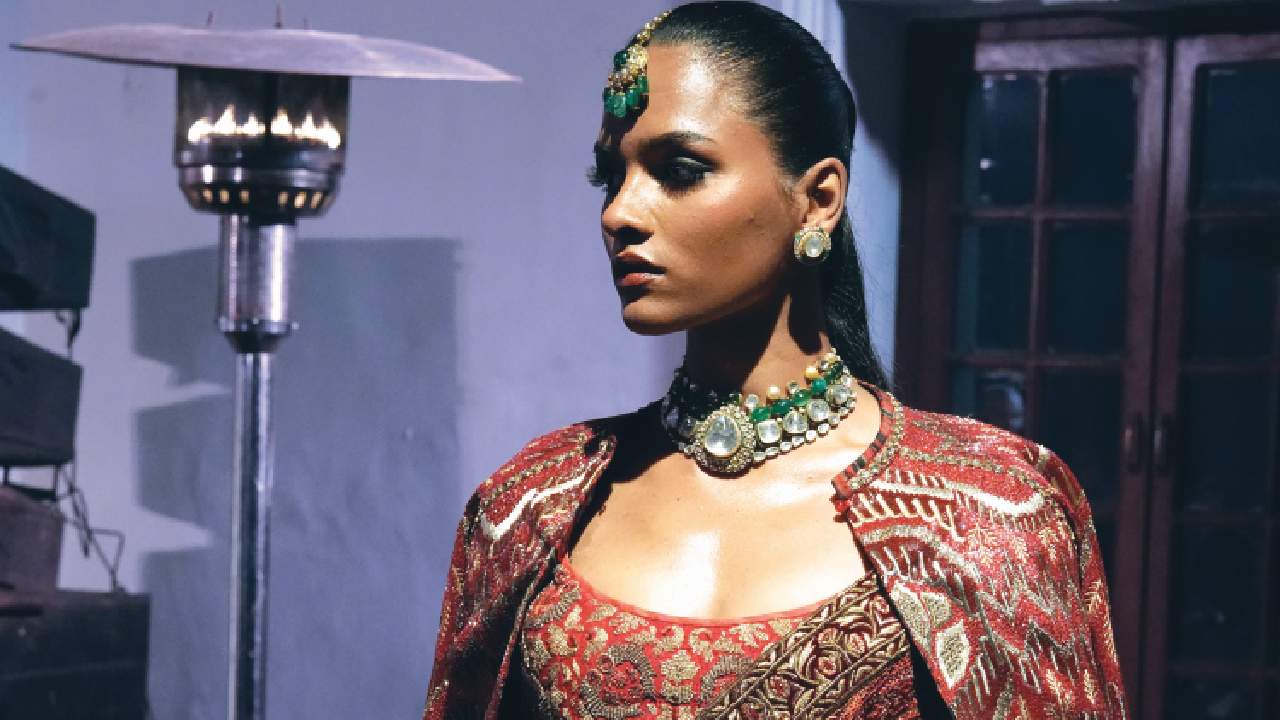
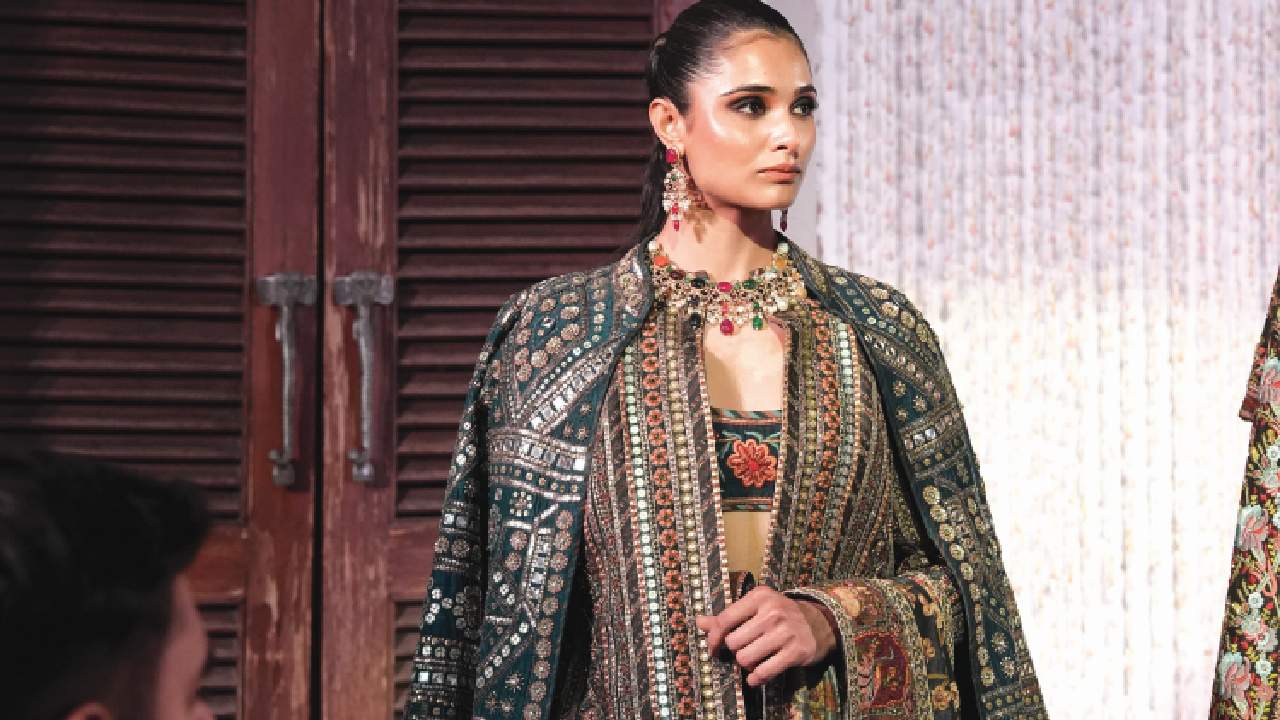
That historical conversation crashes into the present through the craft of JJ Valaya. We often encounter Valaya amidst the flashbulbs and runway frenzy, but here, his work requires a quieter, more intense focus. It is art in fabric. The heavy velvets and oxidized metals seem to swallow the gallery lights. They sit with the monumental weight of sculpture.
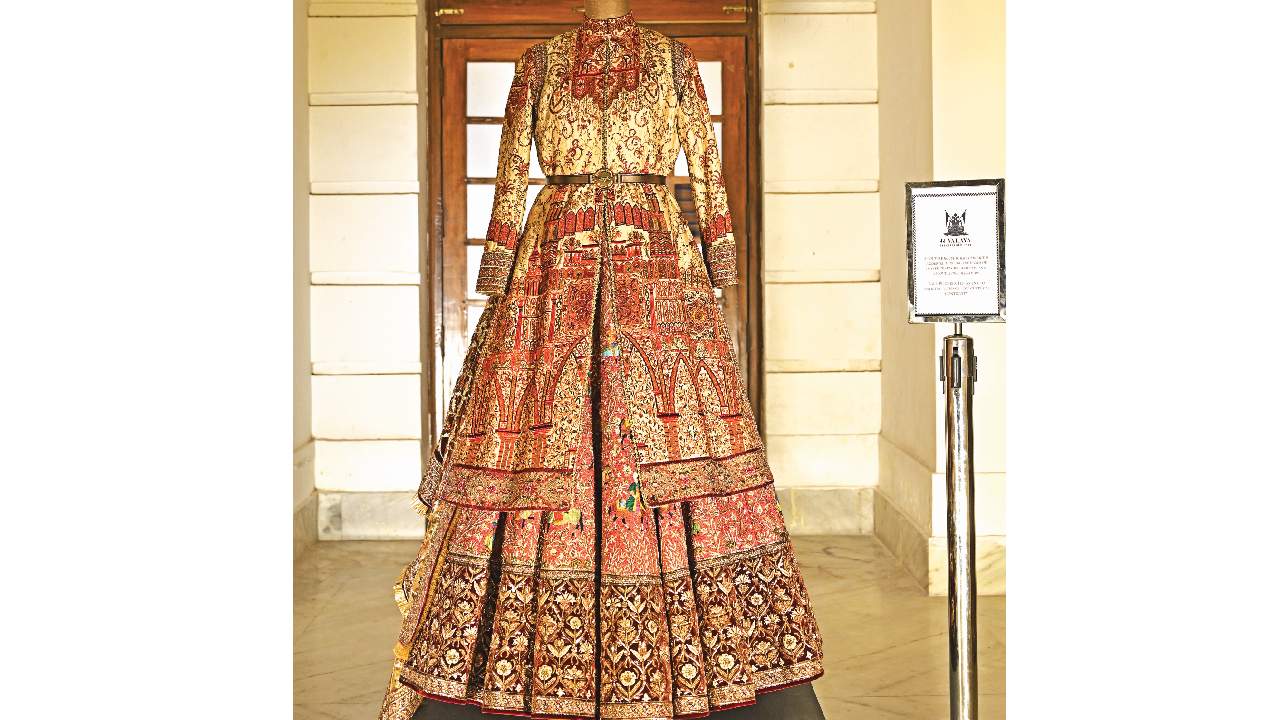
There is an old, unwritten rule in high fashion: you can always tell when a designer truly loves women. He builds a temple around the body. Valaya’s installation is purely architectural. His ‘Alika’ jacket and signature Chevron patterns serve as archives of a nomadic royalty, stitched with the memory of empires that stretched from the Khyber Pass to the canals of Europe. He frames the female form in dignity, wrapping it in history rather than exposing it to a casual gaze. As Valaya says, “Light has always been a carrier of memory revealing not just form, but history, emotion, and cultural exchange. Couture becomes a lens through which craftsmanship and inheritance are examined.”
Around these textile monuments, the contemporary art bites back. The exhibition refuses to be purely decorative. Rabiul Khan’s installation, a tent pierced with bullet holes, forces light to behave like an intruder. It cuts through the canvas in sharp, painful beams that stop a viewer cold. Just a few steps away, Supriyo Manna works with reeds that are quietly disappearing from our landscape. His weaving is a desperate, delicate attempt to save something before it is gone forever. The work is so thin and honest that it feels like it might shatter if you even breathe on it. This exhibition shows that the exchange is ongoing. Myna Mukherjee observes that this illumination is a form of “ethical attention, shaped by material exchange, shared histories, and the quiet ways cultures learn to see one another.” Ambassador for International Cultural Cooperation , Netherlands Dewi van de Weerd notes that this artistic exchange is “continually reinterpreted through contemporary practice, collaboration, and shared responsibility.”
Inheritances of Light understands that geography is just a line on a map. Light is the only inheritance that travels everywhere. It touches the gold on a Valaya jacket and the oil on a Dutch canvas with the same indifferent, beautiful grace. Centuries of Dutch shadows meet Indian souls in a palace where light tells our shared story.
Legacy in Flux: How Old Spirits Shape New Worlds
A heavy-hitting panel brings together European museum directors and cultural leaders to ask: how do we carry old spirits into a new century? From Rembrandt’s hidden Mughal influences to the future of shared legacies, these curators and thinkers explore how our pasts mirror one another in a modern, restless world. Light is the only inheritance that travels and heals everywhere.