The menace of illegal infiltration: A threat India can no longer ignore
The problem of illegal infiltration is multi-dimensional — economic, social, political, and administrative — demanding a comprehensive, coordinated national response
The Election Commission of India (ECI) recently undertook a significant initiative called the Special Intensive Revision (SIR) to clean up electoral rolls across the country. The exercise aimed at correcting longstanding deficiencies - including the wrongful inclusion of foreign nationals, failure to remove deceased voters’ names, duplicate entries, and discrepancies caused by frequent migration. Where foreign nationals appeared on the rolls, their names were automatically deleted, as they were unable to furnish proof of citizenship. After resolving objections, a cumulative total of 52 million voters were removed from electoral rolls across 12 states and 3 Union Territories.
Despite facing strong opposition from several political parties, the SIR process received the Supreme Court’s stamp of constitutional validity, effectively silencing critics. While this cleansing of voter rolls marks a commendable step forward, it represents only one piece of a far larger puzzle. The more pressing and complex challenge - that of physically identifying and expelling illegal foreign infiltrators from Indian soil - remains very much unresolved.
For decades, illegal Bangladeshi infiltration has been steadily escalating across various parts of India. This is not a new or isolated problem; it is a deeply entrenched crisis that has, unfortunately, been repeatedly politicized rather than addressed with the urgency it demands. It is worth noting that developed nations - including the United States and several European countries - are enacting increasingly stringent laws against illegal immigration and pursuing enforcement with firm resolve. India deserves no less. Recently, Union Home Minister Amit Shah constituted a high-level committee to address the issue of illegal infiltration and the resulting demographic changes.
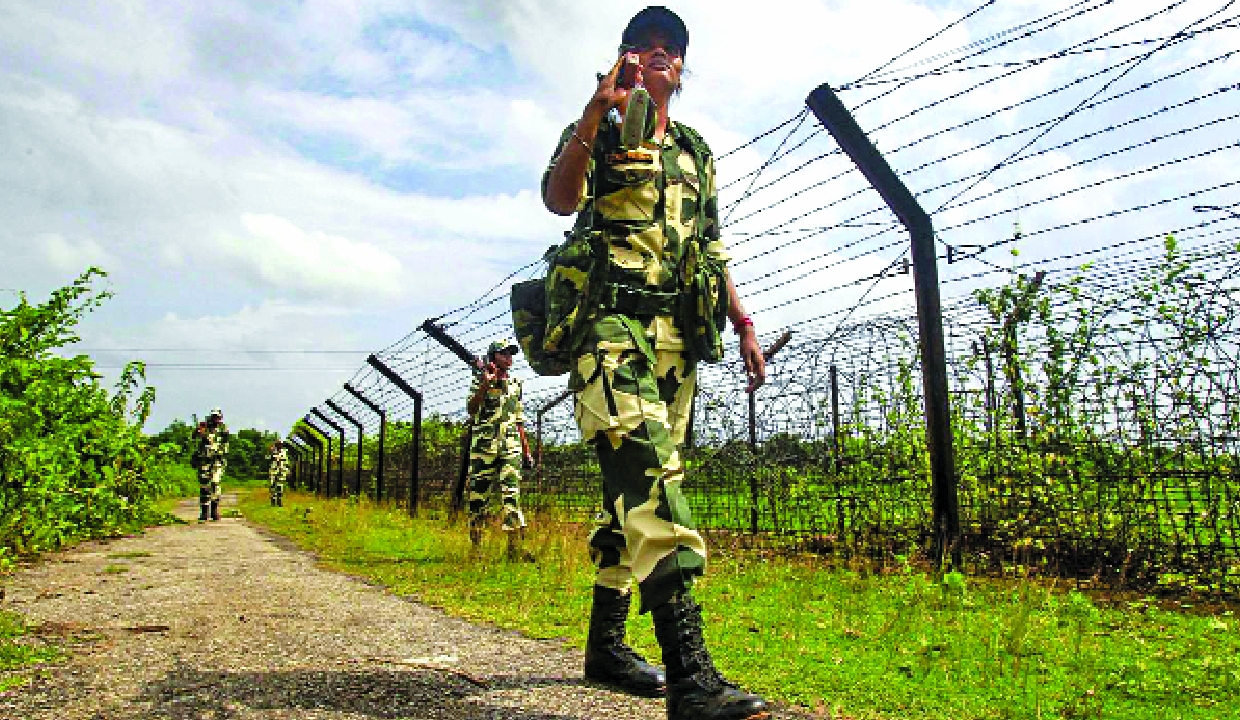
The move comes against the backdrop of the alarming scale of Bangladeshi infiltration in West Bengal - a state that shares a long and porous border with Bangladesh. For years, critics alleged that the previous state government under former Chief Minister Mamata Banerjee extended tacit patronage to illegal infiltrators.
With the BJP now in power in West Bengal, there are clear signals that the government is prepared to adopt a firm, uncompromising stance on this issue.
Numbers That Tell a Disturbing Story
While no definitive official figure exists, the numbers cited over the years are staggering. In 2004, the UPA government stated in Parliament that approximately 12 million Bangladeshis were residing illegally in India - though the government later hastily distanced itself from this figure, dismissing it as based on hearsay.
By 2016, Minister Kiren Rijiju of the NDA government placed the number at 20 million - a figure 70 percent higher than the UPA’s own estimate from just twelve years prior. By 2017, the government acknowledged that obtaining precise data on the number of infiltrators was virtually impossible.
Regardless of the exact figures, the trajectory is unmistakably alarming. Opposition parties have occasionally acknowledged the severity of the problem even while in power, but have made no meaningful efforts toward a lasting solution.
Rather than evaluating this issue through the narrow prism of electoral politics, it must be approached from the perspective of national interest and long-term social stability.
The economic fallout of illegal infiltration is both direct and devastating. India already faces the enormous challenge of generating sufficient employment for its vast and young population. When illegal Bangladeshi workers willingly accept wages far below market rates, Indian laborers - especially from vulnerable communities - are effectively pushed out of the workforce. This displacement is visible across both the domestic sector and industrial employment.
A significant share of India’s economy operates through the unorganized sector - comprising small shopkeepers, street vendors, hawkers, scrap collectors, construction laborers, and market workers. In virtually all these spheres, Bangladeshi infiltrators are increasingly cornering economic opportunities, often through well-organized syndicates.
This directly undermines the livelihoods of Indian citizens who depend on these very sectors for their survival. Since these infiltrators operate almost entirely within the informal economy, the government collects no tax revenue from their economic activities.
Worse still, earnings made in India are illegally remitted back to Bangladesh, bleeding the Indian economy further. Adding insult to injury, many infiltrators exploit welfare schemes meant exclusively for India’s poor - obtaining free rations, subsidized electricity, water connections, and even bank accounts - using fraudulent documents. This misuse results in a loss of crores to the national exchequer every year.
The pressure on public services in infiltration-prone areas is mounting at an alarming pace. Healthcare facilities, schools, sanitation systems, and subsidised food distribution networks in affected regions are strained beyond capacity. Illegal procurement of Aadhaar cards, ration cards, and voter identity cards has created a governance nightmare.
Distinguishing between genuine citizens and illegal infiltrators becomes increasingly difficult when fraudulent documentation is widespread, thereby compromising internal security and administrative integrity. Demographic shifts triggered by large-scale infiltration also generate serious social tensions. Border districts in particular witness cultural and linguistic imbalances as migrant populations grow disproportionately.
Competition over land, employment, and welfare resources routinely sparks conflicts between local communities and migrant groups. Crime rates - including human trafficking, organized criminal activity, and illegal land encroachment - tend to be significantly higher in areas with heavy infiltration. The political consequences are equally troubling. Illegal infiltrators have, on numerous occasions, influenced election outcomes by being fraudulently registered as voters - directly undermining the integrity of Indian democracy.
The appeasement of minority vote banks by certain parties has only deepened this problem, eroding sound political values and rewarding illegal presence over legitimate citizenship. The problem of illegal infiltration is multi-dimensional - economic, social, political, and administrative - and demands a comprehensive, coordinated national response.
The government’s current initiatives, if pursued with consistency and resolve, hold the potential to significantly reduce the crisis threatening India’s socio-economic and democratic fabric. The time for half-measures and political hedging has long passed. What India needs today is political will, administrative efficiency, and national unity in confronting this challenge head-on.
Distinguishing between genuine citizens and illegal infiltrators becomes increasingly difficult when fraudulent documentation is widespread, thereby compromising internal security and administrative integrity
The writer is a National Co-convener, Swadeshi Jagran Manch & Former Professor, PGDAV College, University of Delhi; Views presented are personal.