The markets have spoken on E20: Nobody is listening
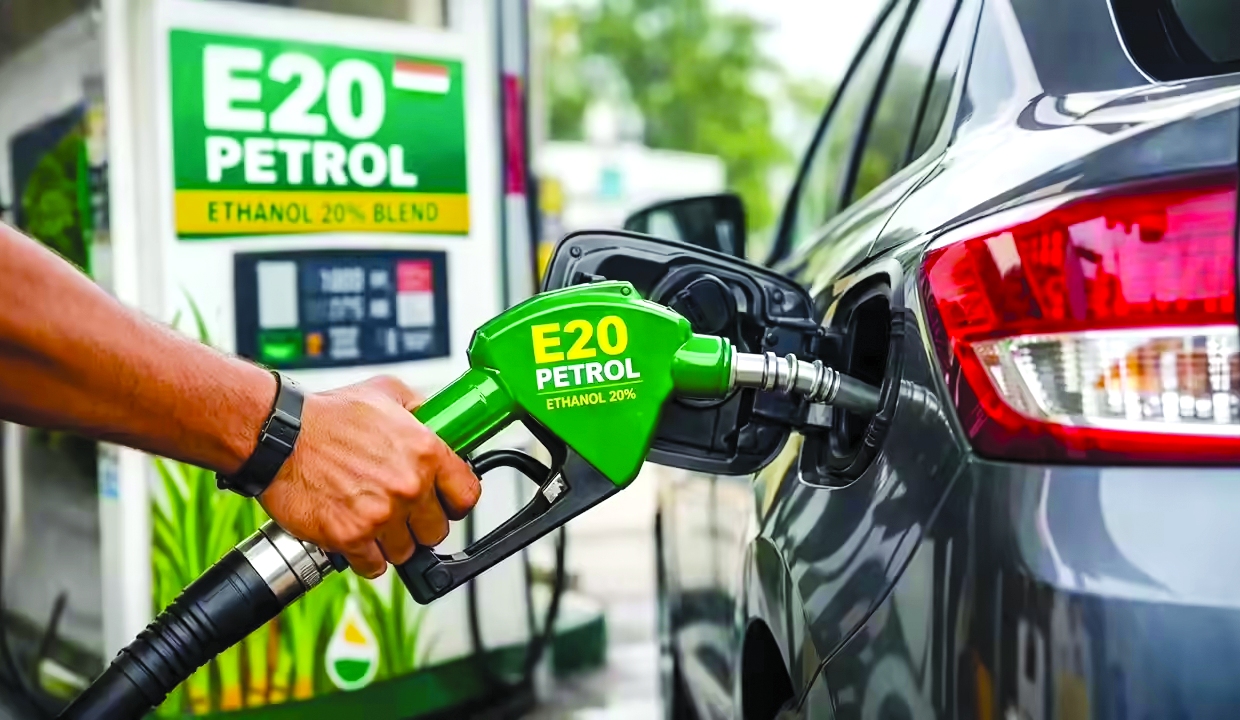
The debate over E20 petrol in India has a curious structure. On one side: viral videos of engine failures, Twitter threads about rubber seal corrosion, and a rotating cast of automotive commentators warning of civilisational collapse for pre-2023 vehicles.
On the other side: five separate markets, each with billions of rupees at stake, showing no distress signal whatsoever. When sentiment and markets diverge this sharply, the question worth asking is not who sounds more convincing — it is who has skin in the game.
Signal One: The used car market is growing, not collapsing
If E20 were quietly destroying pre-2023 vehicles, the segment that constitutes the overwhelming bulk of India’s secondhand car inventory, the effect would show up fastest in used car valuations and transaction volumes.
Sellers would struggle to offload ageing stock. Buyers would demand steep discounts on vehicles vulnerable to ethanol damage. Platforms would report inventory write-downs and collapsing margins.
None of this is happening. Spinny, one of India’s largest organised used-car retailers, posted Rs 4,657 crore in revenue for FY25 — a 25 per cent year-on-year increase — while cutting its net losses by 28 per cent to Rs 423 crore.
Cars24 India’s gross revenue fell to Rs 6,233 crore in FY25 from Rs 6,910 crore in FY24, according to the company’s consolidated financial statements filed with the Registrar of Companies (RoC). The decline was due to operational restructuring and not any market dynamics. Ahead of the IPO, the used-car marketplace claims to have turned profitable for the first time in Q4 FY26, earning Rs 20 crore in adjusted EBITDA.
The broader India used-car market was valued at approximately $41.74 billion in 2026 and is projected to reach $82.88 billion (some studies place it at around $70 billion) by 2031, at a CAGR of 14.72 per cent. Another report highlights that 65 per cent of those entering the second-hand car market are first-time owners.
Critically, used cars outnumbered new car sales in FY25: 5.5 million. Most of those 5.5 million units were pre-2023 vehicles — precisely the fleet the E20 panic is centred on. Buyers purchased them anyway, in growing volumes, with full knowledge that E20 was the fuel they would be filling with.
That is not the behaviour of a market pricing in catastrophic risk. If E20 is a problem, as many claim, this should be the first market to collapse.
Signal Two: Auto manufacturers have put service data on the table
The strongest evidence against the engine-damage narrative came from the manufacturers themselves.
On July 4, 2026, a panel convened by the Ministry of Information and Broadcasting brought together representatives from Maruti Suzuki, Hero MotoCorp, Toyota Kirloskar Motor, Hyundai Motor India, Bajaj Auto, and TVS Motors.
Maruti Suzuki’s Senior Executive Officer (Corporate Affairs), Rahul Bharti, stated that the company serviced 2.84 crore vehicles during FY2025-26, of which more than 1.5 crore were over three years old and not originally E20-certified. His finding: “No cases of corrosion, abnormal wear and tear or reduction in component life attributable to E20 have been reported.”
Separately, Maruti data from 1.4 crore E20-run vehicles monitored through service centres over 15 years showed zero evidence of ethanol-induced corrosion.
Hero MotoCorp’s Chief Business Officer Ashutosh Varma was equally categorical: “We analyse crores of service data that we have, and there is no incidence whatsoever of any higher damage with vehicles that run on E20 than the vehicles that were running on fuels before E20.”
Hyundai’s Associate Vice President Puneet Anand put it more bluntly: “social media is social media. We have not seen any glaring claims of E20 damage.”
Also, manufacturers face shareholder liability and warranty obligations that directly contradict any incentive to hide damage at scale.
However, since many believe the manufacturers to be in cahoots with the government, let’s look at what the insurance data is saying, because that will be the first industry to raise alarm bells against claims they had not factored for.
What is the insurance market saying?
If E20 were generating a surge in engine claims, insurance companies would be the first to reprice.
Motor insurance is actuarially driven — insurers do not absorb rising claim frequencies without adjusting premiums or policy exclusions. The market has done neither. The Government clarified that motor insurance policies remain valid for E20 use, and there is no publicly available data showing any insurer has issued a blanket E20-exclusion clause on older vehicles.
Further, motor policies, if one reads the fine print, only cover accidental damage, theft, and natural disasters. Therefore, to assume that they will single out E20 and refuse to pay for engine damage due to maintenance issues is a baseless assumption.
Insurance is where the real money is. If the companies saw a risk, it would show up in the premiums. As of today, it isn’t.
The logistics argument against multiple blends
The counter-proposal circulating online — offer E0 alongside E20 and let consumers choose — sounds reasonable until you run the numbers.
India has over 1,00,266 petrol pumps as of November 2025, with IOC leading at 41,664 outlets, BPCL at 24,605, and HPCL at 24,418.
Even IOC’s XP100, a 100-octane ethanol-free premium grade, is available only at select metro outlets — launched initially in 10 cities, with XP95 covering roughly 12,000-13,000 of IOC’s outlets at rollout. High-octane variants exist at a small fraction of total pumps because they serve a niche.
Maintaining dual ethanol-blend infrastructure across 1 lakh pumps would require separate underground storage tanks, separate tanker fleets, separate supply chains, and separate inventory accounting — while drawing on a single agricultural feedstock (ethanol) that is seasonal, crop-dependent, and geographically concentrated.
Regular petrol and diesel already account for approximately 93-95 per cent of India’s total fuel sales. The economics of investing in parallel infrastructure for the remaining margin — catering to a risk that no market is pricing in — do not survive scrutiny.
Also, the E0 blend will be about catering to a fleet that is going to be obsolete in ten years, or perhaps fifteen. The question is whether a significant threshold (say 20 per cent) of those owners will be willing to cough up extra money for the same volume of fuel? What if they don’t? What if it’s a niche?
In that case, the OMCs may want to consider having a few pumps with the variant, but it will be an economic choice based on the latest market dynamics they have access to. Even the best anecdotes fail that test.
Sentimental chatter can often drown out the reality outside social media. This is where the market and its invisible hand offer some perspective. The signs are there, crystal clear.
There’s a fiscal argument and an energy security angle to explore, but that’s for another day.
The writer is a senior political journalist, covering politics, economy, and technology. He is also the editor of Polity Policy; Views presented are personal.